



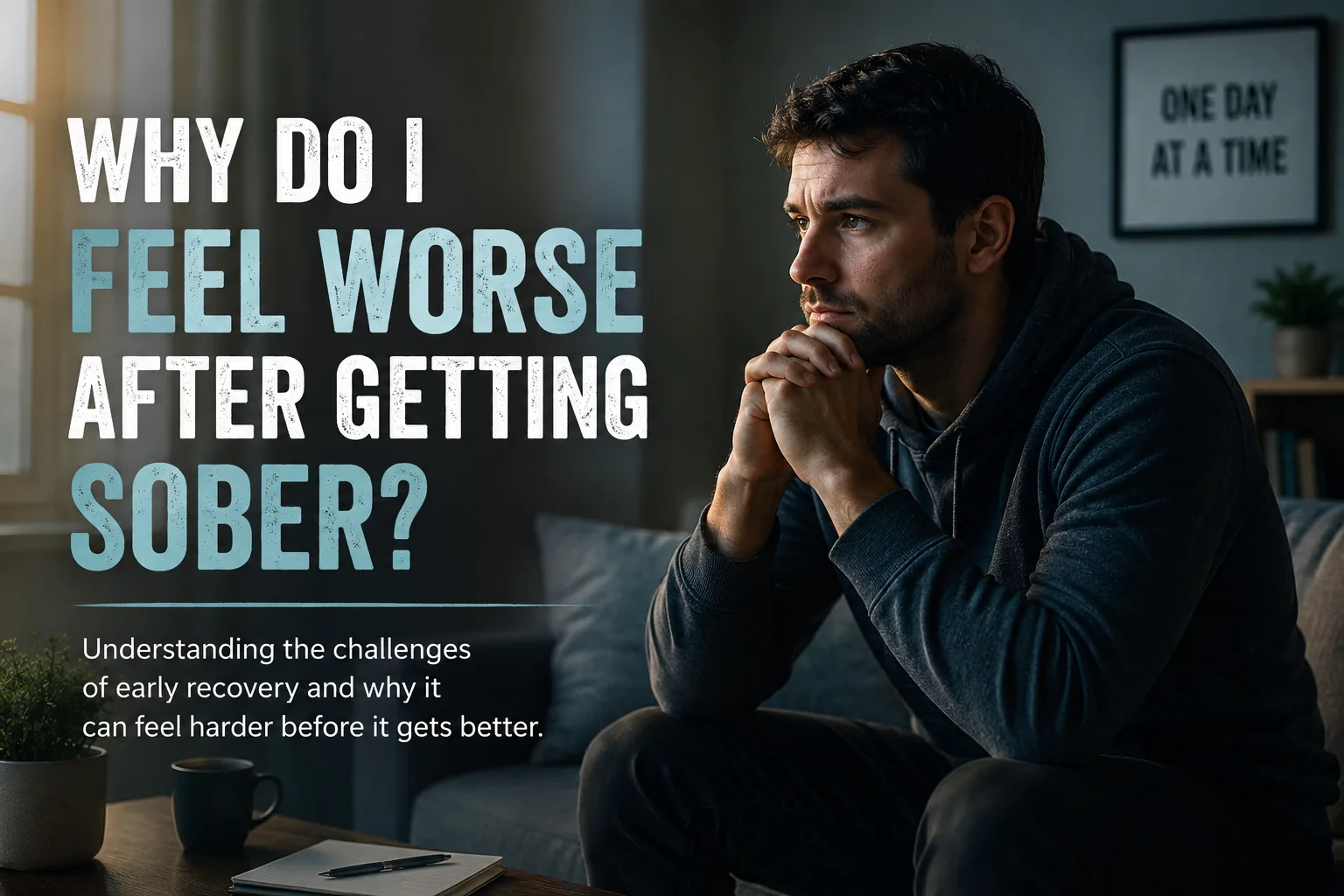


You stopped drinking or using drugs because you wanted life to get better. So why do you suddenly feel worse?
For many people, early recovery does not feel like immediate freedom. You may be exhausted, emotional, angry, lonely, bored, anxious, or unable to enjoy anything. You may even catch yourself wondering whether getting sober was a mistake.
That can be frightening.
But feeling worse after getting sober does not necessarily mean recovery is failing. Your brain, body, emotions, relationships, and daily life may all be adjusting at the same time.
After months or years of substance use, removing drugs or alcohol is only the beginning.
Recovery is what happens next.
Your Brain Is Adjusting to Life Without Drugs or Alcohol
Repeated substance use can change brain systems involved in reward, stress, motivation, memory, sleep, and decision-making.
The addicted brain may have learned to connect drugs or alcohol with relief, pleasure, confidence, energy, sleep, or escape.
Then you get sober.
The substance disappears, but the brain does not instantly forget those associations.
That can leave you feeling emotionally and physically out of balance.
You may have trouble sleeping.
You may struggle to concentrate.
Normal activities can seem unrewarding.
Stress may feel stronger.
Cravings may appear unexpectedly.
These changes can improve, but recovery takes time.
Our sobriety timeline explains why the first days, weeks, and months can feel very different from long-term recovery.
Why Am I So Emotional After Getting Sober?
Drugs and alcohol can numb, suppress, or temporarily change emotions.
When substance use stops, emotions may return with surprising intensity.
Sadness.
Fear.
Joy.
Guilt.
Anxiety.
Frustration.
Grief.
You may cry over things that normally would not bother you or feel overwhelmed by feelings you do not know how to manage.
Understanding why emotions can feel so intense after getting sober can help you recognize that emotional instability may be part of adjustment rather than proof that sobriety is making you worse.
Recovery also requires learning to handle emotions without drugs or alcohol. That is a skill, and skills take practice.
Anger Can Show Up Too
Some people do not become sad after getting sober.
They become angry.
Everything is irritating.
People feel demanding.
Small problems feel enormous.
You may even become angry that you have to be sober at all.
There can be many reasons for anger after quitting drugs or alcohol, including poor sleep, stress, withdrawal, unresolved emotions, relationship problems, and the loss of a substance that once provided quick relief.
Feeling angry does not give you permission to hurt other people.
But understanding the emotion can help you learn what to do with it.
Why Am I So Tired After Getting Sober?
Early recovery can be exhausting.
Your body may be recovering from withdrawal, sleep disruption, nutritional problems, stress, and years of substance use.
At the same time, you are probably doing more emotional work than you realize.
You’re trying not to use.
You’re rebuilding routines.
You’re dealing with consequences.
You’re thinking about your future.
You’re repairing relationships.
No wonder you’re tired.
If exhaustion is one of your biggest struggles, learn more about why you may feel so tired after getting sober.
Rest is not the enemy of recovery.
Your body may genuinely need it.
Normal Life Can Feel Boring
Addiction can create intensity.
Even when that intensity is destructive, life may revolve around finding substances, using them, recovering from them, hiding use, chasing money, dealing with crises, and planning the next opportunity to use.
Then sobriety arrives.
Suddenly, Tuesday night is just Tuesday night.
That can feel painfully quiet.
You may wonder why you are bored after getting sober or why normal life feels boring after addiction.
Boredom matters because it can become a relapse risk.
The goal is not to create constant excitement.
It is to slowly build a life that becomes worth participating in.
Why Can’t I Feel Happy Yet?
One of the hardest parts of early sobriety is expecting happiness and finding emotional flatness instead.
You may have gotten sober to feel better.
Instead, nothing seems enjoyable.
Food is just food.
Music sounds flat.
Sex feels different.
Hobbies seem pointless.
This does not automatically mean you have permanently lost your ability to experience pleasure.
Understanding why you may not feel happy after getting sober can help explain why the brain’s reward system may need time to adjust.
Early recovery is not necessarily what sober life will feel like forever.
Loneliness Can Get Worse Before Connection Gets Better
Getting sober can change your social world.
You may stop seeing people you used with.
Some friendships may disappear.
You may realize that certain relationships existed mostly around alcohol or drugs.
At the same time, you may not yet have a strong recovery community.
That middle period can be lonely.
If you find yourself thinking, “I got sober and lost everyone,” understanding loneliness in addiction recovery can help.
Connection often has to be rebuilt deliberately.
Meetings.
Treatment.
Family.
Friends.
Peer support.
Recovery communities.
Healthy relationships do not always appear automatically. Sometimes you have to go build them.
You May Still Miss Drugs
One of the strangest experiences in recovery is knowing a substance nearly destroyed your life and still missing it.
That does not make you irrational.
The brain remembers rewards.
It remembers relief.
It remembers routines.
It remembers people, places, music, smells, and experiences connected with using.
This can explain why you still think about drugs after getting sober.
You may even wonder why you miss drugs even though they ruined your life.
Remembering something fondly is not the same as needing to return to it.
Recovery means learning to remember the entire story—not just the part where using temporarily felt good.
Regret About Sobriety Can Happen
There may be days when you genuinely regret getting sober.
That thought can be scary.
But thinking “I hate this” is not the same thing as deciding to use.
Learning whether it is normal to regret getting sober can help put difficult days into perspective.
Sometimes you are not actually missing addiction.
You are grieving the familiar.
Getting sober may mean losing routines, friendships, nightlife, identity, or a version of yourself that existed for years.
That is why grieving your old life after getting sober can be a real part of moving forward.
Shame Can Make Recovery Feel Even Worse
Once the fog of addiction begins lifting, you may start thinking about things you did while using.
People you hurt.
Money you lost.
Promises you broke.
Years you wish you could get back.
That shame can become overwhelming.
Learning how to deal with shame and regret after addiction is an important part of long-term recovery.
Sometimes everyone else has moved forward while you remain stuck punishing yourself. If that sounds familiar, read about when everyone forgives you except yourself and the process of learning how to forgive yourself after addiction.
Accountability matters.
So does growth.
You cannot change what happened yesterday.
You can change what you do next.
Feeling Worse Does Not Mean Recovery Is Worse
Early recovery can be uncomfortable because you are experiencing life without the substance that once changed how you felt.
That adjustment can involve exhaustion, anger, sadness, boredom, cravings, loneliness, regret, and grief.
But those feelings are not necessarily permanent.
The goal is not to feel amazing every day.
The goal is to keep moving toward a life that becomes healthier, steadier, and more meaningful over time.
Some days recovery looks like rebuilding relationships.
Other days it looks like going to treatment.
Sometimes it looks like exercising, sleeping, making an apology, or asking for help.
And sometimes recovery simply means getting through a difficult day without using.
Feeling worse after getting sober does not mean sobriety was a mistake. It may mean your brain, body, and life are finally beginning the difficult work of learning how to live without addiction.


