



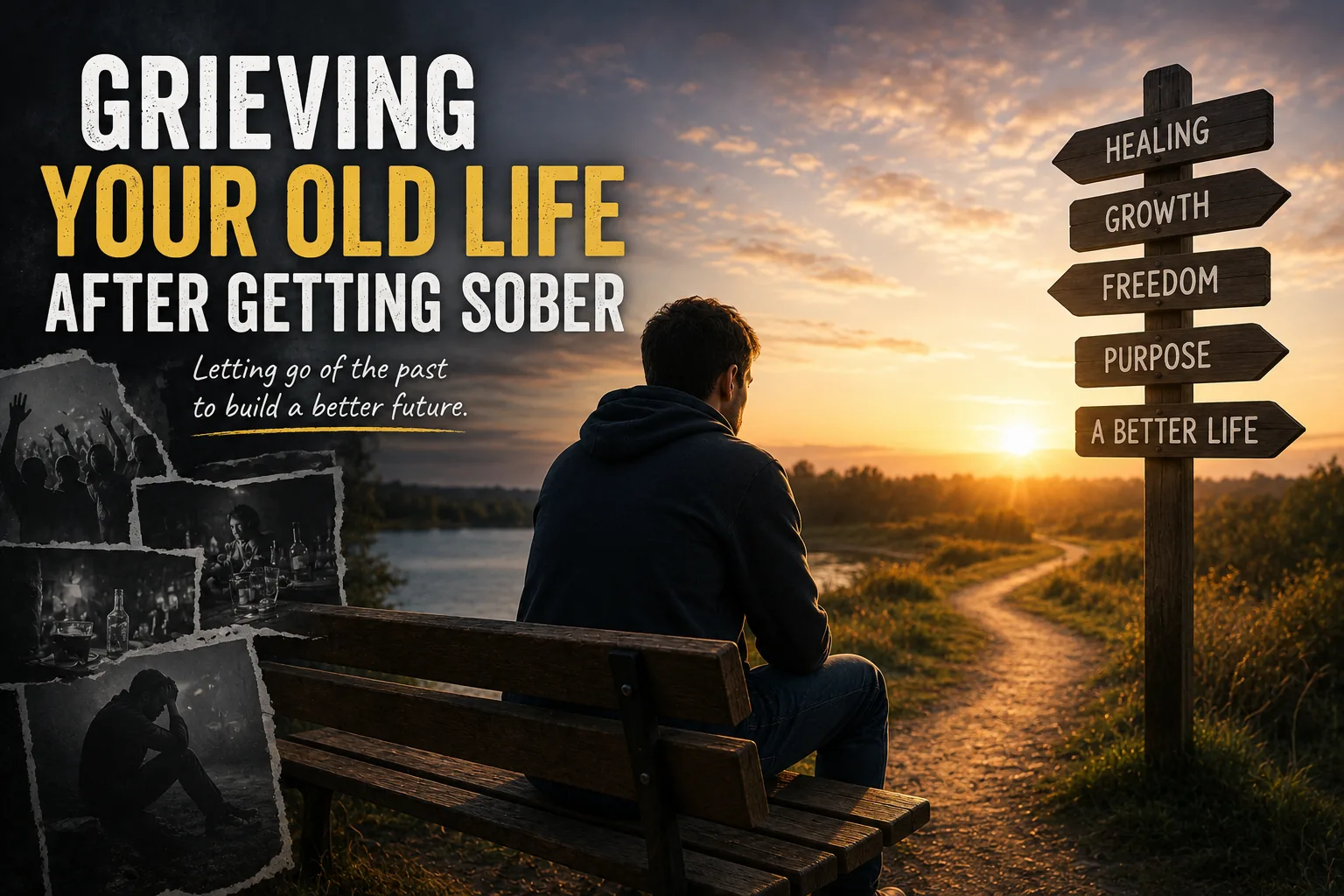


Grieving your old life after getting sober can feel confusing. You know drugs or alcohol were hurting you. You remember the arguments, lost money, broken promises, health problems, and mornings you wished you could take back.
So why do you miss it?
During early recovery, you may find yourself missing friends, parties, routines, places, relationships, and even the person you thought you were while using.
That does not mean getting sober was a mistake.
Ending substance use can create real loss. Even when something was unhealthy, it may have been familiar.
Recovery asks you to leave that familiar life before you have completely built the new one.
That space in between can feel a lot like grief.
You Are Giving Up More Than Drugs or Alcohol
Addiction can become woven into nearly every part of life.
Where you go.
Who you spend time with.
How you celebrate.
How you relax.
What you do after work.
Who you call when you are lonely.
How you handle stress.
When you get sober, many of those things change at once.
You may no longer go to the same bars.
People you used with may disappear.
A relationship may end.
Weekends suddenly have no plan.
Even certain songs, neighborhoods, or holidays may remind you of your old life.
You can know those changes are necessary and still feel sad about them.
That is one reason it can be normal to regret getting sober during difficult moments.
Regret does not always mean you want addiction back.
Sometimes you simply miss what was familiar.
You May Miss the People and the Feeling of Belonging
For many people, substance use was social.
There were friends at the bar.
People at parties.
Someone who always answered the phone.
A group that understood the routine without needing an explanation.
When you stop using, some of those relationships may no longer be safe.
Others may disappear on their own.
Suddenly, your phone is quiet.
Friday night comes and you have nowhere to go.
This can create powerful loneliness during addiction recovery.
You may begin thinking:
“At least when I was using, I had friends.”
But being surrounded by people is not always the same as being supported.
Recovery may require rebuilding your social life around relationships that are not dependent on intoxication.
That takes time.
The lonely space between old relationships and new ones can hurt, but it does not have to last forever.
You Can Miss the Excitement Without Missing the Consequences
Addiction can be chaotic.
It can also be intense.
There was always something happening.
Finding drugs.
Getting money.
Partying.
Going somewhere.
Recovering.
Fixing a problem.
Planning the next night.
Then sober life gets quieter.
You may start wondering why you are bored after getting sober.
Eventually, you may question why normal life feels boring after addiction.
That does not mean addiction was better.
Your brain and daily routine may simply have become accustomed to intensity.
The addicted brain can also form strong connections between substances and reward, excitement, relief, and pleasure.
Recovery often feels quieter because healthy life usually is quieter.
A peaceful Saturday night may initially feel empty.
One day, that same quiet night may feel safe.
Grief Can Bring Back Thoughts About Drugs
Missing your old life can bring memories of substance use with it.
You remember the people.
The music.
The places.
Then you remember using.
You may wonder why you still think about drugs after getting sober.
You might even miss drugs even though they ruined your life.
Memory can be selective.
It may show you laughing with friends without reminding you of the argument later.
It remembers the first drink but not the blackout.
It remembers relief without remembering withdrawal.
When nostalgia appears, remember the entire story.
You do not have to pretend every moment of your old life was terrible.
Some moments probably were fun.
The important question is what that lifestyle eventually cost you.
Grief becomes dangerous when remembering turns into romanticizing and romanticizing starts increasing relapse risk.
Grief, Anger, Shame, and Sadness Can Mix Together
Grief does not always look like crying.
You may become angry.
Restless.
Irritable.
Anxious.
Emotionally numb.
You may discover why emotions feel so intense after getting sober as feelings that were previously avoided or numbed begin surfacing.
That is why learning to handle emotions without drugs or alcohol is such an important part of recovery.
Grief may also be mixed with regret.
Once sober, you may think about years you lost or people you hurt.
Learning how to deal with shame and regret after addiction can prevent grief from becoming endless self-punishment.
Sometimes other people move forward before you do.
You may reach a point where everyone forgives you except yourself.
Eventually, recovery may require learning how to forgive yourself after addiction.
Forgiveness does not erase your past.
It allows you to build something beyond it.
You Are Not Losing Your Life — You Are Building Another One
Grieving your old life does not mean you should go back to it.
It means something familiar ended.
Now something new has to be built.
Start small.
Create a new weekend routine.
Reconnect with healthy friends or family.
Exercise.
Volunteer.
Attend recovery meetings.
Try hobbies.
Make plans.
Go somewhere you never associated with drinking or drugs.
Build new memories.
The sobriety timeline looks different for everyone. The life you have after several weeks sober may look nothing like the life you have after a year or several years.
At first, recovery can feel like everything is being taken away.
Later, you may realize you were making room.
Room for healthier relationships.
Room for peace.
Room for trust.
Room for purpose.
Room for a version of yourself you have not met yet.
Grieving your old life after getting sober does not mean you want addiction back. It means you are saying goodbye to something familiar while learning how to build a life that no longer requires drugs or alcohol to make it feel complete.


