



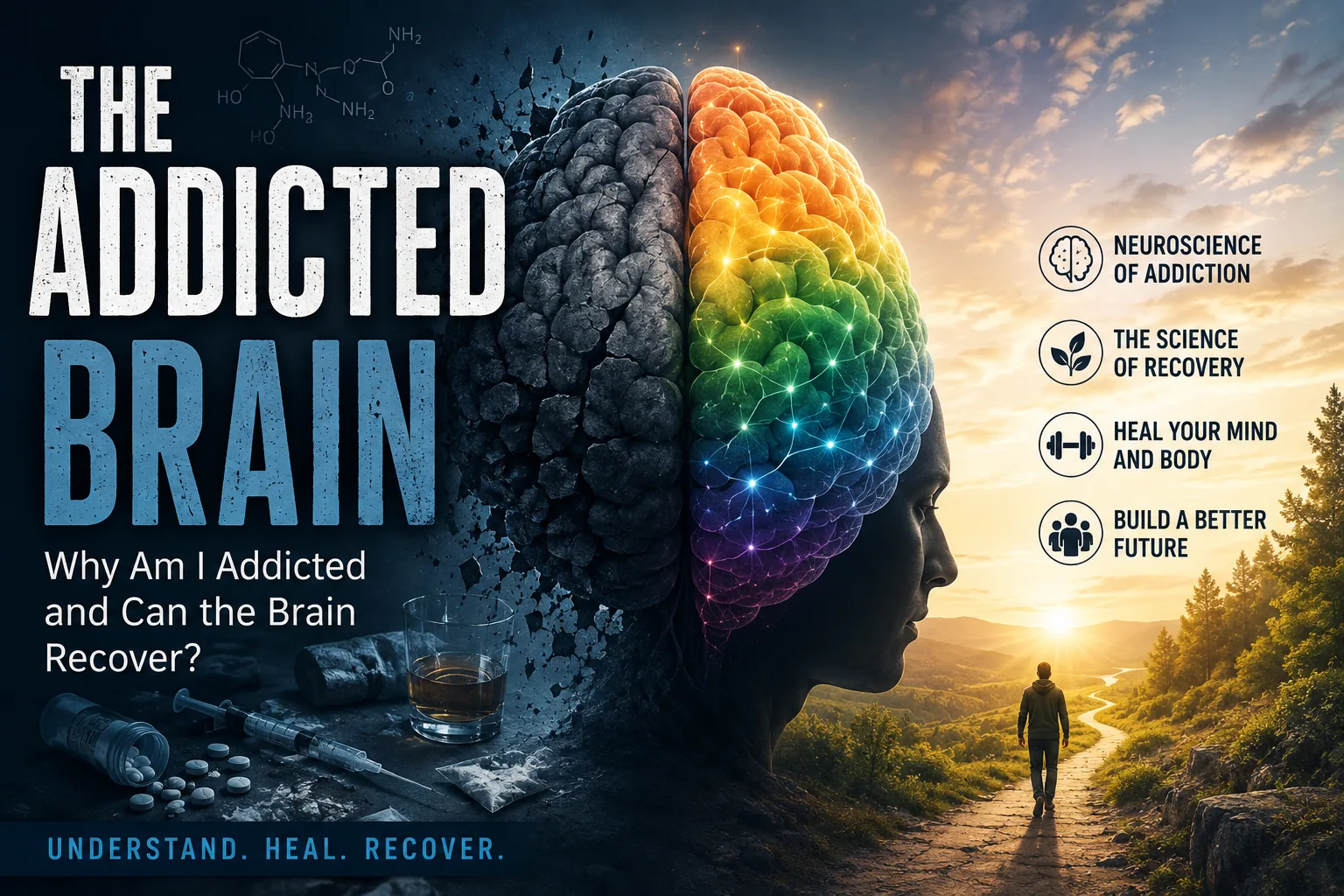


The addicted brain does not develop because someone is weak, selfish, or incapable of making good decisions. Addiction develops through a complicated interaction between the brain, repeated substance use, genetics, environment, stress, mental health, learned behavior, and life experiences.
Over time, drugs or alcohol can change the way the brain responds to reward, stress, motivation, memory, pleasure, and decision-making. A person may understand that substance use is destroying relationships, damaging health, draining finances, or putting their life at risk and still experience an overwhelming drive to continue.
That is one of the hardest things about addiction to understand from the outside.
It is also why recovery involves much more than simply removing drugs or alcohol.
The addicted brain has learned powerful patterns. Recovery gives the brain an opportunity to learn new ones.
Some changes begin within days or weeks of stopping substance use. Others may take months or years. Sleep can improve. Thinking may become clearer. Motivation can return. Normal activities can become pleasurable again. Cravings can become less intense and easier to manage.
The brain that changed during addiction can continue changing during recovery.
What Happens to the Brain During Addiction?
Your brain has systems designed to help you recognize things that are important.
Food matters.
Relationships matter.
Safety matters.
Accomplishing goals matters.
The brain reinforces these behaviors partly through chemical messengers and networks involved in reward, motivation, learning, memory, and emotion.
Addictive substances can interfere with those systems.
Some drugs produce unusually powerful or rapid reward signals. Others provide intense relief from anxiety, emotional pain, withdrawal, exhaustion, or stress.
The brain learns from these experiences.
A substance may gradually become associated with:
Pleasure.
Relief.
Energy.
Confidence.
Sleep.
Escape.
Survival.
Repeated substance use strengthens these associations.
Eventually, using may feel more important than activities that once mattered deeply.
This is why understanding how addiction changes the brain and what happens during recovery is so important. Addiction can affect reward, motivation, stress, learning, memory, impulse control, and decision-making at the same time.
That does not remove personal responsibility.
But it does explain why addiction cannot always be overcome through willpower alone.
Tolerance and dependence can deepen the cycle.
As the brain and body adapt to repeated substance exposure, someone may need more to experience the same effect. Eventually, substance use may become less about getting high and more about avoiding withdrawal, anxiety, depression, physical discomfort, or emotional distress.
The addicted brain begins organizing behavior around the substance.
Finding it.
Using it.
Recovering from it.
Thinking about it.
Avoiding withdrawal.
Promising to stop.
Then using again.
Recovery interrupts that cycle.
What Happens to the Addicted Brain When You Get Sober?
Stopping substance use is a major change for the brain.
It may have spent months or years adapting to alcohol, opioids, stimulants, benzodiazepines, or other drugs. Once those substances disappear, the brain has to adjust again.
That adjustment is not always comfortable.
Early recovery may include:
- Cravings
- Brain fog
- Poor concentration
- Memory problems
- Anxiety
- Depression
- Irritability
- Sleep disturbances
- Low motivation
- Emotional numbness
- Difficulty experiencing pleasure
People sometimes interpret these symptoms as proof that sobriety is making them worse.
Usually, the situation is more complicated.
Your brain may still be adjusting.
Our guide to how long the brain may take to heal from addiction explains why there is no universal recovery clock. Some changes may become noticeable relatively quickly, while others continue evolving throughout months or years of sustained recovery.
There is also no single moment when someone can say the brain is officially “healed.”
That is why the question can the brain fully heal after drug addiction deserves a nuanced answer.
Significant recovery is possible.
Complete reversal of every effect is not guaranteed.
The substance used, duration of use, age, sleep, nutrition, mental health, physical health, overdose history, head injuries, and other factors can all influence the outcome.
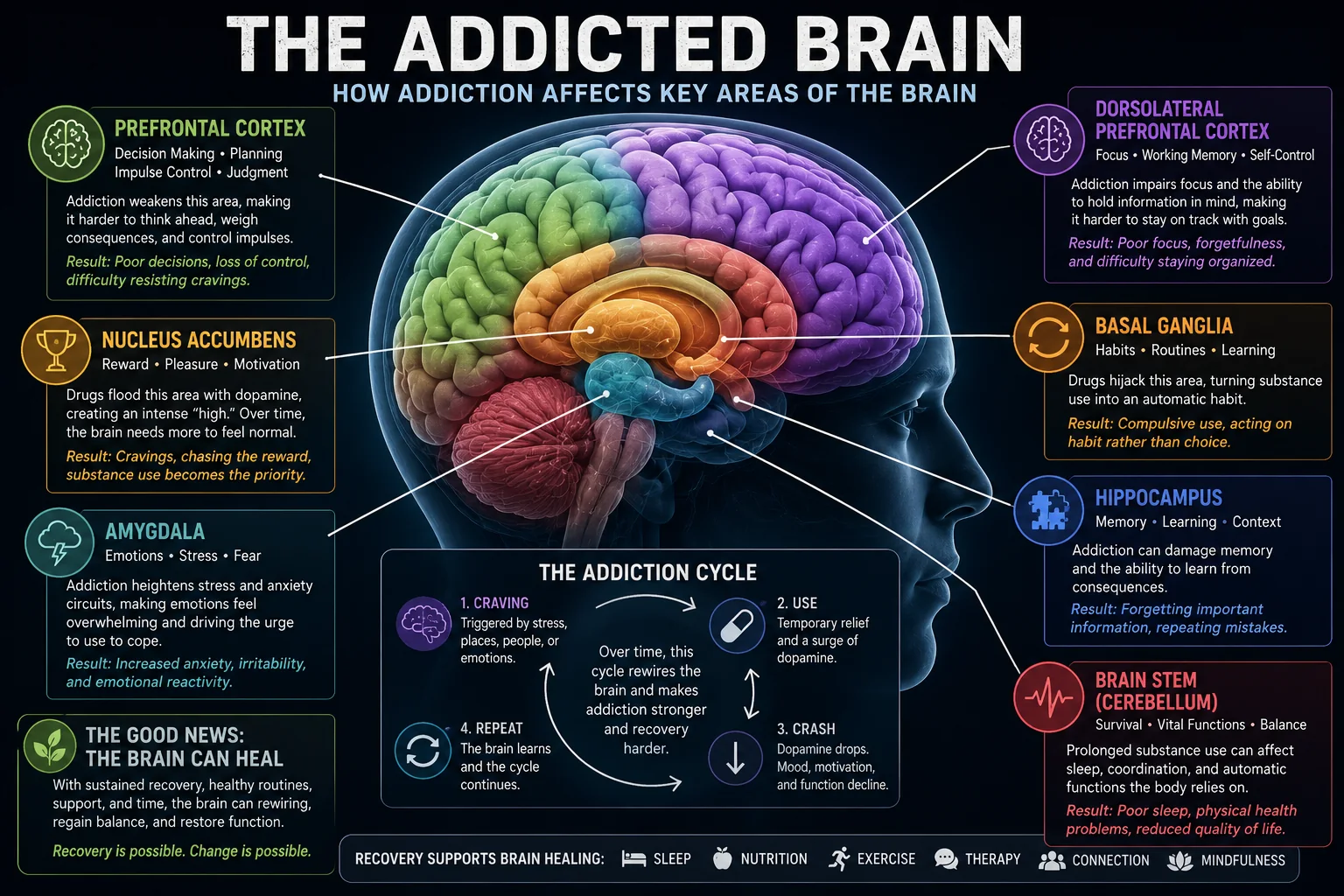
Dopamine, Pleasure and Motivation During Recovery
Dopamine receives a lot of attention in discussions about addiction.
It is often called the brain’s “pleasure chemical,” but dopamine does much more than create pleasure. It is deeply involved in learning, motivation, reinforcement, and deciding which behaviors are worth repeating.
Repeated drug use can disrupt these systems.
When someone gets sober, they may initially feel as though normal life has lost its color.
Food tastes fine.
Music plays.
People laugh.
The sun comes up.
But nothing feels particularly rewarding.
This can make early recovery frightening.
Our explanation of dopamine recovery after addiction and how long it may take looks more closely at why reward and motivation may take time to stabilize.
Why doesn’t anything feel good anymore?
This question is extremely common.
For some people, nothing feels good after getting sober because the brain is still adjusting to the absence of intense substance-related rewards.
Someone may have no desire to exercise.
They may not care about hobbies.
Socializing feels exhausting.
Achievements seem meaningless.
When the inability to experience pleasure becomes significant, it may be described as anhedonia.
Understanding anhedonia during addiction recovery can be especially important because emotional flatness can become a relapse risk.
The thought may begin:
“Nothing feels good.”
Then become:
“I felt better when I was using.”
Then:
“Maybe I could use once.”
That is how changes in the reward system can become connected to relapse.
Recovery helps create another path.
A walk.
A conversation.
A workout.
A good meal.
A sober holiday.
Finishing a project.
Keeping a promise.
Ordinary rewards may seem weak at first, but repeated healthy experiences give the brain something new to learn.
Brain Fog, Memory Problems and Low Motivation
Not every change in early recovery involves cravings.
Sometimes the biggest frustration is simply trying to think.
Brain fog can make someone feel slow, forgetful, distracted, or mentally exhausted.
You may read the same paragraph three times.
Forget what someone just told you.
Lose your train of thought.
Struggle through tasks that once seemed easy.
There are many possible reasons for this, including withdrawal, disrupted sleep, anxiety, depression, stress, poor nutrition, medication changes, and the neurological effects of prolonged substance use.
Our guide to brain fog after quitting drugs or alcohol explains why these symptoms can occur and why they do not automatically mean permanent brain damage.
Memory may also feel unreliable.
Someone might forget appointments, conversations, names, or instructions.
Learning new information can require more effort.
These memory problems during addiction recovery may improve as sleep, concentration, physical health, stress, and brain function improve.
Motivation may be another major challenge.
You know you should exercise.
You know you should answer the phone.
You know you should go to treatment.
You know you should clean the house.
But knowing and wanting are not the same thing.
Understanding why motivation can be low in early recovery helps separate low motivation from laziness.
Recovery can be exhausting.
Sleep may be poor.
The reward system may still be adjusting.
Depression or anxiety may be present.
The person may simultaneously be trying to repair relationships, finances, employment, health, and trust.
Sometimes the next healthy action has to happen before motivation appears.
Take a shower.
Walk ten minutes.
Make one phone call.
Attend one appointment.
Complete one task.
Small actions can become evidence that change is possible.
Can Addiction Permanently Damage the Brain?
Not every addiction-related brain change is permanent.
But it would also be inaccurate to say lasting neurological damage never happens.
There are situations where substance use can contribute to significant or permanent injury.
These include:
- Oxygen deprivation during overdose
- Stroke
- Traumatic brain injury
- Severe nutritional deficiencies
- Certain infections
- Prolonged heavy substance exposure
- Complications from multiple substances
Our detailed guide examines when addiction can cause permanent brain damage and when symptoms may instead reflect a brain that is still recovering.
Persistent confusion, major personality changes, severe memory loss, seizures, weakness, speech changes, or significant problems functioning should be medically evaluated.
Do not assume every neurological symptom is simply “part of getting sober.”
At the same time, do not assume every episode of brain fog means the damage is permanent.
Those are two very different things.
Alcohol and benzodiazepine withdrawal also deserve special caution. Withdrawal from these substances can become medically dangerous. Anyone at risk for severe withdrawal should seek professional medical guidance rather than attempting to detox alone.
Recovery is about protecting the brain as much as healing it.
Helping the Brain Recover: Sleep, Exercise and Daily Life
There is no supplement, detox drink, or internet “brain reset” capable of instantly reversing addiction.
Brain recovery is usually less dramatic.
It happens through repeated healthy conditions and experiences.
One of the most important is sleep.
Sleep supports memory, concentration, learning, emotional regulation, and decision-making. Unfortunately, addiction and withdrawal can seriously disrupt normal sleep patterns.
That makes learning how sleep helps the brain heal from addiction an important part of understanding recovery.
Better sleep can make other parts of recovery easier.
You think more clearly.
Your patience improves.
Stress becomes easier to tolerate.
You have more energy.
Cravings may feel more manageable.
Exercise can help too.
Physical activity does not cure addiction, but it can support mood, sleep, stress management, physical health, confidence, and daily structure.
Even walking counts.
Someone who has been inactive does not need an extreme exercise program.
Our guide to how exercise can support brain recovery after addiction explains why movement can become one useful part of a larger recovery plan.
Other basics matter too:
Eat consistently.
Stay hydrated.
Treat mental health conditions.
Take prescribed medications correctly.
Build supportive relationships.
Create structure.
Reduce unnecessary stress.
Learn coping skills.
Stay connected to treatment when needed.
And give yourself time.
Recovery Changes the Addicted Brain
The addicted brain is not frozen permanently in addiction.
That may be one of the most important things someone entering recovery can understand.
The brain learned to associate drugs or alcohol with reward, comfort, escape, energy, confidence, or relief.
Recovery creates new experiences.
Stress without using.
Celebration without drinking.
Boredom without getting high.
Pain without immediately escaping.
A difficult night survived.
A craving that passed.
A promise kept.
A relationship repaired.
A morning remembered clearly.
These experiences matter because recovery is not simply about removing a substance.
It is about building another way of living.
At first, healthy choices may feel unnatural.
Then they become familiar.
Eventually, many become normal.
That is one reason long-term recovery can feel so different from early sobriety.
Early recovery may feel like constantly fighting the addicted brain.
Long-term recovery can begin to feel like having a brain that expects something different.
Not perfection.
Not a life without stress.
Not immunity from relapse.
But a growing ability to experience stress, pleasure, relationships, responsibility, and everyday life without automatically turning toward drugs or alcohol.
Addiction changed the brain through repetition.
Recovery uses repetition too.
Every sober day creates another opportunity for the brain to learn.
Every healthy routine reinforces another pattern.
Every time someone experiences a craving and chooses not to use, the addicted brain receives new information.
The past cannot be erased.
But the brain can continue changing.
And recovery gives it something addiction never could:
the opportunity to build a healthier future.


