



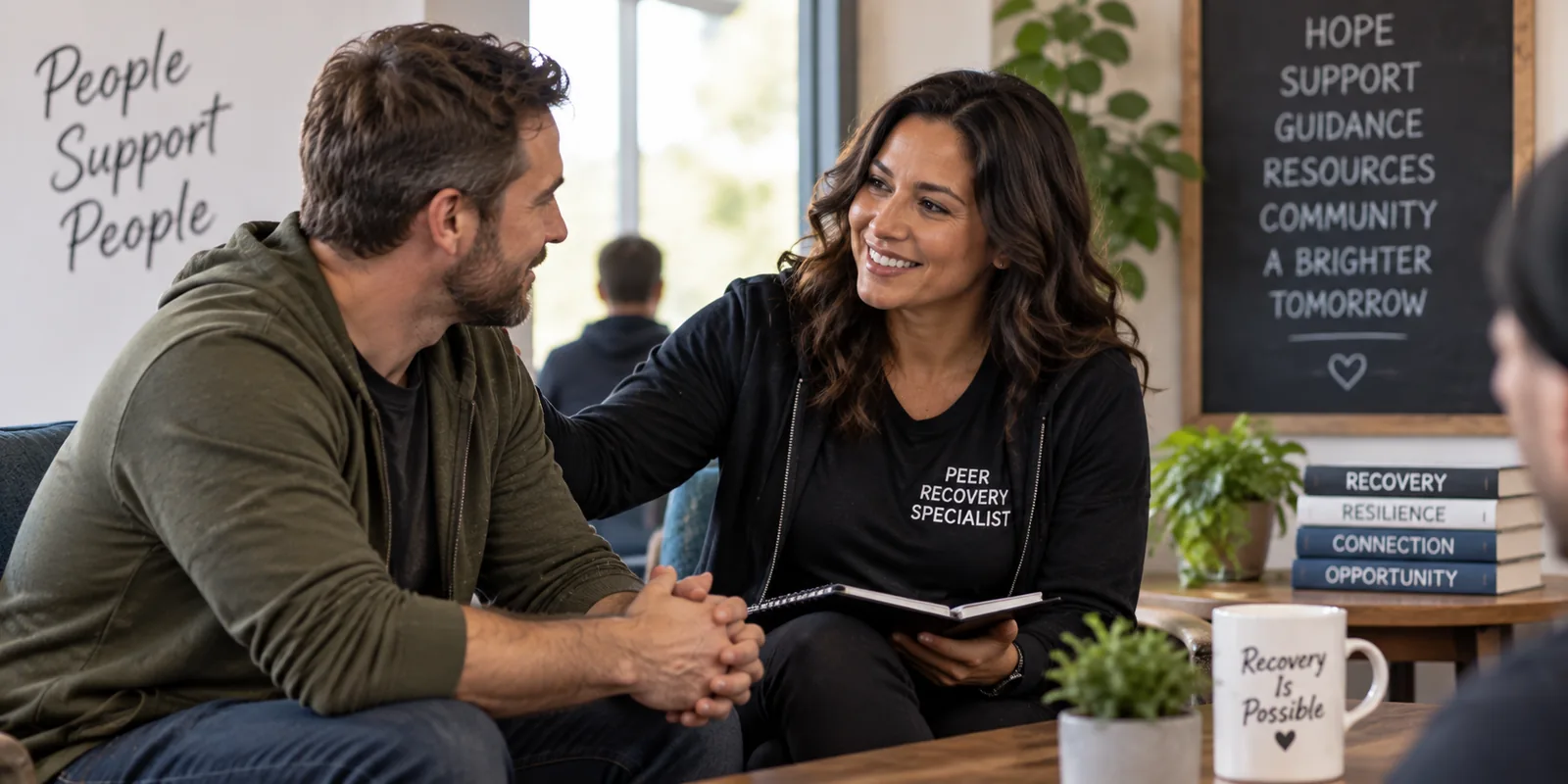

What is a peer recovery specialist? A peer recovery specialist is someone who uses personal lived experience with addiction, mental health challenges, or recovery to help other people move forward in their own recovery. Instead of approaching addiction only from a clinical perspective, peer specialists can say something incredibly powerful: I understand because I have been there too.
Peer recovery specialists may work in treatment centers, hospitals, behavioral health programs, recovery organizations, community programs, or other settings. Depending on the position and state, they may also complete specialized training or certification.
Their role is not to diagnose addiction, prescribe medication, or replace professional treatment. Instead, they provide encouragement, practical support, connection to resources, and hope.
For someone beginning addiction recovery, that connection with another person who understands the struggle can make recovery feel much less lonely.
What Does a Peer Recovery Specialist Do?
The exact responsibilities of a peer recovery specialist can vary depending on where they work.
A peer specialist may help someone identify recovery goals, locate community resources, prepare for challenges, connect with meetings, and develop a healthier daily routine.
They may also help people:
- Find recovery support groups
- Connect with treatment resources
- Build healthy routines
- Identify personal recovery goals
- Find sober activities
- Develop coping strategies
- Navigate community services
- Strengthen relationships
- Build confidence in recovery
- Create a stronger support system
Sometimes the most valuable thing a peer specialist provides is simply hope.
Early recovery can make people wonder whether life will ever feel normal again. Talking with someone who has experienced addiction and built a meaningful life afterward can make recovery feel possible rather than theoretical.
A peer specialist may also encourage someone to begin building a strong sober support network instead of depending entirely on one person for support.
How Is a Peer Recovery Specialist Different From a Sponsor?
Peer recovery specialists and sponsors can both draw from lived experience, but the roles are different.
A sponsor is traditionally associated with a 12-step recovery program. Sponsors generally help other members understand and work through the Steps.
For example, someone participating in Alcoholics Anonymous may choose another AA member as a sponsor.
Our guide explaining what an AA sponsor does explores this relationship in more detail.
Sponsorship is generally an unpaid peer relationship within a fellowship.
A peer recovery specialist, however, may work in a formal behavioral health or recovery-support role. The person may receive training and work for an organization that provides recovery services.
Peer specialists can also support people who do not participate in the 12 Steps.
Someone may use SMART Recovery, therapy, medication, community programs, or another recovery pathway and still work with a peer specialist.
Peer Recovery Specialist vs. Recovery Coach
The terms peer recovery specialist and recovery coach are sometimes used in similar ways, and specific responsibilities can differ between organizations.
Both roles may involve goal-setting, accountability, encouragement, resource navigation, and helping someone build a sustainable life in recovery.
However, peer recovery specialist positions often emphasize lived experience as a central qualification. Some positions also require specific peer-support training or certification.
Recovery coaching may have a broader focus on identifying goals and helping someone take practical steps toward them.
Our comparison of a recovery coach vs. sponsor can help clarify how different recovery-support roles fit together.
Someone could potentially have several people supporting their recovery.
A therapist might address mental health concerns.
A sponsor might help with the Steps.
A recovery coach might help establish goals.
A peer specialist might use shared experience to provide encouragement, resources, and practical support.
Recovery does not have to depend on one person.
Can Peer Specialists Help You Find Recovery Support?
Yes. Connecting people with recovery communities can be an important part of peer support.
A specialist may help someone explore how to find the right recovery meeting rather than assuming everyone must attend the same type of group.
One person may feel comfortable in AA.
Another may prefer SMART Recovery.
Someone looking for a Christian-centered recovery community may connect with Celebrate Recovery and faith-based addiction support.
Others may want secular alternatives to AA.
Even location does not have to prevent someone from getting support. Online recovery meetings can make peer communities accessible to people who have transportation problems, live in rural areas, work unusual schedules, or feel uncomfortable attending their first meeting in person.
A good peer specialist should support an individual’s recovery goals rather than insist that everyone recover in exactly the same way.
Why Lived Experience Can Matter in Recovery
Addiction can make people feel ashamed, misunderstood, and isolated.
Someone may have heard advice from doctors, counselors, relatives, or friends for years and still feel that nobody truly understands what addiction feels like from the inside.
A peer recovery specialist can help bridge that gap.
They may understand the fear of early sobriety, the difficulty of repairing damaged relationships, the frustration of cravings, or the challenge of rebuilding a life after substance use.
That shared experience can help build trust.
It is important, however, to understand the limits of peer support. A peer recovery specialist does not replace medical detox, psychiatric care, therapy, or professional addiction treatment when those services are needed.
Instead, peer support can become another layer of a comprehensive recovery system.
The question “What is a peer recovery specialist?” has a simple answer at its core: it is someone who uses experience, training, connection, and hope to help another person move forward.
Recovery can feel impossible when you are standing at the beginning.
Sometimes meeting someone who has already walked farther down that road is exactly what helps you believe that you can keep walking too.


