



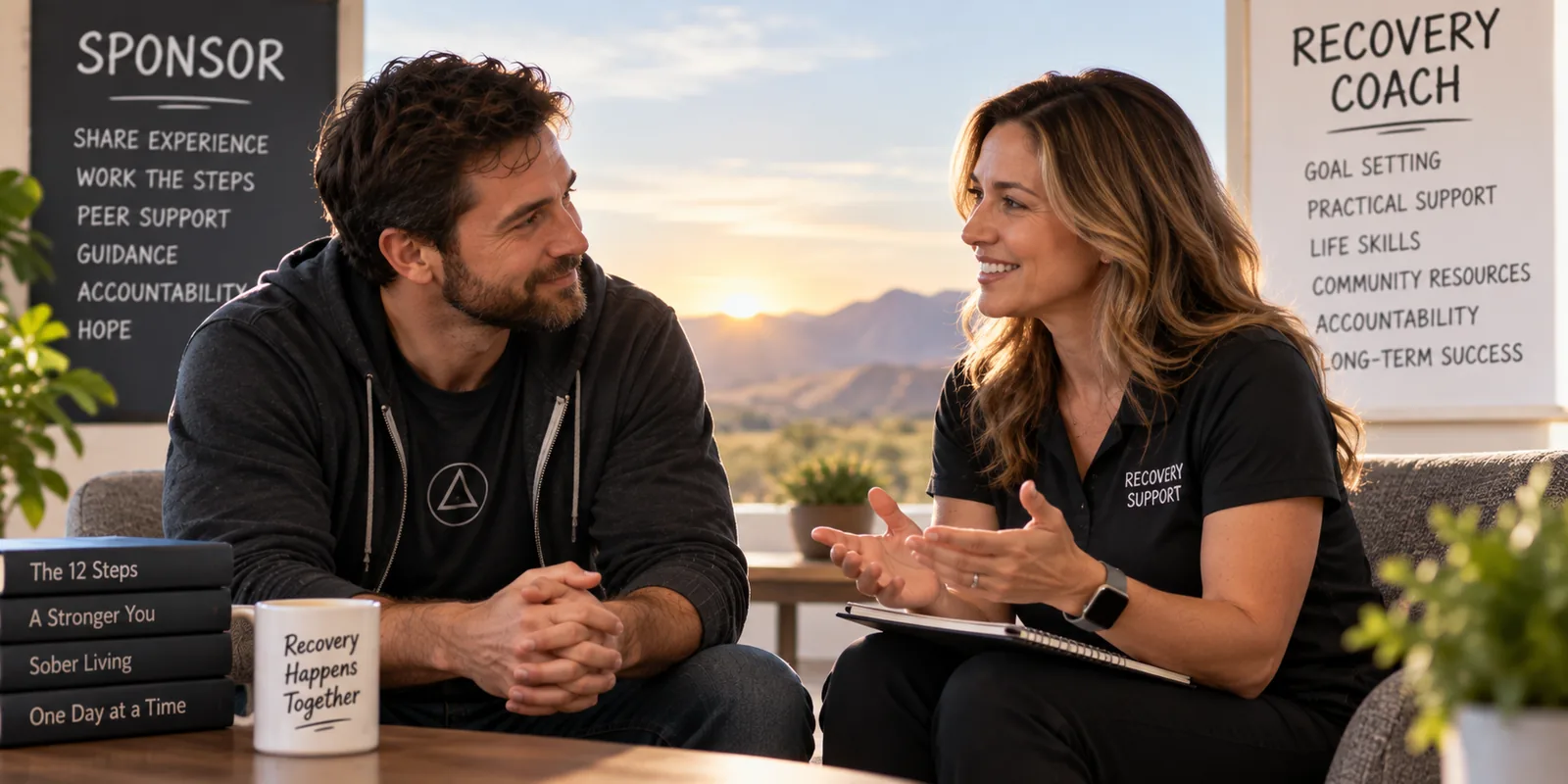


If you are building a support system after treatment or during early sobriety, you may hear people recommend both a recovery coach and a sponsor. That raises an important question: recovery coach vs. sponsor—what’s the difference?
Both can help someone navigate addiction recovery, but they serve different roles.
A sponsor is traditionally a peer within a 12-Step fellowship who helps another member work through the Steps and apply the program to everyday life. A recovery coach usually provides broader, goal-focused support that may include accountability, problem-solving, connecting with resources, and helping someone build a stable recovery lifestyle.
Neither is a therapist, doctor, or replacement for professional addiction treatment.
Understanding the difference can help you decide whether you need a sponsor, a recovery coach, or possibly both.
What Does a Sponsor Do?
Sponsorship is most closely associated with 12-Step recovery programs, particularly Alcoholics Anonymous and Narcotics Anonymous.
A sponsor is usually another person in recovery who has experience working the Steps and is willing to guide someone else through that process.
If you participate in Alcoholics Anonymous, your sponsor may help you understand AA literature, work through each Step, discuss challenges in sobriety, and recognize behaviors that could threaten your recovery.
Our guide to what an AA sponsor does explains that relationship in greater detail.
Sponsors generally are not paid. The relationship is based on peer-to-peer support and the principle of one person in recovery helping another.
Someone attending Narcotics Anonymous may develop a similar relationship with a sponsor.
For people who choose a Christian recovery pathway, Celebrate Recovery and faith-based addiction support may provide another community-centered approach to recovery.
What Does a Recovery Coach Do?
A recovery coach usually has a broader role.
Rather than focusing primarily on working the Steps, a coach may help someone identify recovery goals and deal with practical barriers that could threaten sobriety.
That might include:
- Creating healthy daily routines
- Finding recovery meetings
- Building accountability
- Returning to work or school
- Developing healthier relationships
- Finding sober activities
- Connecting with community resources
- Preparing for difficult situations
- Strengthening a recovery plan
A recovery coach may work with someone who attends AA, but the client does not necessarily have to participate in a 12-Step program.
That distinction is important.
Someone who chooses SMART Recovery, another secular recovery community, or a completely different approach may still benefit from recovery coaching.
A coach can help turn the idea of sobriety into practical daily actions.
Recovery Coach vs. Sponsor: The Biggest Differences
The biggest difference between a recovery coach and a sponsor is the structure and purpose of the relationship.
Sponsors are usually connected to 12-Step programs.
Recovery coaches may work with people following many different recovery pathways.
Sponsors generally focus on the Steps and shared recovery experience.
Recovery coaches may focus more broadly on goals, routines, resources, accountability, and everyday challenges.
Sponsors are usually volunteers.
Recovery coaching may be provided professionally and may involve payment.
Sponsors speak primarily from personal experience.
Recovery coaches may have training in coaching methods, recovery support, boundaries, and community resources.
Neither role should replace professional medical or mental health treatment.
A coach or sponsor may encourage you to seek professional help, but they should not diagnose mental illness, prescribe medication, or attempt to manage dangerous withdrawal symptoms.
How Is a Recovery Coach Different From a Peer Recovery Specialist?
Another term you may hear is peer recovery specialist.
These roles can overlap, but they are not always identical.
A peer recovery specialist typically uses lived experience with addiction or recovery to support other people. Peer specialists may work within treatment programs, hospitals, community organizations, behavioral health agencies, or recovery centers.
Recovery coaches may also have lived experience, but coaching often emphasizes helping someone establish goals and take specific actions toward them.
A sponsor is different from both because sponsorship traditionally exists within a mutual-support fellowship rather than as a professional service.
All three roles can potentially contribute something valuable.
The question is what kind of help you need.
Do You Need a Sponsor, Recovery Coach, or Both?
You do not necessarily have to choose one.
Someone attending AA might work with a sponsor on the Steps while also having a recovery coach help with employment, routines, relationships, and other life goals.
Another person may not participate in AA at all.
It is possible to recover without following the 12 Steps, which means someone might work with a recovery coach while attending SMART Recovery, therapy, or another peer-support program.
If sponsorship does appeal to you, learning how to find a sponsor in addiction recovery can help you identify someone whose recovery experience and communication style fit your needs.
What matters most is avoiding isolation.
Your sponsor or coach should be part of a larger sober support network, not the only person standing between you and a return to substance use.
Build the Support System That Works for You
When comparing a recovery coach vs. sponsor, neither should automatically be considered better.
They solve different problems.
A sponsor may be ideal if you want to work through the 12 Steps with someone who has already walked that path.
A recovery coach may be helpful if you want broader support with goals, accountability, routines, resources, and rebuilding your life.
You may benefit from both.
You may also build recovery through meetings, professional treatment, therapy, medication when appropriate, family support, sober friends, or other forms of addiction recovery support.
The strongest recovery systems rarely depend on one person.
Build connections with people who encourage your sobriety, challenge unhealthy patterns, answer when you reach out, and help you continue moving forward.
A sponsor can share the path they took.
A recovery coach can help you plan your next steps.
Ultimately, however, recovery becomes yours to build.


