



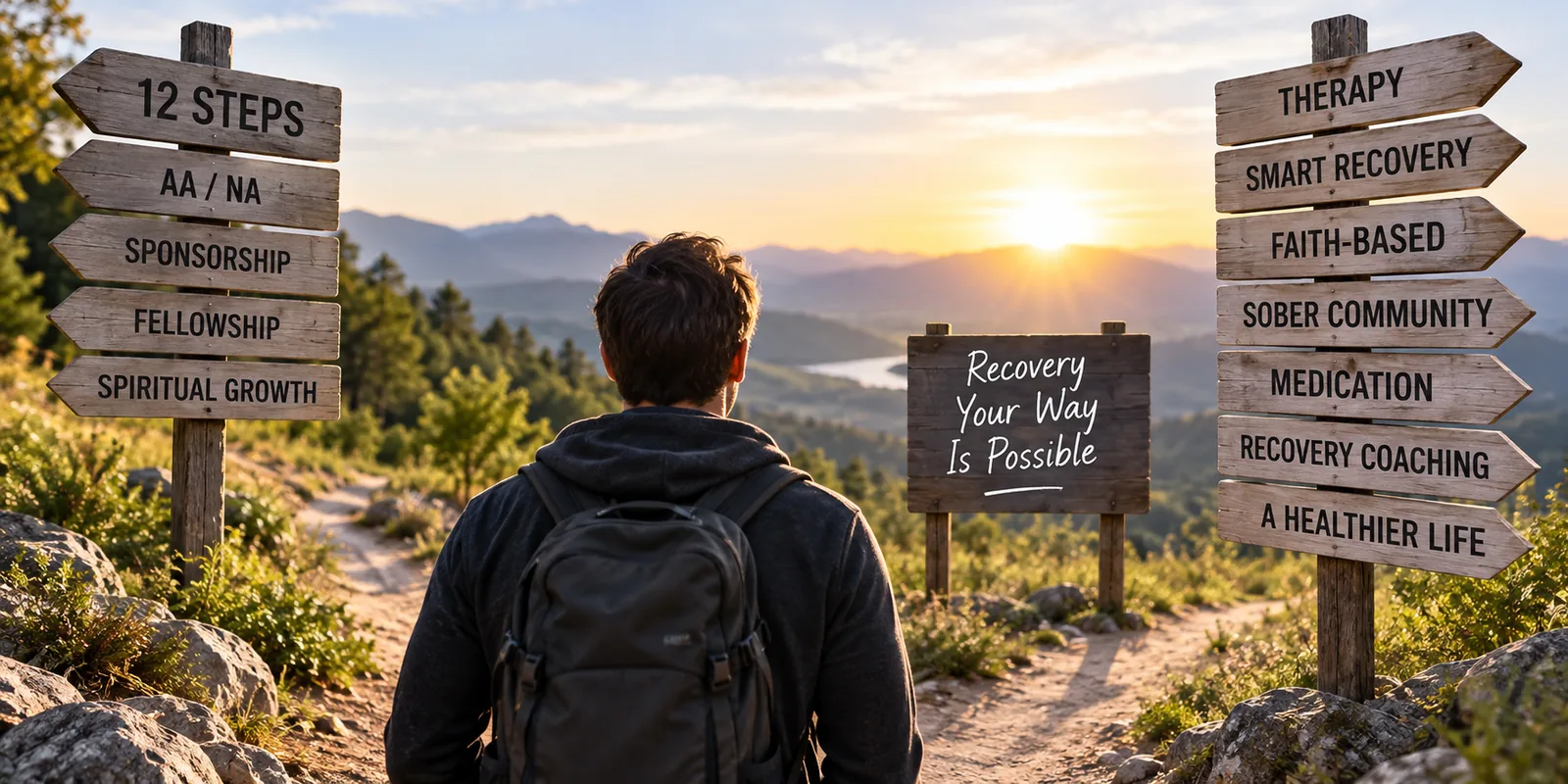


Can you recover from addiction without the 12 Steps? Yes. Twelve-Step programs have helped millions of people find sobriety, community, and purpose, but they are not the only way to recover from drug or alcohol addiction.
Programs such as Alcoholics Anonymous and Narcotics Anonymous remain some of the best-known recovery communities in the world. For many people, the 12-step recovery model provides exactly the structure and fellowship they need.
Other people connect more strongly with therapy, SMART Recovery, medication, peer support, recovery coaching, sober living, faith-based programs, or combinations of several approaches.
Recovery is not about following one specific formula. It is about finding effective support, addressing the reasons substance use became part of your life, and building habits that make long-term sobriety possible.
Why the 12 Steps Work for Some People
Traditional 12-Step programs emphasize acceptance, personal inventory, making amends, spiritual growth, helping others, and regular connection with a recovery community.
Alcoholics Anonymous focuses primarily on alcohol, while Narcotics Anonymous provides a similar fellowship for people recovering from drug addiction.
Many people appreciate the consistency these programs provide. Meetings are available in communities around the world, members can develop relationships with others in recovery, and sponsorship can create individual accountability.
For people who want a distinctly Christian approach to recovery, Celebrate Recovery combines a structured recovery process with Christian teachings and faith-based support.
But spirituality and the traditional language of the Steps do not connect with everyone.
That does not mean recovery is out of reach.
What Are the Alternatives to 12-Step Recovery?
There are many ways to build a recovery program without following the traditional Steps.
One of the best-known options is SMART Recovery. SMART stands for Self-Management and Recovery Training. Rather than following the 12 Steps, the program focuses on motivation, coping with urges, managing thoughts and behaviors, and creating a balanced life.
Our comparison of AA and SMART Recovery explains how these approaches differ.
People who specifically want a nonreligious approach can also explore secular alternatives to AA.
Professional therapy is another option. Cognitive behavioral therapy and other evidence-based approaches can help people recognize triggers, challenge unhealthy thinking patterns, and learn better ways to deal with stress.
For some substance use disorders, medication can also play an important role in treatment and relapse prevention.
Recovery does not have to be one program. Someone might use therapy, medication, SMART Recovery, exercise, family support, and sober friends at the same time.
Support Still Matters Without the 12 Steps
Choosing not to participate in a 12-Step program does not mean trying to recover alone.
This distinction matters.
Addiction often creates isolation. People may withdraw from family, lose healthy friendships, or spend most of their time around others who drink or use drugs.
Recovery usually requires rebuilding connection.
Creating a strong sober support network can give you people to call when cravings, stress, loneliness, or difficult emotions appear.
Your support system might include:
- Family members
- Sober friends
- Therapists
- Treatment professionals
- Recovery coaches
- Peer recovery specialists
- Support groups
- People you meet in sober living
Some people work with a sponsor, while others prefer professional or peer-based support. Understanding the difference between a recovery coach and a sponsor can help you decide which type of relationship fits your recovery.
A peer recovery specialist can also provide support informed by lived experience with addiction and recovery.
The specific title matters less than having people who notice when you begin pulling away from recovery.
Can You Stay Sober Without Going to Meetings?
Some people maintain sobriety without regularly attending recovery meetings.
However, that does not mean meetings have no value.
Support groups offer something that can be difficult to find elsewhere: a room full of people who understand addiction because they have experienced it themselves.
If traditional meetings are uncomfortable or difficult to attend, online recovery meetings may provide another option.
You may also need to try several groups. Finding the right recovery meeting can take time because groups differ in philosophy, personalities, age ranges, size, and atmosphere.
Even within the same recovery organization, two meetings can feel completely different.
Do not mistake “I did not like that meeting” for “meetings cannot help me.”
Explore your options.
What Does Recovery Without the 12 Steps Look Like?
Recovery without the Steps still requires work.
Stopping substance use is only one part of the process.
You may need to learn how to handle anxiety without drinking, manage anger without using drugs, rebuild damaged relationships, create new friendships, improve your physical health, find meaningful activities, and recognize relapse warning signs before they become dangerous.
Someone who used substances to cope with loneliness needs connection.
Someone who drank to handle stress needs new ways to manage stress.
Someone whose entire social life revolved around drugs may need to build an entirely new community.
This is why successful addiction recovery is usually much bigger than simply avoiding substances.
Recovery involves creating a life that supports sobriety.
There Is More Than One Path to Recovery
So, can you recover from addiction without the 12 Steps? Absolutely.
The 12 Steps can be incredibly valuable, but they are a pathway—not the only pathway.
You might find recovery through SMART Recovery, professional treatment, therapy, medication, peer support, recovery coaching, faith, sober living, community groups, or a combination of several approaches.
You might even begin without the Steps and later decide that an AA or NA meeting offers something useful.
Your recovery can evolve.
What matters is whether the approach you choose helps you remain connected, manage cravings, address the underlying problems connected to addiction, and continue moving toward a healthier life.
There is no prize for recovering exactly like someone else.
The goal is to find what helps you stay sober, stay connected, and build a life worth protecting.


