



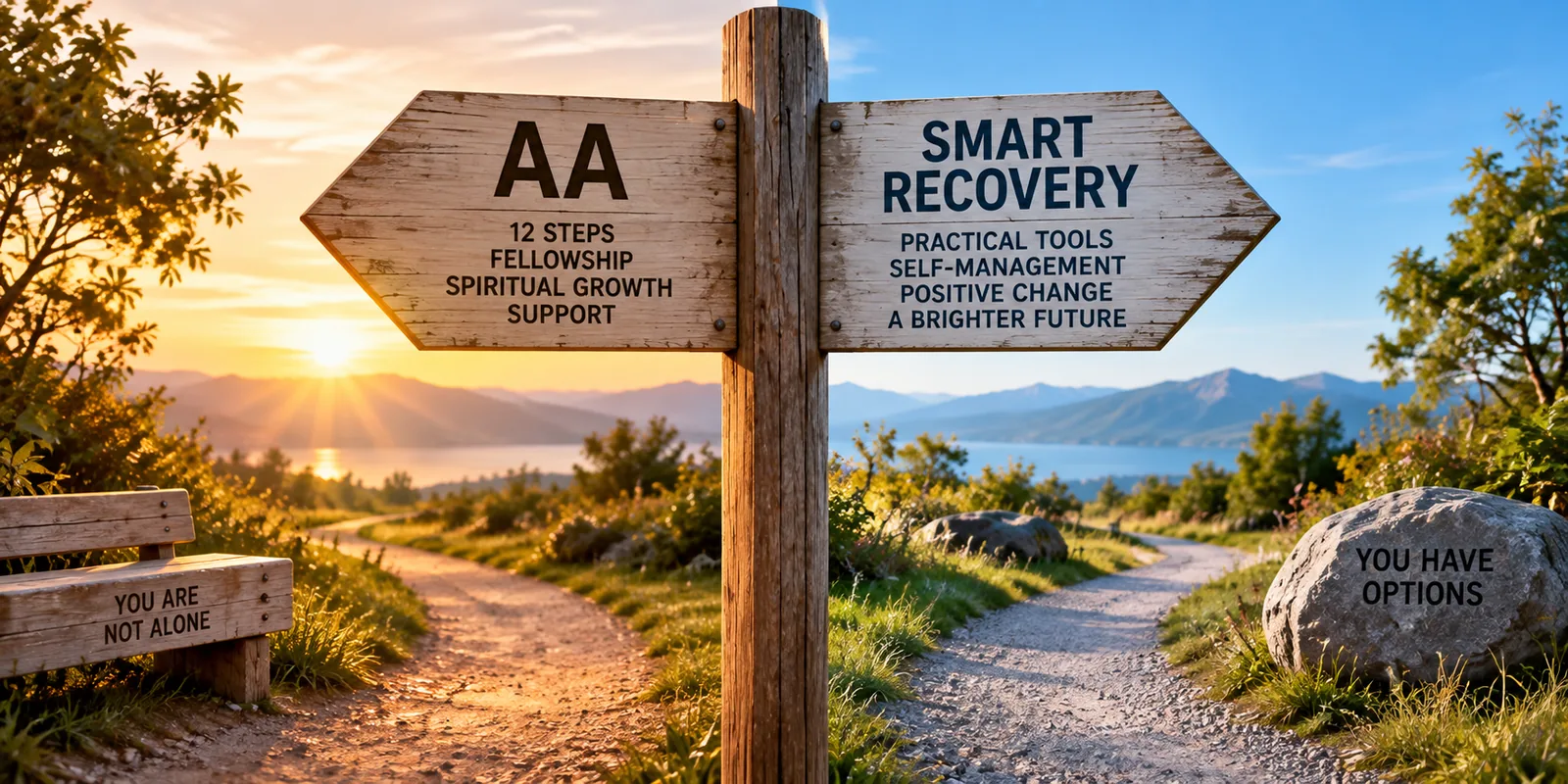


If you are looking for help with addiction, you may eventually compare AA vs. SMART Recovery. Both programs bring people together around a common goal: stopping harmful substance use and building a healthier life. However, they approach recovery very differently.
Alcoholics Anonymous follows the traditional 12-Step model and places strong emphasis on fellowship, personal reflection, spiritual principles, and helping others. SMART Recovery uses a more secular approach based on self-management, behavior change, and practical coping strategies.
Neither approach is automatically better for everyone. The right choice depends on your beliefs, needs, personality, and what keeps you actively engaged in recovery.
What Is Alcoholics Anonymous?
Alcoholics Anonymous, commonly called AA, is one of the best-known mutual-support programs for people who want to stop drinking.
AA follows a 12-step recovery program built around admitting that alcohol has become unmanageable, examining past behavior, making changes, repairing relationships when appropriate, and helping other people in recovery.
Meetings generally involve members sharing their experiences with alcohol, sobriety, setbacks, and personal growth. Members are not required to speak, especially when attending for the first time. If you are nervous about walking into a meeting, learning what happens at your first AA meeting can make the experience less intimidating.
AA also places significant emphasis on fellowship. People often build relationships with other members who understand what addiction and recovery feel like firsthand.
Many members choose to work with a sponsor. An AA sponsor is generally a more experienced member who provides guidance through the Steps and offers peer support during recovery.
What Is SMART Recovery?
SMART stands for Self-Management and Recovery Training.
Unlike AA, SMART Recovery does not use the 12 Steps. It is generally described as a secular program and focuses heavily on changing thoughts, behaviors, and responses to cravings.
SMART Recovery uses a four-point approach centered around building motivation, coping with urges, managing thoughts and behaviors, and creating a balanced life.
Rather than describing addiction through the traditional language used in many 12-Step groups, SMART encourages participants to examine the behaviors surrounding substance use and develop practical strategies for changing them.
That distinction can make SMART appealing to people looking for secular alternatives to AA or to people who prefer a recovery program without a spiritual framework.
Meetings typically include discussion and problem-solving. Participants may talk through situations they are facing and explore strategies that can help them respond differently.
AA vs. SMART Recovery: The Biggest Differences
The biggest difference between AA and SMART Recovery is their overall philosophy.
AA follows the 12 Steps.
SMART Recovery follows its four-point program.
AA includes spiritual concepts.
SMART Recovery is secular and does not require belief in God or a higher power.
AA emphasizes surrender and acceptance.
SMART emphasizes self-management and personal empowerment.
AA commonly uses sponsors.
SMART does not use sponsorship in the traditional AA sense.
AA meetings often focus on sharing personal experiences.
SMART meetings tend to focus more directly on discussion, problem-solving, and coping techniques.
Both programs, however, offer something extremely important: connection with other people who understand addiction.
You do not necessarily need to accept every part of either program to benefit from recovery support. Some people even attend more than one type of meeting.
Do You Need the 12 Steps to Recover?
No single recovery model works for everyone.
Some people strongly identify with the Steps and continue attending AA for decades. Others struggle with the spiritual language or simply prefer another approach.
It is possible to recover from addiction without the 12 Steps. Recovery may include SMART Recovery, professional treatment, therapy, medication when appropriate, peer support, sober living, recovery coaching, or a combination of resources.
Similarly, you do not necessarily have to attend AA to stay sober.
What can become dangerous is assuming that rejecting one program means you must recover completely alone.
Isolation can make addiction harder to manage. Having people who notice changes in your behavior, listen when you are struggling, and encourage healthy decisions can make an enormous difference.
Building a strong sober support network may include friends, relatives, counselors, sponsors, peers, recovery coaches, and support-group members.
Which Recovery Meeting Is Right for You?
You do not have to make a lifelong decision before attending your first meeting.
Try AA.
Try SMART Recovery.
Attend several meetings before deciding whether a program fits. Groups can have very different personalities, even when they belong to the same organization.
You can also explore online recovery meetings if transportation, anxiety, work, childcare, or location makes attending in person difficult.
Most importantly, pay attention to what happens after the meeting.
Do you feel supported?
Did you learn something useful?
Do you want to return?
Are you becoming more connected rather than more isolated?
Our guide to finding the right recovery meeting can help you evaluate different options without assuming that your first meeting represents every recovery group.
AA vs. SMART Recovery: There Is No Single Right Path
When comparing AA vs. SMART Recovery, the biggest mistake may be assuming that everyone must recover the same way.
AA offers the tradition, fellowship, sponsorship, and structure of the 12 Steps. SMART Recovery offers a secular, self-management approach focused on practical strategies for changing behavior.
Both can provide community and accountability.
Some people find exactly what they need in AA. Others feel more comfortable in SMART Recovery. Still others combine meetings with therapy, treatment, medication, sober living, or other forms of addiction recovery support.
Recovery is not about proving which program is best.
It is about finding the people, tools, routines, and support that help you stop using substances and create a life you genuinely want to protect.


