



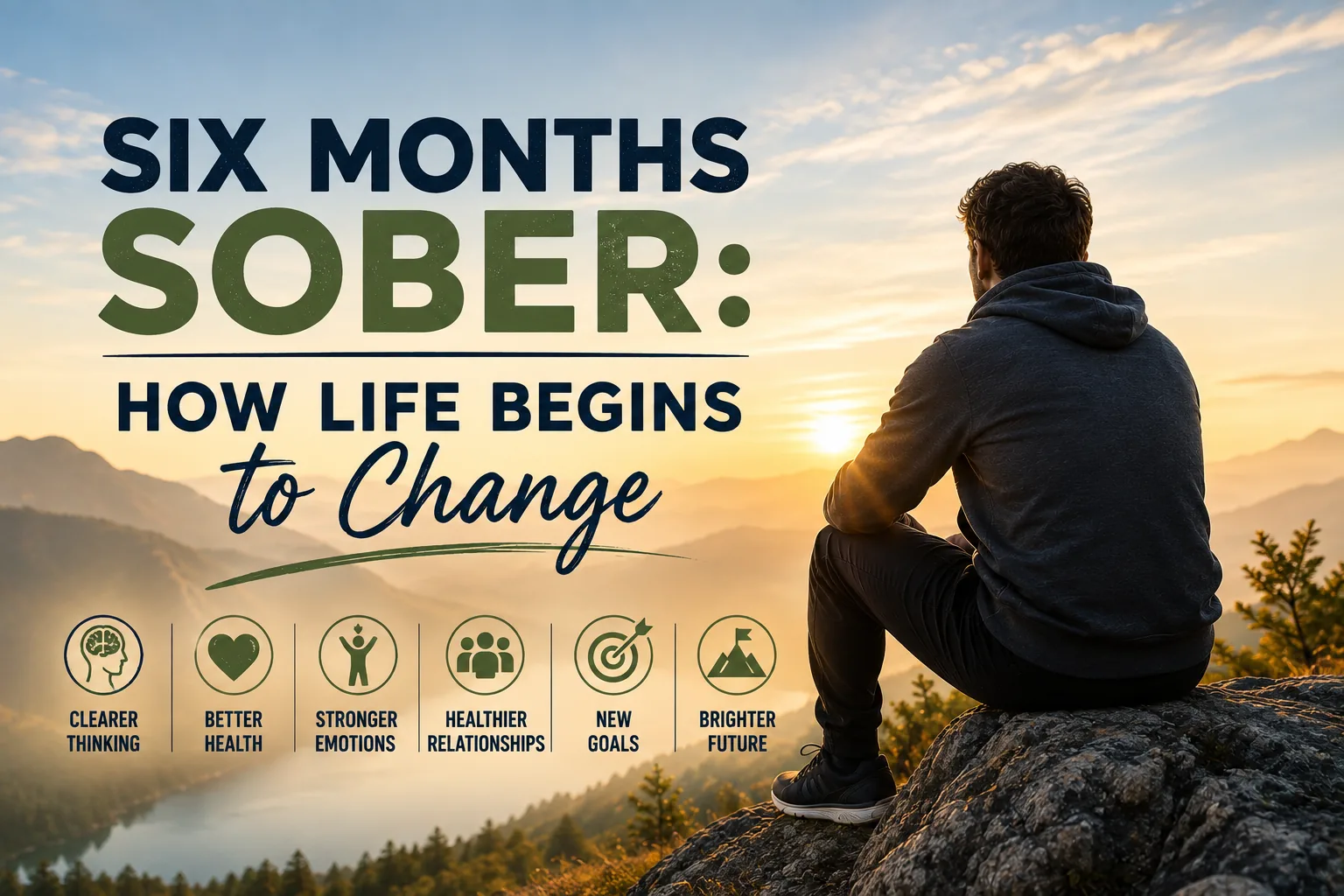


Reaching six months sober is a major milestone in addiction recovery. By this point, many people have moved beyond the most intense part of withdrawal and early stabilization. Life may begin to feel more predictable, relationships may start improving, and healthy routines can become easier to maintain.
But six months sober does not mean everything is fixed.
Some people feel stronger, clearer, and more hopeful than they have in years. Others are still dealing with anxiety, low motivation, sleep problems, cravings, damaged relationships, or the consequences of addiction.
Both experiences can be normal.
Recovery does not happen on a perfect schedule.
What matters is that six months gives your brain, body, and daily life more time to adjust to living without drugs or alcohol.
What Changes Physically After Six Months Sober?
By six months, many people notice physical improvements that were difficult to imagine during active addiction.
Depending on the substance used, health history, sleep, diet, and other factors, changes may include:
- More consistent sleep
- Better appetite
- More stable energy
- Improved exercise tolerance
- Better concentration
- Fewer hangovers or withdrawal symptoms
- Improved digestion
- Healthier daily routines
- Better hydration
- Improved physical appearance
Someone who once spent mornings feeling sick or exhausted may now wake up and begin the day normally.
That can feel like getting part of your life back.
For people recovering from alcohol misuse, the body has had six months without repeated alcohol exposure. This may give the liver, nervous system, digestive system, and other organs time to recover from some alcohol-related effects.
However, sobriety does not automatically reverse every health problem.
Some conditions may take much longer to improve, and others may require medical treatment.
Recovery should include taking care of your health, not just avoiding substances.
Your Brain May Feel Clearer
During the first 30 days sober, brain fog, poor concentration, irritability, or low motivation can be common.
At 90 days sober or 100 days sober, many people begin noticing clearer thinking.
By six months, some of those improvements may feel more established.
You might notice that you can:
Think through decisions more carefully.
Remember appointments.
Focus longer.
Handle frustration without immediately reacting.
Plan for the future.
Complete work or school tasks more consistently.
Repeated alcohol or drug use can affect brain systems involved in reward, motivation, stress, memory, and decision-making.
Those systems need time to adjust.
Six months can be an important period of healing, but brain recovery may continue much longer.
You may still have days when motivation disappears or emotions feel overwhelming.
That does not mean the progress is gone.
Your Emotions May Feel More Manageable
One of the biggest changes after six months sober may be how you handle emotions.
In early recovery, everything can feel intense.
Anger.
Sadness.
Anxiety.
Guilt.
Loneliness.
Even happiness can feel unfamiliar.
By six months, you may have had enough practice to recognize feelings without immediately trying to escape them.
Instead of drinking after a bad day, you might exercise.
Instead of using drugs during an argument, you may call someone in your recovery support system.
Instead of isolating when you feel depressed, you may attend counseling or a meeting.
That is what emotional recovery can look like.
The emotions still happen.
Your response begins changing.
Relationships May Begin to Feel Different
Six months of consistent behavior can start rebuilding trust.
Family members may notice that you are more dependable.
You show up.
You answer the phone.
You keep plans.
You tell the truth.
You handle responsibilities.
Those ordinary behaviors can mean a lot to people who experienced years of instability during addiction.
But some relationships may still be damaged.
A loved one may not trust you yet.
A partner may still be angry.
A parent may still be cautious.
That can hurt.
Try not to demand forgiveness on your timeline.
Trust is built through consistency.
Six months of changed behavior is meaningful.
A year is even more meaningful.
Time gives people a chance to see that recovery is becoming part of your life.
Cravings Can Still Happen
Many people assume that after six months, cravings should be gone.
Not necessarily.
Cravings may become less frequent or intense, but triggers can still appear unexpectedly.
Stress.
A familiar neighborhood.
A celebration.
A breakup.
An old friend.
A song.
Even success can trigger thoughts about drinking or using.
You may think:
“I have been sober six months. I can probably control it now.”
That thought can be dangerous.
This is why your relapse prevention plan still matters.
Know your triggers.
Stay connected to supportive people.
Pay attention if you begin isolating, skipping treatment, romanticizing substance use, or returning to old habits.
Feeling better is a reason to keep doing what works, not a reason to stop.
Your Daily Routine May Become Your Normal Life
At first, creating a daily routine in addiction recovery can feel forced.
Wake up.
Eat.
Exercise.
Go to treatment.
Attend meetings.
Call someone.
Sleep.
After six months, some of these things may simply feel normal.
That is a big change.
Healthy routines become part of your recovery capital.
You may have stable housing.
A job.
A few sober friends.
A counselor.
A better relationship with family.
Savings.
Transportation.
A hobby.
Purpose.
Every one of these gives recovery more stability.
Life Starts Becoming About More Than Sobriety
One of the most important changes at six months is that recovery may begin taking up less mental space.
You are still sober.
You still protect your recovery.
But you may start thinking more about life itself.
Work.
Family.
Health.
Travel.
Education.
Relationships.
Fitness.
Money.
Goals.
You begin asking:
“What do I want next?”
That is a powerful shift.
Recovery stops being only about what you are trying to avoid.
It becomes about what you are building.
Six Months Is Progress Worth Protecting
Six months sober can change a lot.
Your body may feel better.
Your thoughts may be clearer.
Your routines may feel more natural.
Relationships may begin healing.
You may start believing that long-term addiction recovery is possible.
Celebrate that.
But stay connected.
Continue treatment or aftercare when needed.
Protect your routines.
Watch for relapse warning signs.
Keep building your support system.
Six months is not the end of recovery.
It is proof that the life you are building is becoming real.
And eventually, sobriety may stop feeling like something you are constantly working toward.
It may simply become the way you live.


