



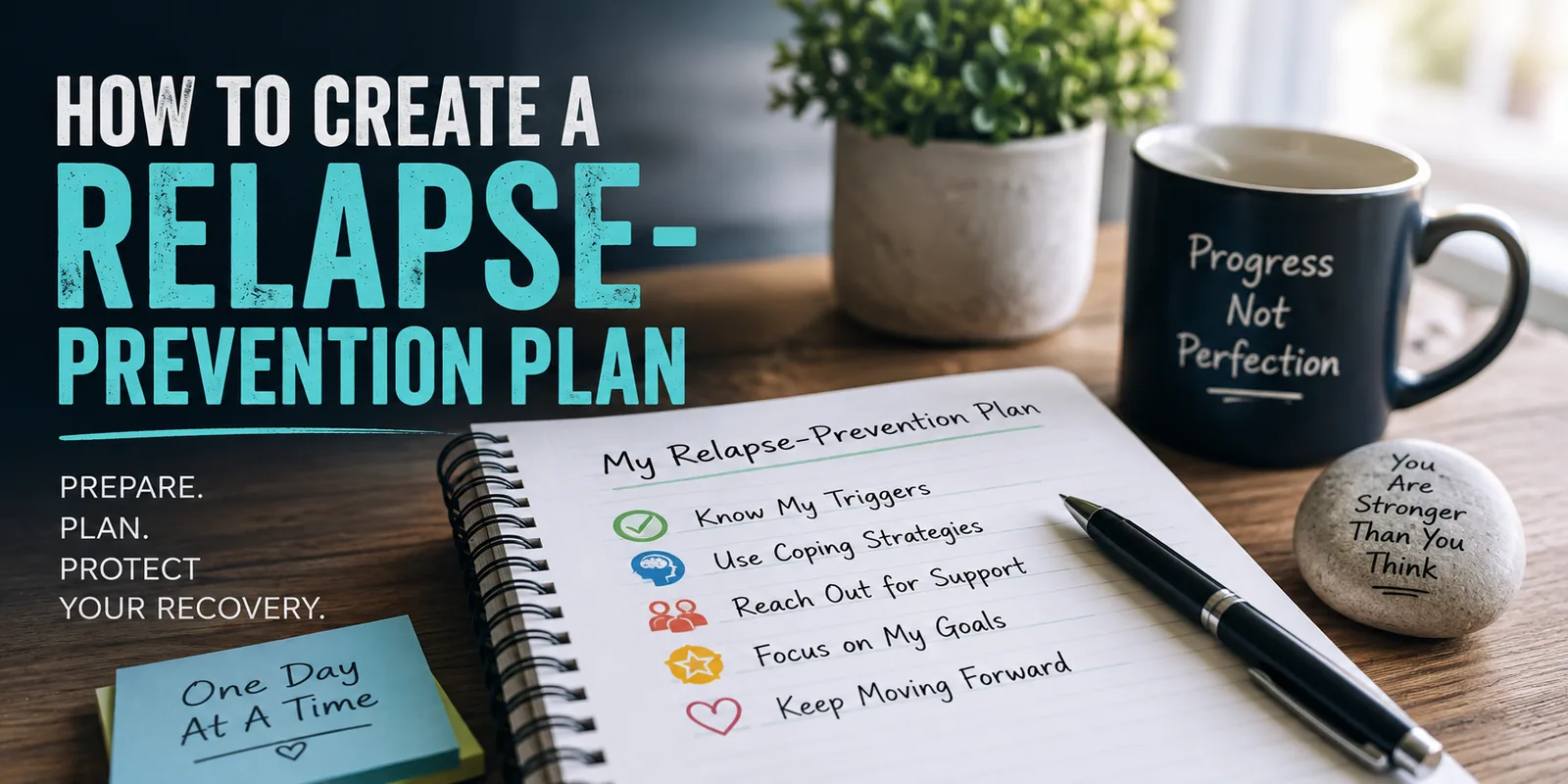


Learning how to create a relapse-prevention plan can help you recognize trouble before a craving turns into substance use. A strong plan is not a promise that you will never struggle. It is a written guide that tells you what to do when stress, triggers, isolation, or cravings begin to threaten your recovery.
Relapse often develops through changes in emotions, thoughts, and behavior before drugs or alcohol are used. You may stop attending treatment, hide how you feel, lose sleep, reconnect with people who use, or begin thinking that one drink or dose will not matter. A relapse-prevention plan helps you notice those changes and respond early.
Behavioral treatment can help people identify triggers, build coping skills, manage stress, and strengthen social support. These skills can reduce the risk that a difficult moment will become a return to substance use.
What Is a Relapse-Prevention Plan?
A relapse-prevention plan is a personalized list of warning signs, triggers, coping tools, supportive contacts, treatment resources, and emergency steps. It should be simple enough to use when you are tired, upset, or experiencing a strong craving.
Create the plan with a counselor, doctor, sponsor, peer-support specialist, or another trusted person when possible. Keep a copy on your phone and give another copy to someone who understands your recovery.
The plan should answer three basic questions:
- What puts me at risk?
- What can I do when risk increases?
- Who will I contact before I use?
Recovery is an ongoing process that can include treatment, healthy relationships, purpose, and community support. Your plan should reflect your needs rather than someone else’s idea of what recovery must look like.
Steps for Creating a Relapse-Prevention Plan
1. Write down your reasons for recovery
Begin with the people, goals, values, and opportunities you want to protect. You might list your children, health, housing, career, freedom, relationships, faith, or peace of mind.
Read this section when cravings make you forget why recovery matters.
2. Identify your strongest triggers
Triggers can be external or internal. External triggers include certain people, neighborhoods, parties, paydays, pharmacies, bars, or access to substances. Internal triggers may include anger, shame, loneliness, boredom, grief, pain, or anxiety.
Be specific. Instead of writing “stress,” write what stress looks like in your life, such as arguing with a partner, working late, or worrying about money.
3. List your early warning signs
Your warning signs are personal changes that suggest your recovery is weakening. They may include:
- Missing counseling or support meetings
- Sleeping too much or too little
- Withdrawing from supportive people
- Becoming dishonest or secretive
- Romanticizing past substance use
- Neglecting meals, exercise, or medication
- Feeling hopeless or unusually angry
- Spending time with people who use
Ask someone close to you what they notice when you begin struggling. Other people sometimes recognize changes before you do.
4. Match each trigger with an action
Do not write only, “I will avoid using.” Choose a clear response for each high-risk situation.
For example:
- If I feel lonely, I will call my sister or attend a meeting.
- If I pass a place where I used to buy drugs, I will take a different route.
- If I receive unexpected money, I will ask someone I trust to help me manage it.
- If I begin thinking about using, I will tell my counselor that day.
Coping strategies may include walking, exercise, breathing exercises, prayer, journaling, music, a shower, a recovery meeting, or leaving the triggering environment. Mindfulness-based relapse prevention can help people notice triggers without responding automatically.
5. Build a support contact list
List at least three people you can contact when you are struggling. Include their names, phone numbers, and the type of help each person can offer.
Your list might include a sponsor, family member, counselor, doctor, recovery coach, peer-support worker, or sober friend. Do not depend on only one person. They may be working, sleeping, or unavailable when you need help.
Write down exactly what you will say: “I am having a strong craving and need you to stay on the phone with me.”
6. Protect your environment
Remove drugs, alcohol, paraphernalia, and unnecessary medications from your home. Delete unsafe contacts and avoid places connected with past use.
Your plan may also include sober housing, transportation to treatment, scheduled evening activities, or limits on access to cash. These steps are not punishments. They reduce the number of decisions you must make during a vulnerable moment.
7. Include professional treatment
List upcoming appointments and contact information for your treatment providers. Your prevention plan may include counseling, group treatment, medication management, peer support, or a higher level of care during periods of increased risk.
Medications may help some people avoid relapse or remain engaged in recovery. Treatment options are available for alcohol and opioid use disorders, and care should be based on individual needs.
Add an Emergency and Overdose Plan
Decide what should happen if you believe you are about to use or have already relapsed. Your emergency steps may include calling your treatment center, going to a safe person’s home, attending an urgent appointment, or entering detox or residential care.
For anyone with a history of opioid use, include naloxone in the plan. Tell family members where it is stored and teach them how to use it. Naloxone can reverse an overdose involving opioids such as heroin or fentanyl. Call 911 whenever an overdose is suspected, even when naloxone has been given.
Call 911 immediately if someone cannot be awakened, has stopped breathing, experiences a seizure, becomes severely confused, or talks about suicide.
Review and Update Your Plan
A relapse-prevention plan should change as your life changes. Review it every month, after major stress, when leaving treatment, or after any lapse or relapse.
Ask what worked, what failed, and what support was missing. Then update the plan without shame.
The best relapse-prevention plan is not the longest one. It is the plan you can understand, reach quickly, and follow during a difficult moment. Write it down, share it with supportive people, and use it at the first warning sign—not after the situation becomes a crisis.


