



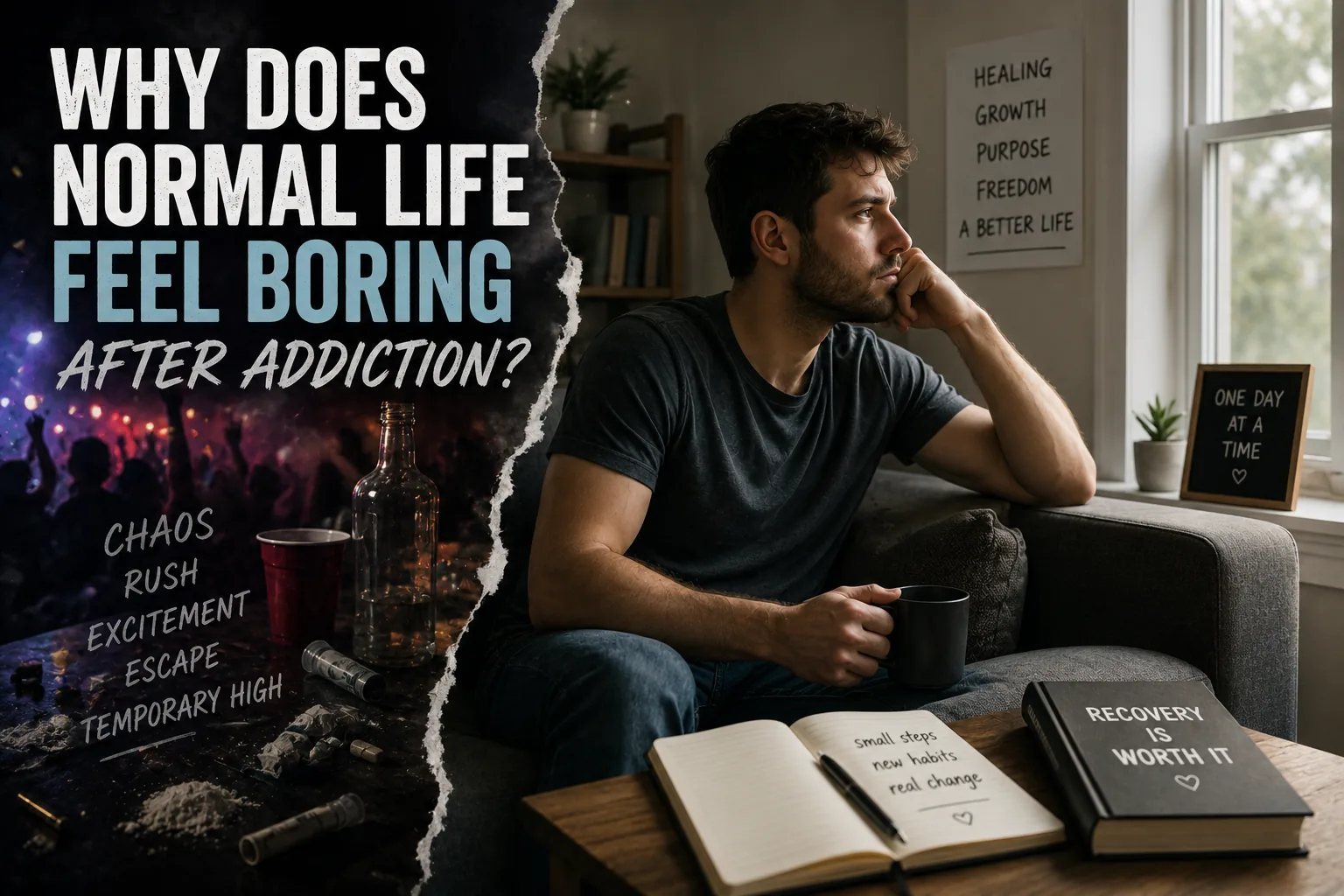


Why does normal life feel boring after addiction? You got sober expecting freedom, clarity, and maybe even happiness. Instead, ordinary life can feel painfully slow.
Going to work feels repetitive.
Watching television does not hold your attention.
Dinner is just dinner.
Weekends seem endless.
You may even find yourself missing the excitement and chaos that came with drugs or alcohol.
This can be confusing, but boredom is common during early recovery. After months or years of substance use, your brain and lifestyle may have become accustomed to intense stimulation.
Sober life is different.
Different does not mean worse.
It may simply take time to learn how to enjoy it.
Addiction Can Make Chaos Feel Normal
Addiction can create a constant cycle of activity.
Finding substances.
Getting money.
Using.
Partying.
Recovering.
Hiding what happened.
Dealing with consequences.
Planning when you can use again.
There may have been arguments, emergencies, sleepless nights, impulsive decisions, and unpredictable situations.
None of that was necessarily healthy, but it was stimulating.
Then you get sober.
Suddenly, nobody is calling at midnight.
You are not searching for drugs.
There is no crisis to solve.
At first, peace may not feel peaceful.
It may feel empty.
This helps explain why you may feel bored after getting sober. Your nervous system and daily routine may still expect the intensity that addiction created.
Recovery often involves learning that calm does not mean something is missing.
Sometimes calm means nothing is going wrong.
Your Brain May Need Time to Enjoy Normal Rewards Again
Drugs and alcohol can strongly affect brain systems involved in reward, motivation, learning, and pleasure.
Over time, the addicted brain may begin treating substances as unusually important rewards.
Compared with getting high or intoxicated, ordinary activities can initially seem weak.
A walk does not produce an immediate rush.
Finishing a book is not chemically intense.
Cooking dinner does not create the same excitement as using.
This can lead to another common question: why can’t I feel happy after getting sober?
The answer is not necessarily that sober life has nothing to offer.
Your expectations of pleasure may be changing.
Normal rewards are often quieter.
A good night’s sleep.
Laughing with someone.
Finishing a workout.
Getting paid without spending everything on substances.
Remembering what you did last night.
Being trusted again.
These rewards may not feel dramatic, but over time they can become far more meaningful.
Boredom Can Really Be Loneliness, Exhaustion, or Emotion
Sometimes boredom is not actually boredom.
You may be lonely.
If many of your friendships were connected with drinking or drugs, getting sober can leave a large hole in your social life. Understanding loneliness during addiction recovery can help you recognize when what you really need is connection.
You may also simply be exhausted.
Early recovery can involve poor sleep, stress, withdrawal, and major changes in your daily routine. If everything sounds like too much effort, learning why you feel so tired after getting sober may explain part of what you are experiencing.
Sometimes uncomfortable emotions are underneath boredom too.
You may be sad.
Anxious.
Angry.
Restless.
Learning why emotions can feel intense after getting sober can help you identify what is actually happening.
Recovery involves learning to handle emotions without drugs or alcohol rather than immediately escaping anything uncomfortable.
Before telling yourself, “I’m bored,” ask:
“What do I actually need right now?”
The answer may be very different.
Boredom Can Make Drugs Look More Exciting Than They Were
When normal life feels slow, the past can begin looking better.
You remember the party.
The people.
The rush.
The excitement.
You may still think about drugs after getting sober, especially when nothing else seems interesting.
You may even struggle with missing drugs even though they ruined your life.
Memory can be selective.
It remembers the first drink and forgets the blackout.
It remembers the high and skips the withdrawal.
It remembers laughing with people and forgets the argument afterward.
If boredom starts making addiction look exciting, deliberately remember the complete story.
Ask yourself:
What happened after the fun?
How much did it cost?
What relationships were damaged?
Why did I want to stop?
Recovery becomes dangerous when nostalgia starts rewriting history.
Boredom Can Become a Relapse Risk
Being bored does not mean you are about to use.
But boredom can become a relapse risk when it creates thoughts such as:
“One night would be fun.”
“I deserve to go out.”
“Maybe I could control it now.”
This is especially important if you begin regretting getting sober.
Regret may appear when your new life has not yet become rewarding.
You gave something up.
But you have not finished building what replaces it.
That uncomfortable middle period can make your old lifestyle seem attractive.
You may also be grieving your old life after getting sober.
You can miss people, routines, nightlife, or excitement without needing addiction back.
Recognizing that difference can protect recovery.
Building a Life That Does Not Feel Boring
You do not need to fill every second with entertainment.
Part of recovery is learning how to tolerate ordinary life.
But you also need reasons to wake up.
Start experimenting.
Exercise.
Cook something new.
Go hiking.
Volunteer.
Take a class.
Call someone.
Attend a recovery meeting.
Travel somewhere nearby.
Learn a skill.
Start a project.
Reconnect with family.
Try something you used to enjoy before addiction.
Do not wait until an activity sounds amazing.
Motivation often comes after you begin.
Early on, you may go to the gym and feel nothing.
Then you keep going.
Eventually, you notice your energy improving.
You meet someone.
You become stronger.
You start looking forward to it.
That is how a new life gets built.
The sobriety timeline is different for everyone. What feels painfully dull during the first months of recovery may eventually become stability you deeply value.
Addiction can train you to expect intensity.
Recovery gives you the opportunity to discover meaning.
There is a difference.
Intensity disappears when the drug wears off.
Meaning stays.
Normal life may feel boring after addiction because your brain and routines are still adjusting to a world without constant chemical stimulation and chaos. Give recovery time. The goal is not to recreate the excitement of addiction—it is to build a life good enough that you no longer need to escape from it.


