



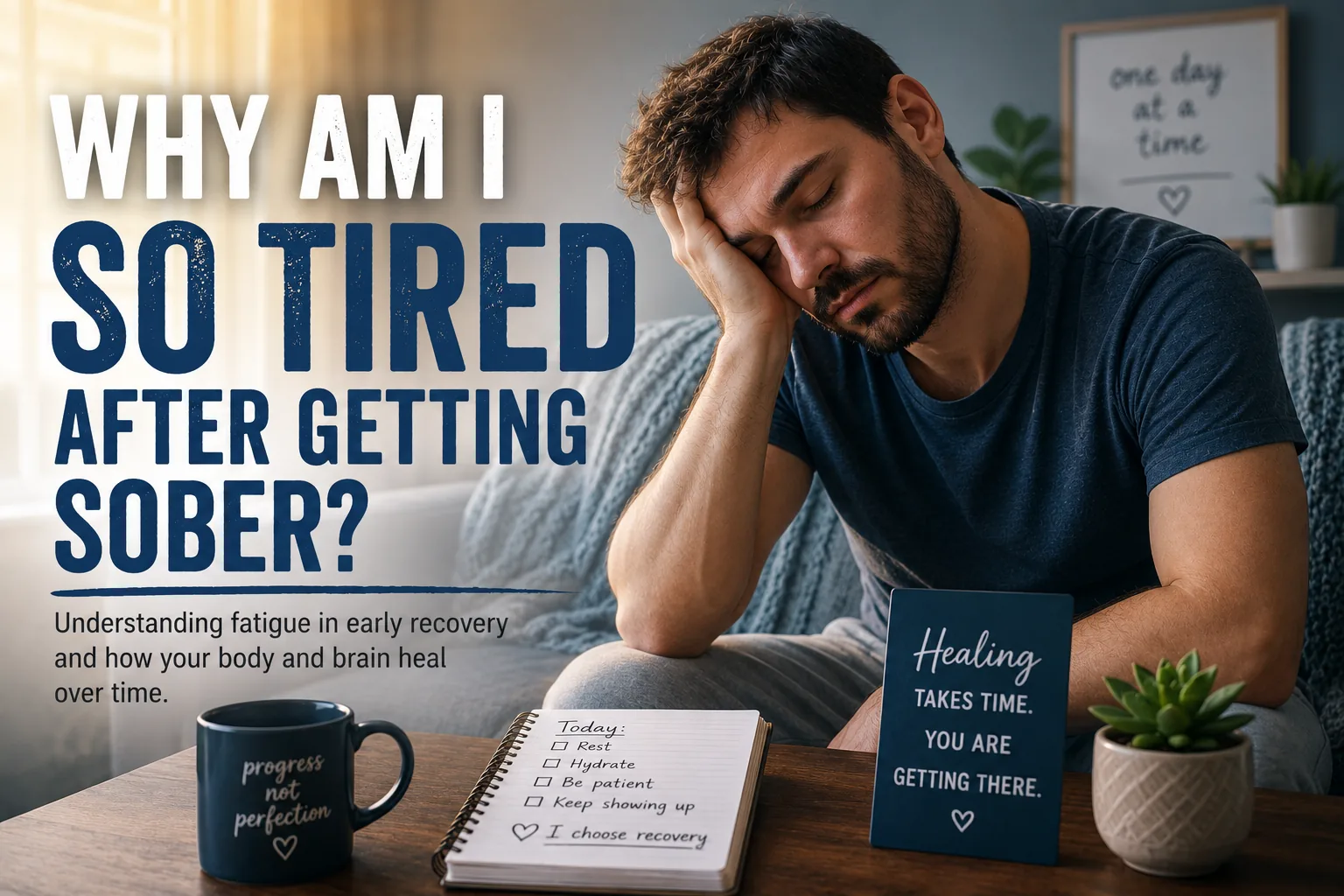


Why am I so tired after getting sober? You stopped drinking or using drugs expecting to have more energy, clearer thinking, and better mornings. Instead, you may feel completely exhausted.
You sleep eight hours and still want a nap.
Getting out of bed feels difficult.
Work takes more effort.
Your body feels heavy, and even simple responsibilities can seem overwhelming.
Fatigue can be frustrating during early recovery, but it does not necessarily mean sobriety is making you unhealthy. Your brain and body may be adjusting after months or years of substance use.
Getting sober removes the substance.
Recovery is the process of learning how to function without it.
That process can take energy.
Why Getting Sober Can Make You Feel Exhausted
Drugs and alcohol can disrupt normal sleep, stress hormones, appetite, activity levels, and brain function.
Some substances artificially increase energy.
Stimulants such as cocaine or methamphetamine can keep someone awake far longer than the body naturally would.
Alcohol and sedatives may make someone drowsy, but passing out is not the same as getting healthy, restorative sleep.
Other substances can change when you sleep, how deeply you sleep, and how often you wake.
After you stop using, your body has to find its natural rhythm again.
At the same time, the addicted brain is adapting to life without the chemical effects it became accustomed to.
That may affect:
- Energy
- Motivation
- Concentration
- Sleep
- Mood
- Stress tolerance
- Pleasure
- Appetite
Early sobriety can therefore feel less like suddenly becoming energized and more like your entire system is trying to reset.
The sobriety timeline can help explain why the first days and weeks may feel very different from later recovery.
Your Body May Be Catching Up on Rest
Addiction can be physically exhausting.
Think about what the body may have endured.
Late nights.
Poor-quality sleep.
Dehydration.
Missed meals.
Stress.
Withdrawal.
Long periods awake.
Repeated intoxication.
For some people, getting sober is the first time in years that the body has had a consistent opportunity to rest.
You may suddenly sleep longer than expected.
That does not automatically mean something is wrong.
Your body may simply be tired.
Recovery itself also requires enormous mental energy.
You are resisting cravings.
Changing routines.
Attending treatment.
Thinking about relationships.
Dealing with financial or legal consequences.
Learning new coping skills.
Trying to rebuild your life.
That is a lot.
If you are also wondering why you feel worse after getting sober, fatigue may be one piece of a much larger adjustment happening throughout early recovery.
Emotions Can Be Exhausting Too
Physical tiredness is only part of the story.
Early sobriety can be emotionally draining.
You may suddenly feel emotions that drugs or alcohol once helped you avoid.
Sadness.
Anxiety.
Fear.
Grief.
Shame.
Frustration.
Learning why you may feel so emotional after getting sober can help explain why some days leave you feeling mentally exhausted even when you have not done much physically.
Anger can drain energy too.
If you find yourself constantly irritated, understanding anger after quitting drugs or alcohol may help you identify stress, poor sleep, withdrawal, or unresolved emotions underneath the frustration.
Recovery requires learning to tolerate feelings instead of immediately escaping them.
That is why learning to handle emotions without drugs or alcohol is such an important skill.
It is also tiring at first.
Something that once required one decision—use—may now require several healthier decisions.
Call someone.
Take a walk.
Eat.
Rest.
Write.
Attend a meeting.
Talk about the problem.
Wait for the feeling to pass.
Those healthier responses become easier with practice.
Low Energy Can Make Life Feel Boring and Lonely
Fatigue can affect your entire experience of sobriety.
When you are tired, you may not want to socialize.
Exercise sounds impossible.
Hobbies require too much effort.
You may start spending more time alone.
That can contribute to loneliness during addiction recovery.
Exhaustion can also make you think sobriety is boring.
If you are too tired to enjoy anything, you may wonder why you are bored after getting sober.
You might even begin asking why normal life feels boring after addiction.
This can become especially discouraging when pleasure has not returned yet.
Some people begin thinking, “I got sober, so why can’t I feel happy?”
Understanding why happiness may feel difficult after getting sober can help you recognize that fatigue, emotional adjustment, and changes in the brain’s reward system may all overlap.
Do not judge your entire future based on an exhausted week in early recovery.
When Tiredness Can Increase Relapse Risk
Extreme fatigue can make recovery harder.
When you are exhausted, decision-making becomes more difficult.
Patience decreases.
Emotions become harder to regulate.
Cravings may feel stronger.
You may start remembering substances as a solution.
Someone who once used stimulants may think:
“I just need something to get through today.”
Someone who drank to fall asleep may think:
“One drink would help me sleep.”
Those thoughts can become dangerous.
You may already still think about drugs after getting sober, especially during stressful or exhausting moments.
Sometimes you may even miss drugs despite knowing how much damage they caused.
Fatigue does not cause relapse, but being physically and emotionally drained can reduce your ability to use the coping skills that protect recovery.
Rest is therefore not laziness.
Sometimes rest is relapse prevention.
How to Manage Fatigue After Getting Sober
Start with the basics.
Protect your sleep. Try to maintain consistent sleeping and waking times.
Eat regularly. Your brain and body need fuel.
Drink enough water. Dehydration can contribute to fatigue.
Move your body. Even a short walk may help rebuild energy gradually.
Give yourself realistic expectations. You do not have to rebuild your entire life during your first month sober.
Stay connected. Isolation can make exhaustion, boredom, and difficult emotions feel heavier.
Talk with a healthcare professional if fatigue persists. Severe or prolonged exhaustion can have causes unrelated to recovery, including anemia, thyroid problems, sleep disorders, depression, medication effects, nutritional deficiencies, or other medical conditions.
Do not assume every symptom is simply because you stopped using.
Recovery should include taking care of your health.
Most importantly, give yourself time.
You may have spent years asking your body and brain to function under extreme conditions.
It is reasonable that recovery will not happen overnight.
Some days you will have energy.
Other days your biggest accomplishment may be getting through the day sober.
Both count.
Feeling tired after getting sober does not mean recovery is failing. Your brain and body may finally have the chance to rest, repair, and learn how to function without drugs or alcohol—and that healing can take time.


