



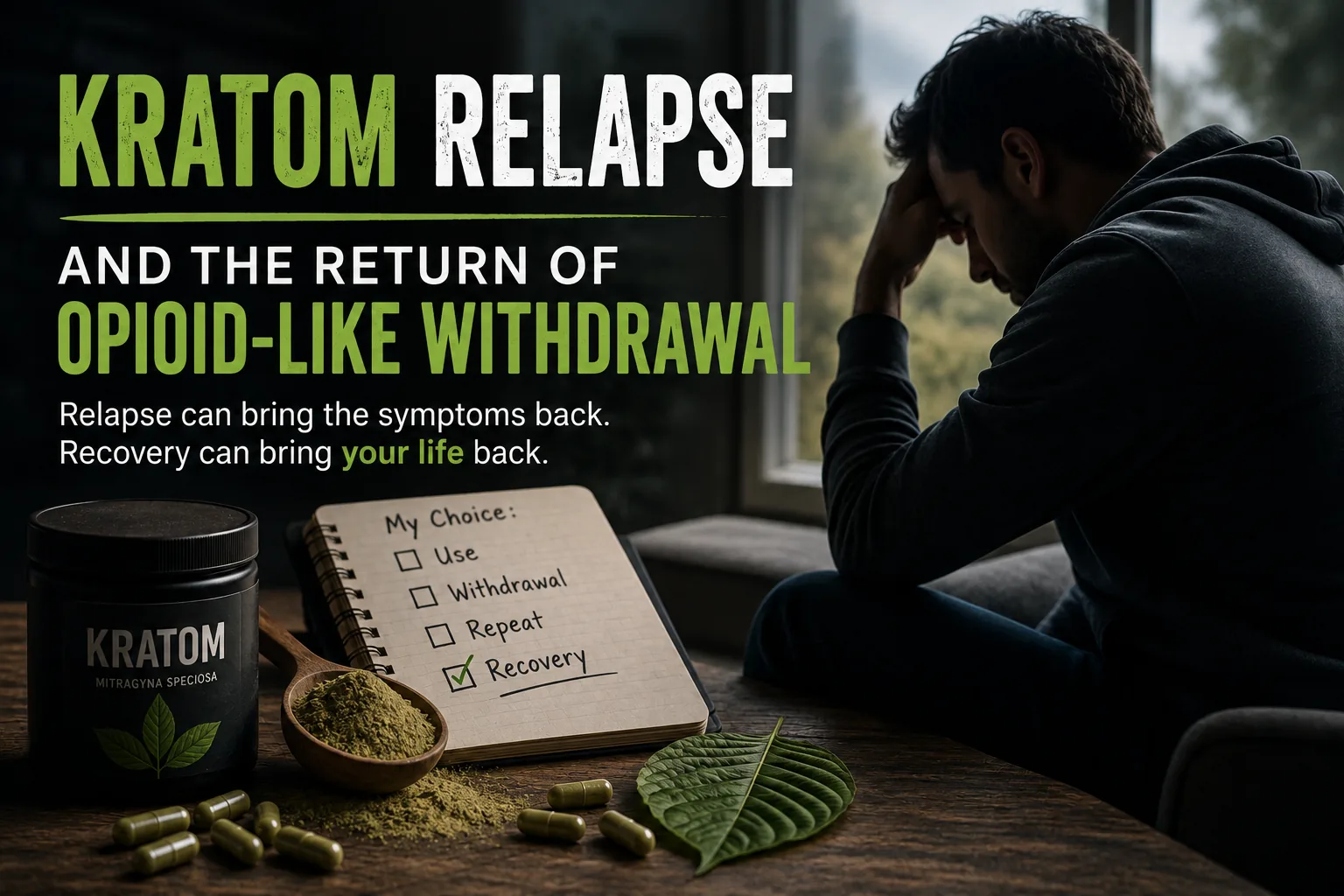


A kratom relapse can bring back something many people hoped they had left behind: opioid-like withdrawal symptoms. Someone may stop kratom, get through the difficult first days or weeks, and then begin using it again because of stress, pain, anxiety, poor sleep, or cravings. What starts as “just once” can sometimes become regular use again.
With repeated use, physical dependence can return. That means stopping again may bring symptoms such as restlessness, anxiety, muscle aches, sweating, insomnia, stomach problems, and strong cravings.
Kratom is not the same as heroin, fentanyl, or prescription opioids. But some of its active compounds interact with opioid receptors, and federal health agencies recognize that regular kratom use can lead to tolerance, physical dependence, withdrawal, and substance use disorder in some people.
The important message is simple: if kratom withdrawal comes back after a relapse, you do not have to keep using just to avoid feeling sick.
Why Kratom Withdrawal Can Return
Kratom comes from the plant Mitragyna speciosa. One of its main active compounds is mitragynine. Kratom also naturally contains small amounts of 7-hydroxymitragynine, commonly called 7-OH.
These compounds can affect opioid receptors in the brain. With frequent use, the body can adapt to their presence.
Eventually, someone may notice that they need kratom simply to feel normal.
A NIDA study of adults who regularly used kratom found that higher-frequency use was associated with signs of physical dependence, including tolerance and withdrawal. In people whose kratom use became problematic, avoiding withdrawal sometimes became an immediate reason to keep taking it.
That cycle can return after a relapse.
You may start taking kratom again for pain or anxiety. Then you begin using every morning. Soon you need another dose in the afternoon. Eventually, skipping a dose makes you uncomfortable.
At that point, kratom may no longer feel optional.
What Does Kratom Withdrawal Feel Like?
Kratom withdrawal varies considerably between people. The amount used, frequency of use, product strength, length of use, and individual health can all influence symptoms.
Reported symptoms can resemble opioid withdrawal and may include:
- Strong kratom cravings
- Anxiety
- Irritability
- Restlessness
- Difficulty sleeping
- Muscle aches
- Sweating
- Runny nose
- Nausea
- Abdominal discomfort
- Diarrhea
- Low mood
- Fatigue
Research has documented physical dependence, withdrawal, and craving among regular kratom users, particularly with heavier or prolonged patterns of use.
For some people, withdrawal is uncomfortable but manageable. For others, symptoms can be strong enough that they quickly return to kratom simply to make them stop.
This creates a common cycle:
Use kratom → develop dependence → stop → experience withdrawal → use again for relief → rebuild dependence.
Once that cycle begins, willpower alone may not be enough.
Relapse Does Not Mean You Have to Keep Using Kratom
After returning to kratom, people sometimes think:
“I already messed up, so I might as well keep taking it.”
That thinking can turn a short relapse into weeks or months of regular use.
Instead, look at what led to the relapse.
Were you experiencing pain?
Did anxiety become overwhelming?
Were you having trouble sleeping?
Did you begin craving the energy or mood effects?
Were you around people or situations associated with kratom?
Did you convince yourself that you could use it occasionally this time?
These questions are not about blame. They help identify what your recovery plan was missing.
If chronic pain triggered the relapse, the pain needs treatment. If anxiety or depression drove the return to kratom, those conditions need attention. If withdrawal symptoms made you start again, a healthcare professional may be able to help you develop a safer plan for stopping.
FDA has not approved kratom as a treatment for opioid withdrawal, pain, anxiety, depression, or any other medical condition. There are currently no FDA-approved prescription or over-the-counter kratom drug products in the United States.
Be Especially Careful With Extracts and 7-OH Products
Not every product marketed around kratom is equivalent.
Traditional kratom leaf naturally contains only small amounts of 7-OH. In recent years, however, highly concentrated or enhanced 7-OH products have appeared as tablets, gummies, shots, capsules, and other products.
FDA has warned that concentrated 7-OH acts as a potent mu-opioid receptor agonist and can produce physical dependence and opioid-like withdrawal. These products may contain amounts of 7-OH far beyond what naturally occurs in kratom leaves.
This distinction matters.
Someone who believes they are simply returning to “kratom” may actually be using a concentrated product with substantially different effects and risks.
If you are seeking help, tell your healthcare provider exactly what you were taking. Bring the packaging or a photo if possible. Saying only “kratom” may not provide enough information.
What Should You Do After a Kratom Relapse?
Start by being honest about your current use.
Write down the product, amount, number of doses per day, how long you have been using again, and any withdrawal symptoms between doses.
Then speak with a doctor or addiction treatment provider.
There is no single medically accepted withdrawal plan that fits every person who has become dependent on kratom. Published reports describe clinicians using different approaches depending on the severity of dependence and the person’s medical and substance-use history. Buprenorphine has been used in some clinical cases involving significant kratom dependence, but it is a prescription opioid medication and should not be started or used on your own specifically for kratom withdrawal.
Professional assessment becomes especially important if you also use opioids, alcohol, benzodiazepines, stimulants, or other substances.
Seek urgent medical help for severe symptoms such as seizures, difficulty breathing, loss of consciousness, severe confusion, or other symptoms that appear dangerous. FDA has reported serious adverse events associated with kratom products, including seizures and substance use disorder.
Recovery Can Restart Before the Relapse Gets Worse
A kratom relapse does not erase the time you were substance-free.
But it should not be ignored either.
If you notice that you are taking kratom to avoid withdrawal, needing larger or more frequent doses, experiencing strong cravings, or repeatedly trying and failing to stop, those are signs that professional help may be useful.
The goal is not simply to endure withdrawal.
The goal is to break the cycle that keeps bringing you back to kratom.
A relapse can bring opioid-like withdrawal back—but it does not have to bring back your entire old life. Get help early, address the reason you returned to kratom, and start moving forward again.


