



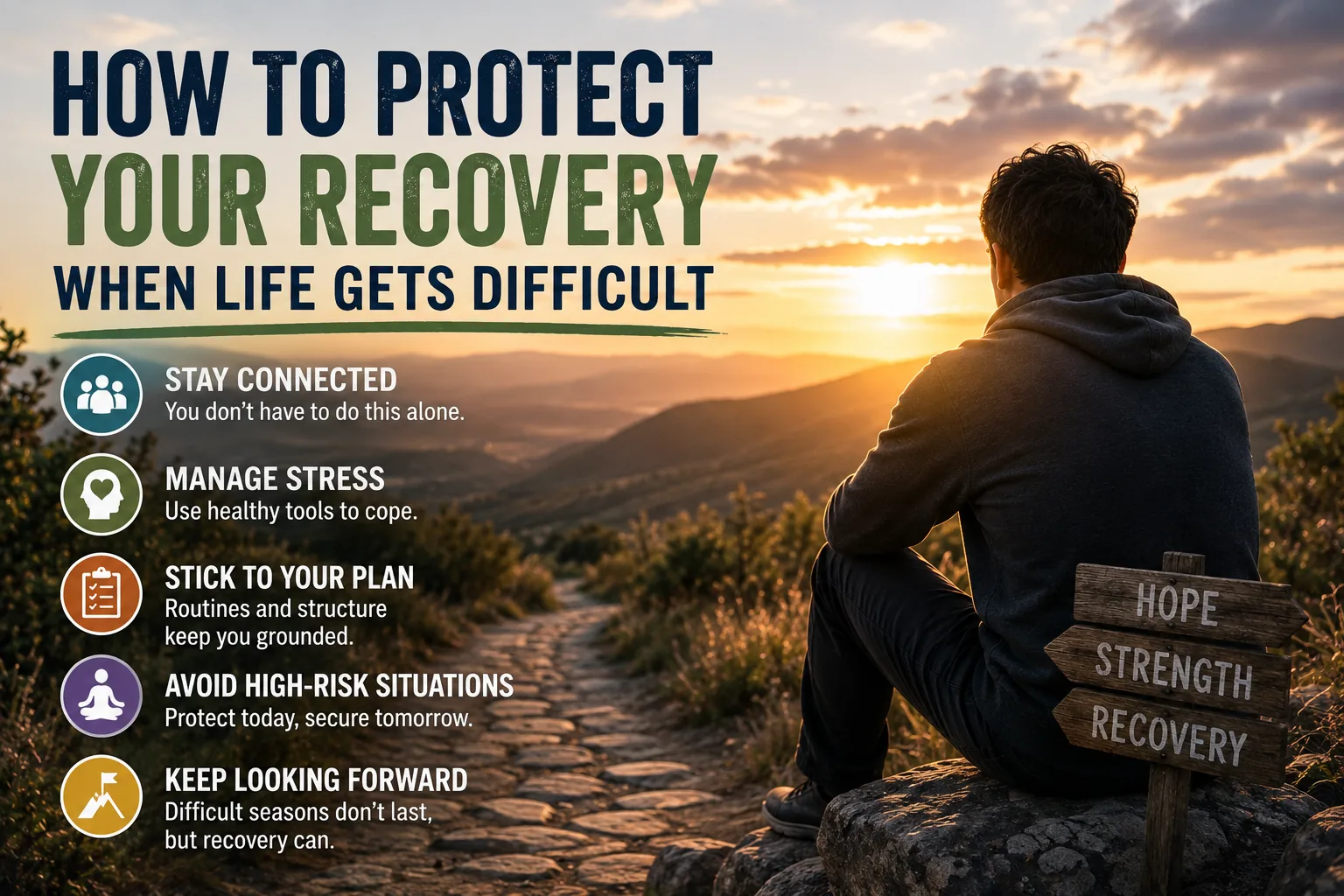


Learning how to protect your recovery when life gets difficult is one of the most important parts of long-term sobriety. Recovery may feel manageable when work is going well, relationships are stable, and your daily routine is predictable.
Then life changes.
You lose a job.
A relationship ends.
Someone you love dies.
Money gets tight.
Your health changes.
Family problems pile up.
Suddenly, the habits that once kept you stable can feel harder to maintain.
Difficult times do not mean your recovery is failing. They mean your recovery may need more attention.
After repeated substance use, your brain may have learned to associate drugs or alcohol with relief, escape, comfort, or numbness. When stress becomes overwhelming, those old patterns can return.
Protecting your recovery means recognizing that risk early and taking action before a difficult day becomes a relapse.
Recognize When Your Recovery Needs More Support
One of the biggest mistakes is assuming that because you have been sober for a while, you should be able to handle everything alone.
Recovery needs can change.
You may normally feel stable with a basic routine, but a crisis can increase stress, disrupt sleep, and bring back old thoughts about using.
Watch for warning signs such as:
- Isolating yourself
- Skipping meetings or treatment
- Sleeping poorly
- Becoming unusually angry
- Thinking frequently about drugs or alcohol
- Romanticizing past substance use
- Feeling hopeless
- Ignoring responsibilities
- Spending time around people who are using
These changes deserve attention.
The addicted brain can remember substances as a quick solution when life becomes painful.
Recognizing that pattern early gives you more choices.
You do not need to wait until you are on the verge of using before asking for help.
Stress Can Make Cravings Stronger
Stress is one of the most common challenges in recovery.
You may have used alcohol to calm down after work.
Drugs may have helped you temporarily escape anxiety, trauma, grief, or relationship problems.
When similar emotions return, your brain may suggest the old solution.
That is why understanding how to stay sober during stressful times can be so valuable.
Stress can also trigger drug and alcohol cravings.
A craving may start with a simple thought:
“I wish I could get away from all of this.”
Then it becomes:
“Using would make me stop thinking about it.”
Recognize that shift.
The problem is not that you had the thought.
The danger comes when you begin treating substance use as a solution.
Use healthier ways to create relief.
Walk.
Exercise.
Call someone.
Rest.
Eat.
Talk about what is happening.
Break one large problem into smaller ones.
The situation may not disappear immediately, but you can get through it without adding another problem.
Know Your Triggers When Life Becomes Unstable
Difficult periods can make old triggers more powerful.
A person who normally does not bother you suddenly becomes difficult to be around.
An old neighborhood creates unexpected memories.
A stressful argument brings back the urge to drink.
Learning how to deal with triggers in addiction recovery can help you identify the situations that become more dangerous when you are already overwhelmed.
Ask yourself:
What makes me want to use when I am stressed?
Is it conflict?
Loneliness?
Exhaustion?
Being around alcohol?
Feeling rejected?
Getting paid?
Certain people?
You cannot avoid every trigger forever.
But you can reduce unnecessary exposure during vulnerable periods.
If you are already struggling, that may not be the best week to reconnect with people you used with or attend a party where substances will be everywhere.
Protecting recovery sometimes means making your life smaller temporarily so that it can stay healthier long term.
Have a Plan for Sudden Urges to Use
One difficult moment can create a powerful craving.
You may suddenly think:
“I cannot do this anymore.”
Then:
“I want to use.”
Have a plan before that happens.
Knowing what to do when you suddenly want to use again can prevent an urge from becoming a series of dangerous decisions.
Change your environment.
Call someone immediately.
Do not contact people connected with past substance use.
Do not drive toward an old bar or drug source.
Give yourself time.
Use practical strategies for handling drug or alcohol cravings without using.
Remember that cravings can pass.
Even if they return unexpectedly later in sobriety, understanding why cravings can come back months or years into recovery can keep you from interpreting an urge as failure.
A craving is not a decision.
Protect Your Routine and Your Support System
When life becomes difficult, healthy routines are often the first things people abandon.
You stop exercising.
Sleep becomes irregular.
Meals disappear.
You cancel appointments.
You stop calling people.
That can make everything harder.
During stressful periods, return to basics.
Sleep.
Eat.
Move.
Stay connected.
Attend treatment.
Keep appointments.
Ask for help.
Social situations may also need extra thought. If alcohol exposure is difficult, knowing how to stay sober when everyone around you drinks can help you decide when to stay and when to leave.
Strategies for staying sober at parties and social events can also help during weddings, birthdays, work gatherings, and celebrations.
You do not have to prove that your recovery is strong enough for every situation.
Sometimes strength looks like saying no.
Difficult Times Do Not Last Forever
When life becomes overwhelming, the present moment can feel permanent.
It is not.
Jobs change.
Arguments end.
Financial problems can improve.
Grief changes with time.
Relationships heal or you learn to live without them.
The sobriety timeline is not a perfectly straight path. Long-term recovery includes seasons when life feels easier and seasons when simply staying sober feels like an accomplishment.
Both are recovery.
A difficult period does not erase your progress.
Neither does experiencing cravings.
What matters is how you respond before the situation becomes a relapse.
Increase support when you need it.
Lower unnecessary stress.
Avoid high-risk situations.
Keep your basic routines.
Talk about what is happening.
And remember why you chose recovery in the first place.
You do not have to handle every problem perfectly.
You only need to avoid allowing one painful period to convince you that returning to drugs or alcohol will make your life better.
Protecting your recovery when life gets difficult means recognizing that hard times require more support, not less. The crisis may be temporary, but the sober life you are protecting can continue long after it passes.


