



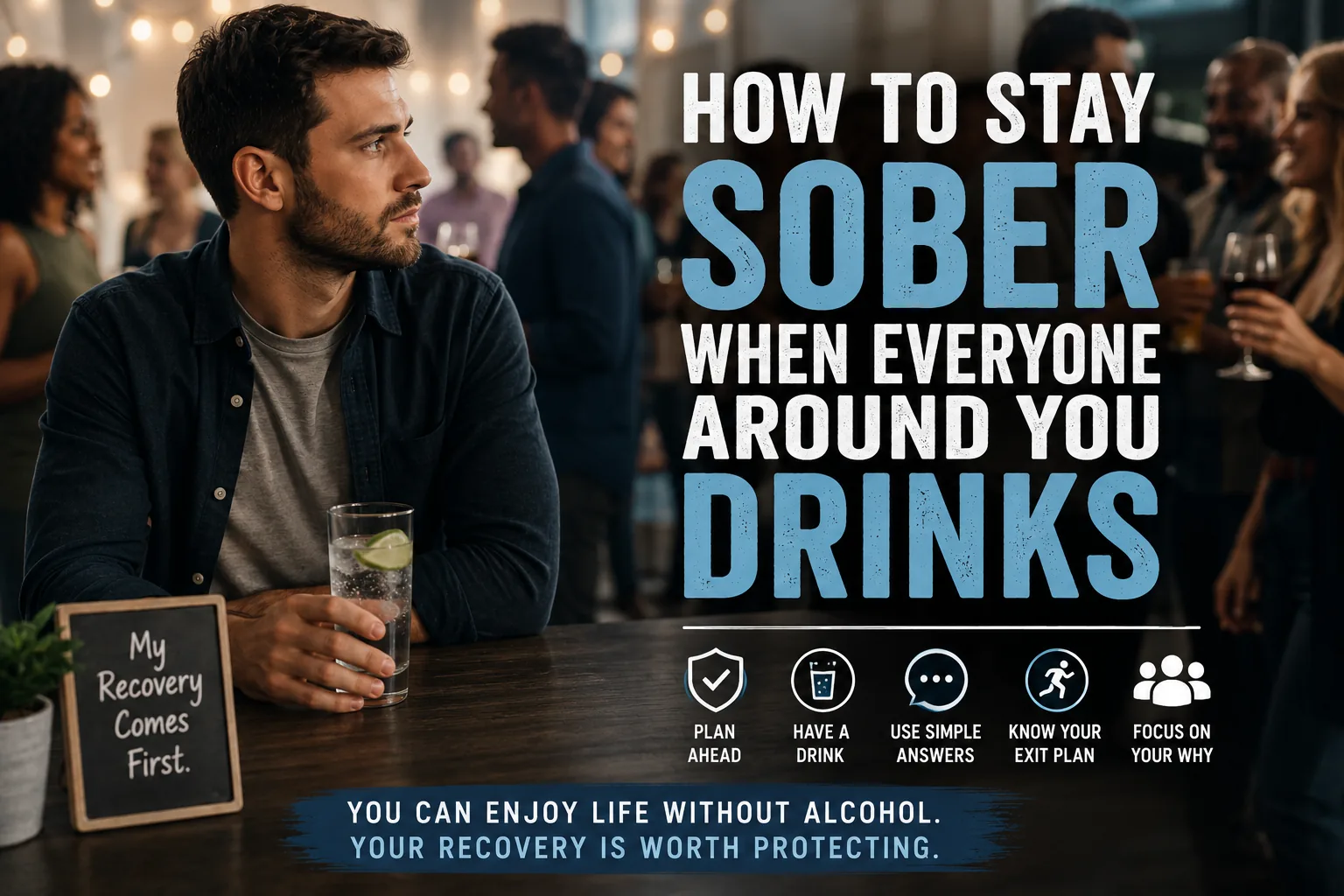


Learning how to stay sober when everyone around you drinks can be difficult, especially during early recovery. You may feel confident about sobriety until you arrive at a restaurant, wedding, party, family gathering, or work event where alcohol seems to be everywhere.
People order cocktails.
Someone offers you a beer.
Friends start taking shots.
Suddenly, drinking can look normal, harmless, and even appealing.
That does not mean your recovery is weak.
After repeated substance use, alcohol can become connected with socializing, celebration, relaxation, confidence, and belonging. Being surrounded by drinking can activate those old associations.
You do not have to avoid every social situation forever.
But you also do not have to prove your sobriety by putting yourself in situations that make you want to drink.
Protecting recovery comes first.
Understand Why Being Around Alcohol Can Trigger Cravings
Alcohol may have played a major role in your social life before sobriety.
Happy hour after work.
Wine with dinner.
Beer during football.
Drinks at weddings.
Shots at parties.
Over time, the addicted brain can connect alcohol with certain environments, people, emotions, and routines.
That means simply being around drinking may trigger cravings during addiction recovery.
You might smell alcohol and suddenly remember drinking.
You may watch everyone laughing with cocktails in their hands and think:
“Maybe I could have just one.”
Recognizing those thoughts matters.
Learning how to deal with triggers in addiction recovery can help you understand that the environment may be creating the urge.
A craving is information.
It tells you something about the situation.
It does not require you to drink.
Decide Before You Go Whether the Event Is Worth the Risk
You are allowed to skip events.
That may sound obvious, but people in recovery sometimes feel obligated to prove that they can be around alcohol.
You do not.
Ask yourself:
Do I actually want to attend?
Will there be people who support my sobriety?
Will drinking be the main activity?
Can I leave whenever I want?
Am I already stressed or craving alcohol today?
If the situation feels unnecessarily risky, staying home may be the healthiest choice.
For events you do want to attend, preparation helps. Our guide to staying sober at parties and social events explains how planning ahead can reduce social pressure and temptation.
Recovery does not mean avoiding life.
It means choosing which situations support the life you are trying to build.
Have a Drink, an Answer, and an Exit Plan Ready
It helps to make decisions before people start offering alcohol.
Order something nonalcoholic immediately.
Sparkling water.
Soda.
Coffee.
Tea.
A mocktail if that is comfortable for you.
Holding a drink can reduce repeated offers from other people.
You can also prepare a simple answer.
“No thanks, I’m not drinking.”
“I’m good with this.”
“I don’t drink anymore.”
You do not owe everyone your recovery story.
You also need an exit plan.
Drive yourself if possible.
Know how you are getting home.
Keep your phone charged.
Tell someone supportive where you are.
If cravings increase, leave.
You do not need permission.
Knowing what to do when you suddenly want to use again can help you respond quickly if a social situation suddenly becomes dangerous.
Do Not Let Social Pressure Turn Into a Relapse
Most people will accept a simple no.
Some will not.
Someone may say:
“Come on, just one.”
“You’re still doing that sober thing?”
“One drink isn’t going to hurt.”
You do not have to debate your recovery with them.
People who respect you should also respect your decision not to drink.
If someone keeps pressuring you, distance yourself.
Continued exposure to alcohol combined with social pressure can make cravings stronger.
If an urge develops, use strategies for handling drug or alcohol cravings without using.
Call someone.
Step outside.
Change rooms.
Eat something.
Leave the event.
Do whatever protects your sobriety.
A craving does not have to become a relapse.
The strongest choice may be walking out the door.
Stress, Holidays, and Celebrations Can Make Drinking Harder to Avoid
Social drinking can become especially difficult when alcohol mixes with stress.
Family tension.
Work pressure.
Relationship problems.
Financial worries.
Poor sleep.
These situations can reduce your ability to manage cravings.
Learning how to stay sober during stressful times can help you recognize when your normal recovery routine needs additional support.
Holidays deserve special attention.
Alcohol may be part of family traditions.
Relatives may ask uncomfortable questions.
You may be grieving someone.
You may be traveling or away from your regular support system.
Preparing for staying sober during the holidays can help you decide which events to attend, what boundaries to set, and when to leave.
The same applies to weddings, birthdays, vacations, and celebrations.
Being happy does not make you immune to cravings.
Alcohol can be a trigger during good moments too.
Build a Social Life That Does Not Depend on Alcohol
Long-term sobriety becomes easier when alcohol is no longer at the center of your social life.
That may require change.
Meet friends for breakfast instead of drinks.
Go hiking.
Exercise.
See a movie.
Try a new restaurant.
Volunteer.
Take a class.
Attend recovery events.
Spend time with people who do not need alcohol to enjoy themselves.
The sobriety timeline looks different for everyone. An environment that feels dangerous during your first months sober may eventually become easier to manage.
But there is no prize for exposing yourself to unnecessary risk.
If being around alcohol still creates powerful cravings, respect that information.
You can also learn how to protect your recovery when life gets difficult so that stressful seasons do not quietly weaken the habits keeping you sober.
Over time, something may change.
You stop noticing what everyone else is drinking.
You become more interested in the conversation.
You leave when you want.
You wake up the next morning without regret.
That is freedom.
Staying sober when everyone around you drinks is not about proving that alcohol has no effect on you. It is about knowing your triggers, setting boundaries, planning ahead, and protecting the recovery that has given you the chance to build a different life.


