



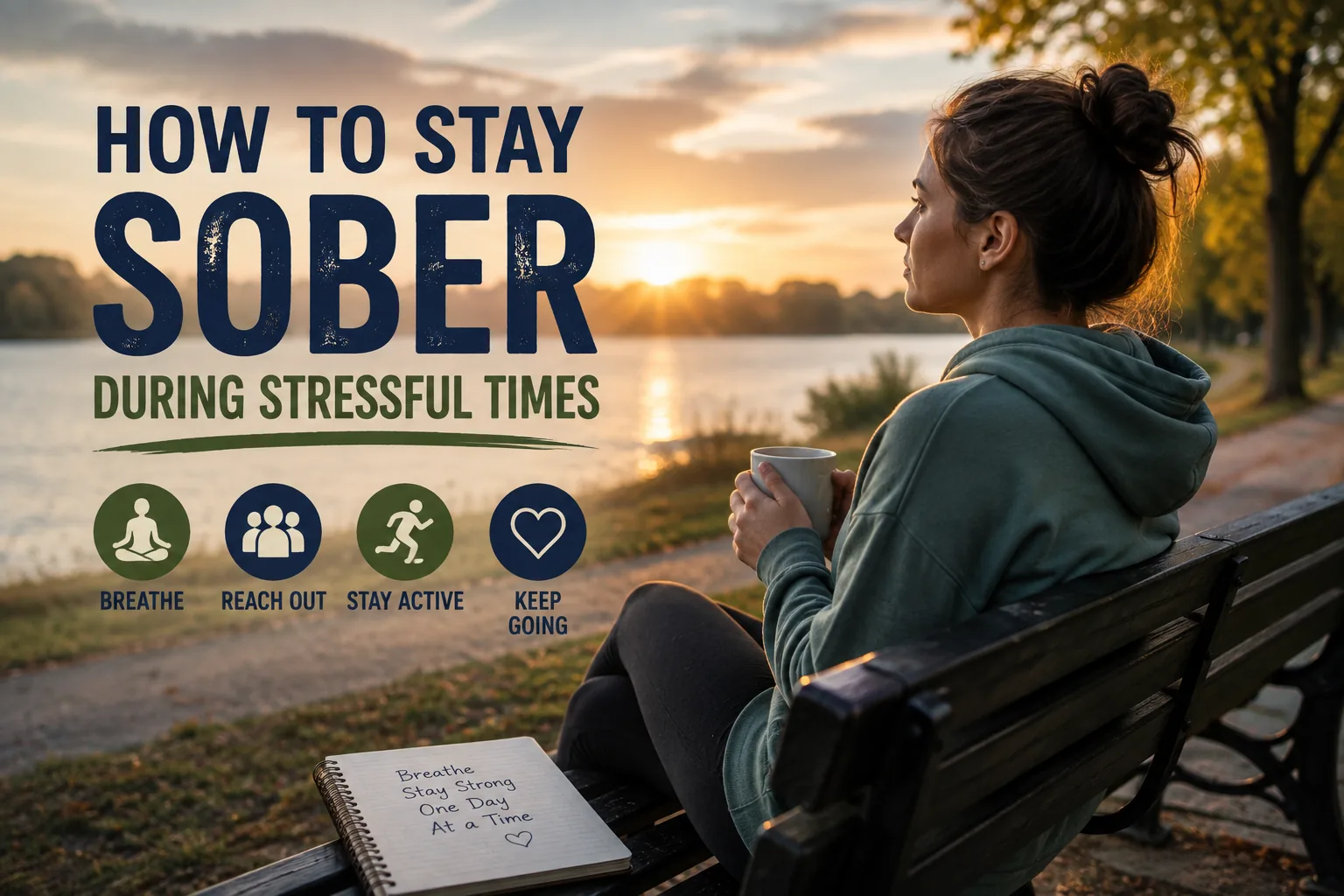


Learning how to stay sober during stressful times is one of the most important skills in addiction recovery. Sobriety may feel manageable when life is calm. The real challenge often comes when work becomes overwhelming, a relationship falls apart, money gets tight, someone you love becomes sick, or several problems happen at once.
During those moments, your mind may remember drugs or alcohol as a quick way to escape.
That does not mean your recovery is failing.
After repeated substance use, the brain can learn to connect stress with drinking or using. When pressure rises, that old response may return automatically.
The goal is not to eliminate stress.
That is impossible.
The goal is to learn how to experience difficult periods without allowing addiction to become the solution again.
Understand Why Stress Can Trigger Cravings
Stress affects both the mind and body.
You may sleep poorly.
Your thoughts race.
You become impatient.
Your muscles stay tense.
Small problems begin feeling enormous.
If drugs or alcohol once provided temporary relief, the addicted brain may remember that experience.
Stress appears.
Then the thought follows:
“A drink would calm me down.”
Or:
“Getting high would make me forget about this.”
That thought can quickly become a craving.
Understanding drug and alcohol cravings during recovery can help you recognize that an urge is not the same as a decision.
Stress may trigger the craving.
You still get to choose what happens next.
Know Your Stress Triggers Before They Become a Crisis
Not every trigger is a bar, bottle, or old friend.
Some of the strongest triggers are emotional.
Financial pressure.
Arguments.
Loneliness.
Work deadlines.
Grief.
Rejection.
Family conflict.
Exhaustion.
Learning how to deal with triggers in addiction recovery can help you identify situations that repeatedly increase your desire to use.
Pay attention to patterns.
Maybe every argument with your partner makes you think about drinking.
Maybe you want drugs whenever money problems feel overwhelming.
Maybe working long hours and sleeping poorly always increases cravings.
Once you recognize the pattern, you can prepare for it.
Ask yourself:
“What usually happens right before I want to use?”
That answer can become an important part of your relapse-prevention plan.
Take Care of Problems Before You Become Overwhelmed
Stress becomes harder to manage when problems pile up.
You skip meals.
Stop exercising.
Sleep gets worse.
You isolate yourself.
Recovery meetings or appointments begin disappearing from your schedule.
Eventually, you may feel emotionally exhausted.
That is when old coping habits can look attractive again.
Do not wait until you are completely overwhelmed to respond.
Handle what you can early.
Make the phone call.
Pay the bill.
Ask for help.
Talk about the relationship problem.
Schedule the appointment.
Take a day off if possible.
Get some sleep.
There will also be situations that you cannot immediately fix.
A death.
A divorce.
A job loss.
A serious family problem.
During those times, learning how to protect your recovery when life gets difficult becomes especially important.
Sometimes protecting sobriety means temporarily increasing support while the rest of life feels unstable.
Have a Plan for Sudden Cravings
Stressful periods can create cravings even when you have not seriously thought about using in a long time.
You may suddenly think:
“I cannot deal with this anymore.”
Then:
“I just want to use.”
Do not wait for the thought to become a plan.
Knowing what to do when you suddenly want to use again can help you react immediately.
Change your environment.
Call someone.
Go to a meeting.
Exercise.
Eat.
Drink water.
Take a shower.
Get somewhere safe.
Use practical strategies for handling drug or alcohol cravings without using.
Most importantly, give yourself time.
You do not have to solve the entire problem while experiencing a craving.
You only need to avoid making the situation worse by returning to substances.
A terrible day can become a better day tomorrow.
A relapse can create consequences that last much longer.
Protect Yourself During Social and Seasonal Stress
Stress does not always come from obvious problems.
Sometimes it comes from social expectations.
A wedding.
A work party.
Family gatherings.
Vacations.
Celebrations.
You may already be exhausted or emotionally overwhelmed before arriving, and then alcohol appears everywhere.
If drinking around other people is difficult, preparing for how to stay sober when everyone around you drinks can help you set boundaries.
For larger gatherings, use strategies for staying sober at parties and social events.
Holidays can be especially difficult because they combine family relationships, grief, financial pressure, disrupted routines, and alcohol. Planning ahead for staying sober during the holidays can reduce unnecessary risk.
You are allowed to say no.
You are allowed to leave early.
You are allowed to avoid people or situations that threaten your recovery.
Sobriety does not require you to make everyone else comfortable.
Stress Will Pass — Protect What You Have Built
One of the most dangerous things stress does is make the present moment feel permanent.
You think:
“My life is falling apart.”
“Nothing is going to get better.”
“I cannot handle another day like this.”
But stressful periods change.
Problems get solved.
Emotions shift.
Situations end.
The sobriety timeline is not a straight line where every day becomes easier than the day before.
Recovery includes good seasons and terrible ones.
You may even experience cravings long after early sobriety. Understanding why cravings can come back months or years into recovery can keep an unexpected urge from making you question all your progress.
A craving does not erase your sobriety.
Stress does not erase your recovery.
And asking for more support does not make you weak.
What matters is preventing a difficult period from becoming a relapse.
When life becomes overwhelming, return to the basics.
Sleep.
Eat.
Move.
Talk.
Ask for help.
Stay connected.
Avoid unnecessary triggers.
Take problems one at a time.
Some days, staying sober may be the most important thing you accomplish.
That is enough.
Staying sober during stressful times is not about handling every problem perfectly. It is about refusing to let a temporary crisis convince you to return to something that once made your problems much worse.


