



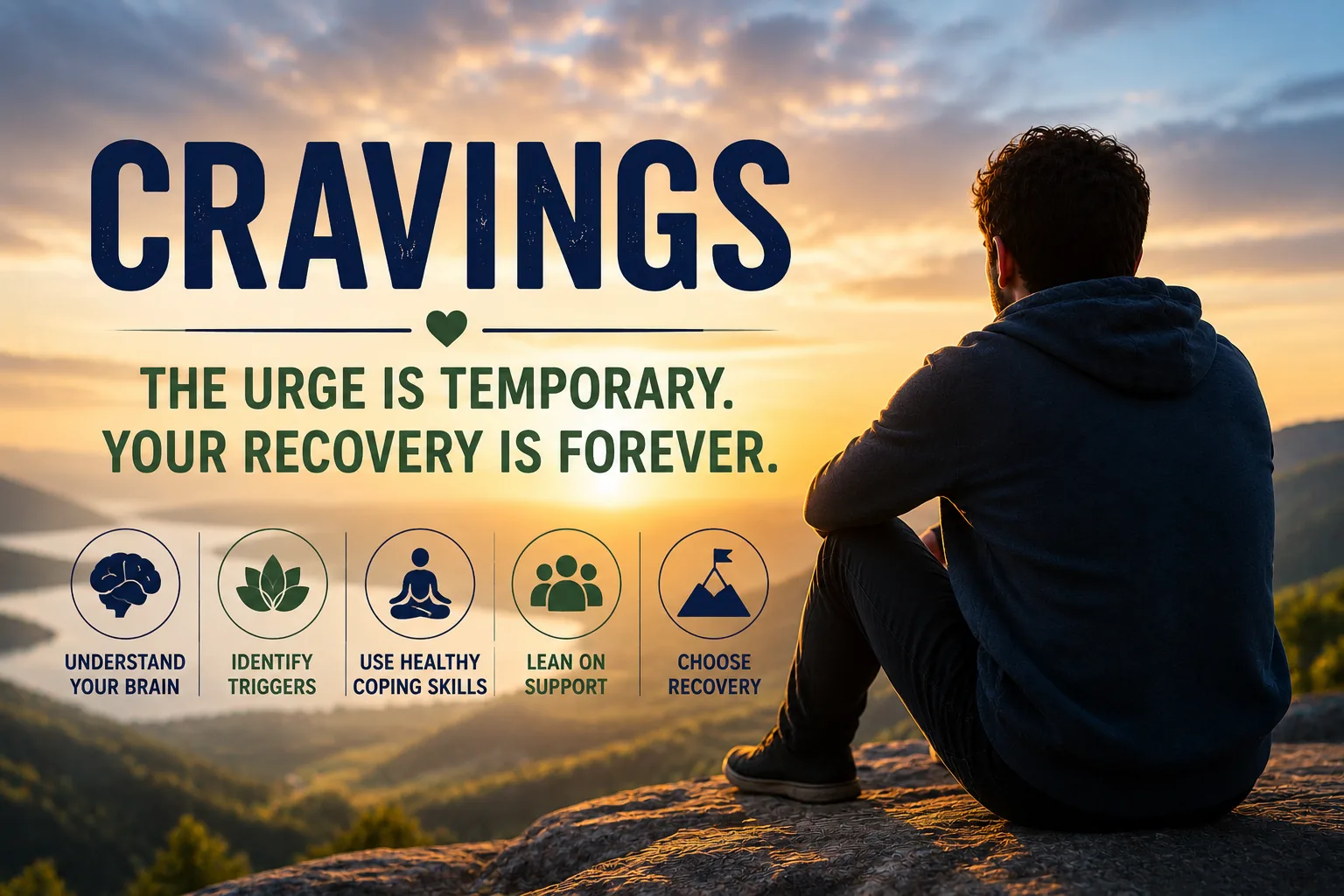


Cravings can be one of the most difficult parts of addiction recovery. You may feel completely committed to staying sober and then suddenly find yourself thinking about drugs or alcohol.
The urge may appear after an argument.
A stressful day.
Driving past an old bar.
Seeing someone you used with.
Sometimes a craving seems to come from nowhere.
That can be frightening, but experiencing cravings does not mean recovery is failing. After repeated substance use, the brain can develop powerful associations between drugs or alcohol and pleasure, relief, stress, people, places, and routines.
Getting sober removes the substance.
It does not instantly erase everything your brain learned while you were using.
The good news is that cravings can pass without becoming actions.
Learning how to recognize them and respond differently is an important part of long-term sobriety.
Why Do Drug and Alcohol Cravings Happen?
Addictive substances can strongly affect brain systems involved in reward, motivation, memory, and learning.
Over time, the addicted brain may begin treating drugs or alcohol as something extremely important.
Your brain can also connect substance use with certain situations.
Stress may become connected with drinking.
Payday may become connected with using.
Friday night may trigger thoughts about going out.
A specific song, neighborhood, smell, person, or emotion can suddenly bring the memory of using back.
These are commonly called triggers.
Learning how to deal with triggers in addiction recovery can help you recognize these connections before they turn into stronger urges.
Cravings can also occur during or after withdrawals, when the body and brain are adjusting to the absence of a substance.
The important thing to remember is that a craving is not a command.
You can experience the urge without obeying it.
How Long Do Cravings Last?
One of the first questions people ask is:
How long is this going to keep happening?
There is no single answer.
The intensity and frequency of cravings can depend on the substance, how long it was used, how heavily it was used, your environment, stress level, mental health, and where you are in recovery.
Some urges may pass within minutes.
Others may come in waves.
For a deeper look at timing, read about how long drug cravings can last after quitting.
Cravings also do not always follow a straight line.
You may go weeks without seriously thinking about using and suddenly experience a strong urge months later.
That does not mean you have gone backward.
Understanding why cravings can return months or years into recovery can help prevent a surprising craving from turning into panic.
Recovery is not measured by never having another urge.
It is measured partly by what you do when the urge arrives.
What Should You Do When a Craving Hits?
The most important thing is to create distance between the feeling and the decision.
Do not assume you need to solve your entire recovery in that moment.
Focus on getting through the craving in front of you.
Change your environment.
Call someone.
Eat.
Drink water.
Go for a walk.
Exercise.
Attend a meeting.
Distract yourself with something that requires concentration.
Remind yourself why you stopped.
If you need practical strategies, learn how to handle drug or alcohol cravings without using.
Sometimes an urge can appear with frightening intensity. You may suddenly think:
“I want to use right now.”
When that happens, having a plan matters. Knowing what to do when you suddenly want to use again can reduce the amount of decision-making required during a vulnerable moment.
Do not isolate yourself with the craving if you feel at risk.
Reach out.
A craving often becomes more manageable when it is spoken out loud instead of hidden.
Stress and Difficult Life Events Can Make Cravings Stronger
Stress is one of the most common reasons people begin thinking about substances again.
Work problems.
Relationship conflict.
Financial pressure.
Grief.
Family problems.
Exhaustion.
Recovery does not prevent difficult things from happening.
It changes how you respond to them.
Learning how to stay sober during stressful times can help you build strategies before stress reaches a breaking point.
There will also be seasons when several problems happen at once.
That is when learning how to protect your recovery when life gets difficult becomes especially important.
Ask yourself what you need before the situation becomes a crisis.
More meetings?
More sleep?
Less contact with certain people?
Professional support?
A different environment?
Recovery is easier to protect before you are overwhelmed.
Social Situations Can Trigger Alcohol or Drug Cravings
Not every craving happens during a bad moment.
Some appear during celebrations.
You may feel fine until everyone around you starts drinking.
Someone offers you a beer.
People begin taking shots.
Suddenly, sobriety feels isolating.
If alcohol is part of your history, learning how to stay sober when everyone around you drinks can help you prepare for these situations.
Parties and social events can present additional challenges because they combine alcohol, social pressure, excitement, and old routines. Having a strategy for staying sober at parties and social events can make it easier to leave before a craving becomes overwhelming.
The holidays can be difficult too.
Family conflict, traditions involving alcohol, travel, grief, and social pressure can all increase stress. Planning ahead for how to stay sober during the holidays can protect the progress you have already made.
You are allowed to leave.
You are allowed to say no.
You are allowed to avoid situations that threaten your recovery.
A Craving Does Not Have to Become a Relapse
Cravings deserve attention because they can become part of the path toward relapse.
But craving and relapse are not the same thing.
You can want to drink without drinking.
You can think about drugs without using them.
You can walk past an old place, feel the urge, call someone, and keep going.
Every time that happens, you create a different pattern.
The sobriety timeline looks different for everyone. Early cravings may feel intense and frequent, while later urges may become less common or easier to recognize.
The goal is not perfection.
The goal is preparation.
Know your triggers.
Build support.
Protect your sleep.
Manage stress.
Avoid unnecessary high-risk situations.
Have people you can call.
Remember why you wanted recovery.
If cravings begin feeling uncontrollable or you believe you are close to returning to drug or alcohol addiction, reach out to treatment professionals or recovery support immediately.
You do not have to prove you can handle everything alone.
Cravings are a reminder of what addiction taught your brain—not proof that you have failed. Every time a craving appears and you choose not to use, you strengthen the life you are building in recovery.


