



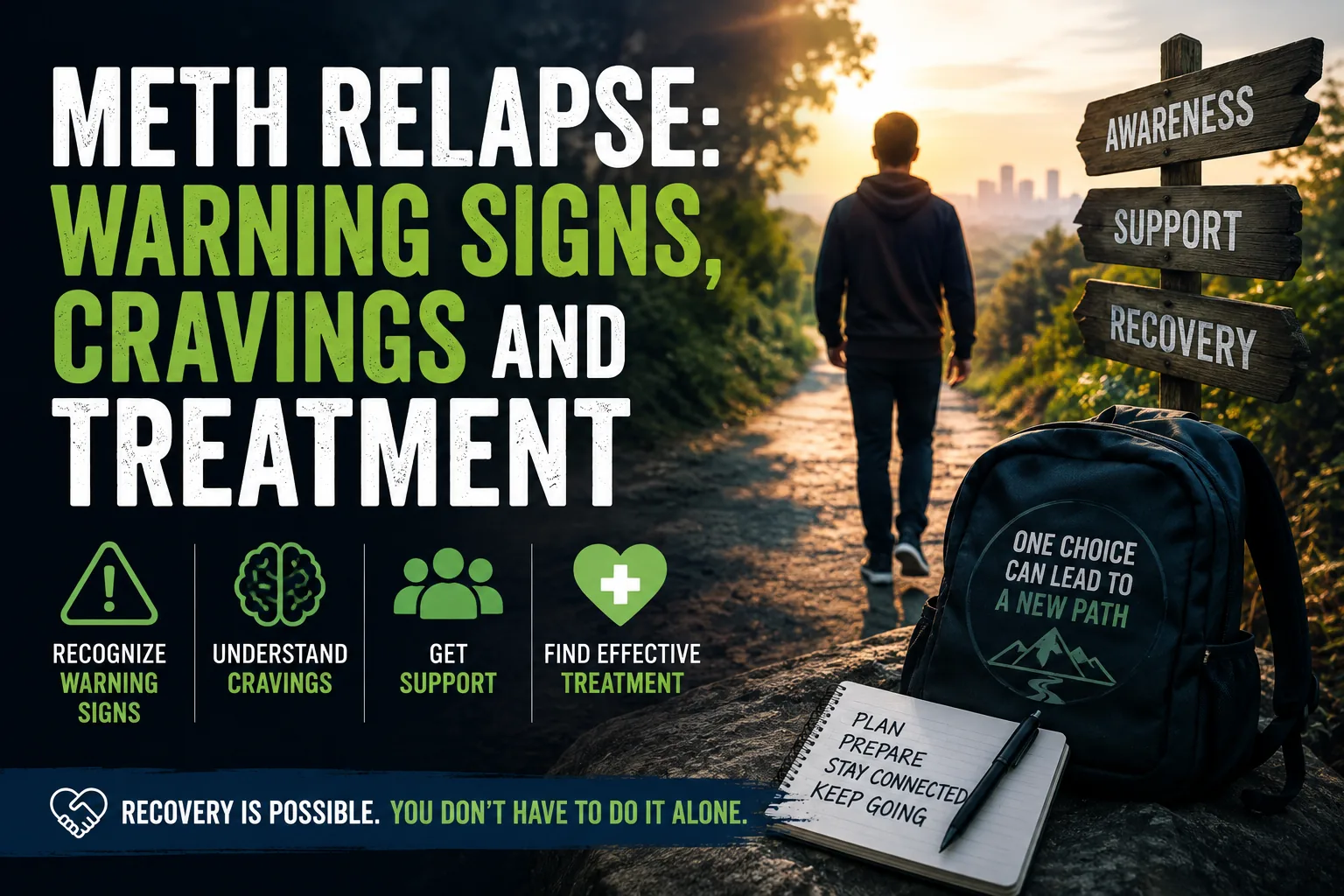


A meth relapse does not always begin when someone actually uses methamphetamine again. Changes in sleep, mood, thinking, relationships, and recovery habits may appear days or weeks earlier. Recognizing the warning signs of meth relapse can create an opportunity to get help before cravings turn into another binge.
Methamphetamine is a powerful stimulant with a high potential for addiction. It affects brain systems involved in reward, motivation, attention, and movement, and repeated use can make powerful cravings difficult to ignore.
Relapse should be taken seriously, but it does not mean treatment failed. NIDA explains that returning to drug use can indicate that treatment needs to be resumed, modified, or replaced with a different approach.
Warning Signs of a Meth Relapse
Relapse may start with small changes that do not initially look connected to meth.
Someone might stop attending treatment, isolate from supportive people, reconnect with old drug-using friends, or begin staying awake later at night. They may start remembering the energy or confidence associated with meth while minimizing the paranoia, depression, relationship problems, or physical consequences that followed.
Common warning signs can include:
- Increasing thoughts about meth
- Stronger or more frequent cravings
- Contacting people associated with past meth use
- Returning to neighborhoods or places where meth was obtained
- Skipping counseling or recovery meetings
- Becoming secretive or dishonest
- Isolating from sober friends and family
- Sleeping poorly or staying awake for unusually long periods
- Increased irritability, anxiety, or depression
- Losing interest in healthy routines
- Romanticizing previous meth use
- Keeping cash, paraphernalia, or contacts available “just in case”
Stress, drug-related people and places, moods, and direct contact with drugs are among the common triggers that can contribute to relapse across substance use disorders.
One warning sign by itself does not guarantee someone will use meth. Look for patterns. Several changes happening together may mean recovery support needs to increase quickly.
Why Meth Cravings Can Feel So Powerful
Meth produces intense effects on the brain’s reward system. After regular use stops, people can experience a difficult period of withdrawal and adjustment.
Methamphetamine withdrawal can include fatigue, low energy, anxiety, depression, irritability, sleep disturbances, and intense cravings. SAMHSA recovery materials describe withdrawal as a period that may involve exhaustion, depression or anxiety, low energy, irritability, and cravings.
These symptoms can create a dangerous cycle.
Someone may remember that meth temporarily made them feel energetic when they are exhausted. When they feel depressed, meth may seem like a fast way to feel something again. If they cannot concentrate, sleep normally, or enjoy everyday activities, the memory of meth’s effects can become tempting.
Cravings are not proof that relapse is inevitable.
When cravings appear, change the situation quickly. Leave the triggering environment. Call a counselor, sober friend, sponsor, or recovery coach. Eat, sleep, exercise if appropriate, or attend treatment rather than remaining alone with the craving.
Do not test yourself by keeping meth nearby or spending time around people who are using.
What to Do After a Meth Relapse
If meth has already been used, respond quickly.
Tell someone you trust what happened and contact your treatment provider. Do not allow shame to convince you that the previous months of recovery were wasted.
NIDA emphasizes that relapse does not mean treatment has failed. It is a reason to reassess the treatment plan and determine what additional support is needed.
Try to identify what happened before the relapse.
Were you sleeping poorly? Were you depressed? Did you reconnect with an old friend? Did money become available? Were you overwhelmed by work, relationships, loneliness, or boredom?
The answers can help rebuild your relapse-prevention plan.
A meth relapse can also become a medical emergency. Methamphetamine can contribute to dangerously high heart rate or blood pressure, irregular heartbeat, overheating, agitation, paranoia, hallucinations, and other serious complications.
Seek emergency care for severe chest pain, difficulty breathing, seizures, extreme overheating, loss of consciousness, severe confusion, or dangerous agitation. Call 911 if someone appears to be experiencing a medical or psychiatric emergency.
The illegal drug supply creates an additional danger. Methamphetamine may sometimes be used alongside opioids or contain fentanyl, and CDC data show that stimulant and opioid involvement commonly overlap in fatal overdoses. In 2023, nearly 35,000 U.S. overdose deaths involved psychostimulants with abuse potential, primarily methamphetamine, and 47% of overdose deaths in reporting jurisdictions involved both opioids and stimulants.
Because fentanyl exposure is possible in the illicit drug supply, having naloxone available is also worth considering even when meth is the intended drug.
What Treatments Help Prevent Meth Relapse?
Treatment for methamphetamine use disorder is different from treatment for opioid addiction.
As of May 2026, the FDA had not approved a medication specifically for stimulant use disorder, including methamphetamine use disorder.
That does not mean there are no effective treatments.
Contingency management has some of the strongest evidence. This approach provides meaningful incentives for behaviors such as providing drug-negative tests or participating in treatment. NIDA describes contingency management as particularly effective for stimulant addictions, including methamphetamine.
Cognitive behavioral therapy (CBT) can also help people recognize the situations and thoughts that lead to meth use and develop different ways of responding. Behavioral therapies are designed to help people identify, avoid, and cope with relapse triggers.
Treatment may also include:
- Intensive outpatient treatment
- Residential rehab
- Individual counseling
- Group treatment
- Contingency management
- Cognitive behavioral therapy
- Peer recovery support
- Sober or recovery housing
- Mental health treatment
- Sleep and medical care
Researchers continue to study medications. A NIDA-supported clinical trial found that a combination of injectable naltrexone and oral bupropion helped some adults with moderate or severe methamphetamine use disorder reduce their meth use, but the combination is not currently FDA-approved specifically for methamphetamine use disorder.
Meth Relapse Does Not Have to Become a Return to Addiction
The most dangerous thought after meth use is often, “I already messed up, so it doesn’t matter anymore.”
It matters what happens next.
One use does not have to become a week-long binge. One binge does not have to become months of meth use.
Tell someone. Sleep and eat. Get medically evaluated when necessary. Reconnect with treatment. Identify what changed before the relapse and strengthen that part of your recovery plan.
Meth cravings can be intense, and recovery may take time. But cravings are temporary experiences—not commands you have to follow.
A meth relapse is a warning that more support is needed. Responding early can turn that warning into a return to treatment instead of a return to active addiction.


