



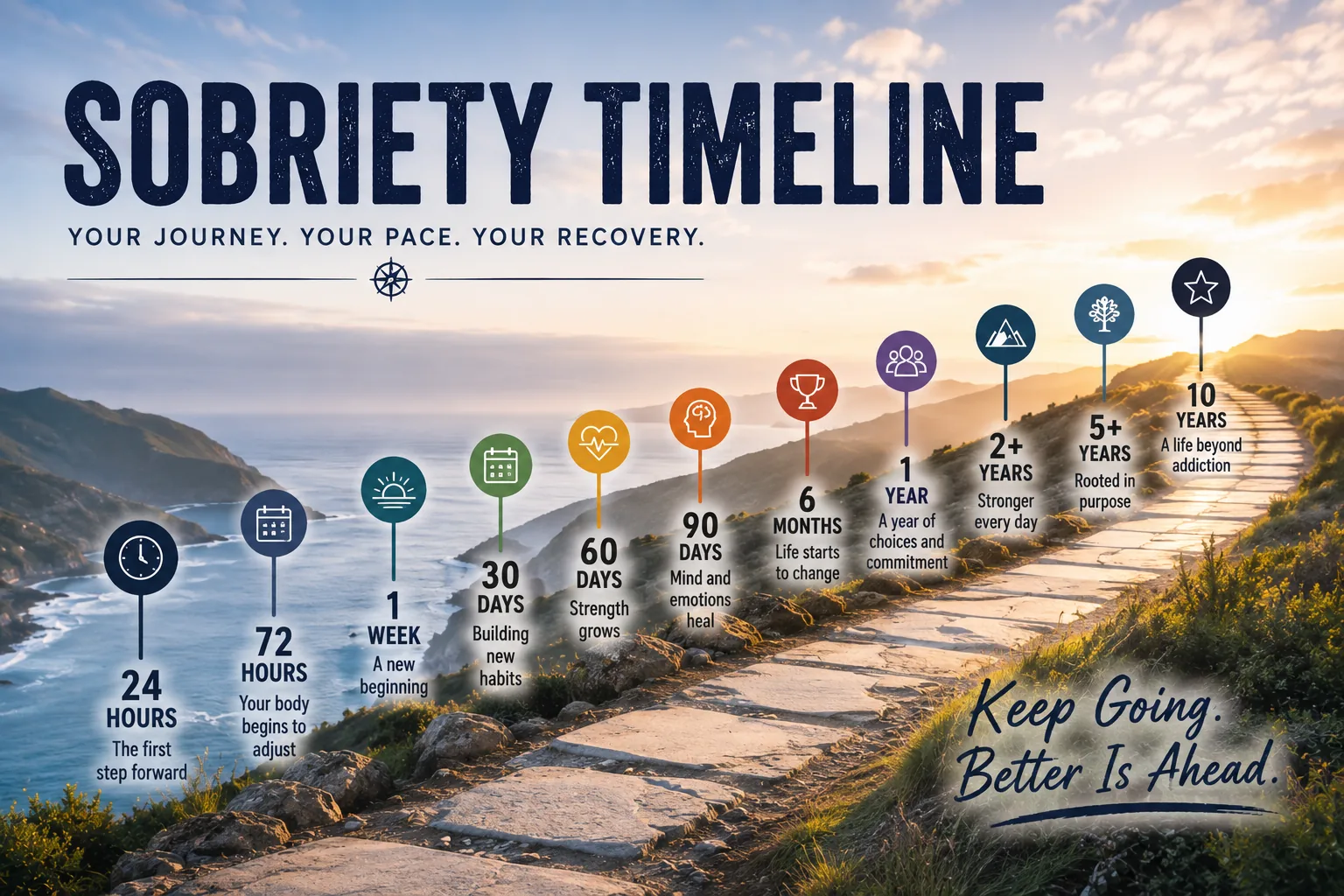


A sobriety timeline can help you understand how recovery may change from the first difficult hours without drugs or alcohol to years of long-term sobriety. There is no perfect schedule for healing. Your experience can depend on the type of substance use, how long you were using, your physical and mental health, treatment, environment, and support system.
Still, certain milestones can help you understand what may be happening along the way.
Early recovery often focuses on withdrawal, cravings, sleep, and simply getting through the day. As weeks turn into months, attention may shift toward emotional health, relationships, routines, work, and preventing relapse. Years into recovery, sobriety may become less about avoiding substances and more about protecting the life you have built.
Use this recovery timeline to explore each stage in greater detail.
The First Days of Sobriety: Safety and Stabilization
The beginning can be the most physically intense period of recovery.
During the first 24 hours without drugs or alcohol, withdrawal symptoms may begin as the body adjusts to the absence of a substance it has become accustomed to. Anxiety, sweating, nausea, shaking, fatigue, sleep problems, and cravings can occur.
Alcohol and benzodiazepine withdrawal deserve particular caution because severe withdrawal can become medically dangerous. Detox should never be treated as a test of willpower.
The next major milestone is the first 72 hours of sobriety. For some people, symptoms begin improving during this period. For others, withdrawal may intensify or continue.
The goal during these early days is simple:
Stay safe. Get support. Make the next healthy decision.
Your First Week to First Month Sober
After the initial withdrawal period, recovery begins becoming about more than physical stabilization.
During your first week sober, cravings, sleep problems, mood changes, exhaustion, and strong emotions may continue. You may also begin realizing how much time substance use once occupied.
Structure becomes increasingly important.
Treatment appointments, regular meals, sleep, exercise, meetings, and supportive relationships can begin creating a new rhythm.
By the first 30 days of sobriety, you may begin recognizing triggers more clearly and developing healthier ways to respond to stress.
Thirty days is a major achievement, but it is still early recovery.
This is also a good time to strengthen your support system and develop a relapse prevention plan rather than assuming that getting through withdrawal means the addiction is gone.
60 to 100 Days Sober: Building a Stronger Foundation
The second and third months can bring noticeable changes.
At 60 days sober, some people notice more stable sleep, clearer thinking, improved energy, and healthier routines.
Emotional recovery may become more noticeable too.
You may begin dealing with guilt, relationships, finances, or problems that were pushed aside during active addiction.
By 90 days sober, healthy behaviors may be becoming more natural.
Three months can also create a dangerous sense of confidence. Feeling better can sometimes lead people to stop attending treatment, disconnect from support, or believe controlled substance use may now be possible.
Continuing the habits that got you sober remains important.
At 100 days sober, changes in concentration, sleep, motivation, and physical health may feel increasingly noticeable. Brain and body recovery can continue much longer, but more than three months without repeated substance exposure can create an important foundation.
Six Months to One Year: Recovery Starts Feeling Like Life
Around six months sober, recovery may start taking up less mental space.
Work, family, health, hobbies, and future goals may become more important.
Cravings can still occur, but you may have more experience handling them.
By nine months sober, relationships may have had more time to heal and healthy routines may feel increasingly normal.
Recovery can also become emotionally deeper. Once the immediate crisis has passed, issues involving trauma, identity, grief, or relationships may become easier to see.
Then comes one of the best-known milestones: one year sober.
A year represents much more than a number.
It is a year of handling birthdays, stress, celebrations, difficult conversations, ordinary days, and unexpected problems without returning to drugs or alcohol.
Two Years and Beyond: Long-Term Recovery
At two years sober, recovery may feel increasingly established.
Stable housing, work, relationships, finances, hobbies, and purpose can become part of the recovery capital supporting your sobriety.
By five years sober, addiction may occupy far less space in everyday life.
You may go long periods without serious cravings. Your identity may no longer revolve around being someone trying to stop using. You may think of yourself primarily as a parent, partner, professional, friend, business owner, artist, or simply someone living their life.
Reaching 10 years sober can bring an entirely different perspective.
A decade of recovery provides thousands of examples that difficult emotions and life events can be survived without returning to substance use.
Sobriety can become less about what you escaped and more about everything you created afterward.
There Is No Perfect Recovery Timeline
A sobriety timeline can provide direction, but it should never become a scoreboard.
Someone may feel incredible at 60 days while another person struggles at six months.
One person may stop experiencing frequent cravings quickly. Another may need continued treatment and support for years.
Neither experience makes recovery less real.
The milestones matter because they give you opportunities to look back at how far you have come and think about what needs strengthening next.
The first goal may be getting through 24 hours.
Then three days.
A week.
A month.
A year.
Eventually, you may stop counting every day.
And that may be one of the biggest changes of all.
Recovery starts as learning how to live without drugs or alcohol. Over time, it can become simply learning how to live.


