



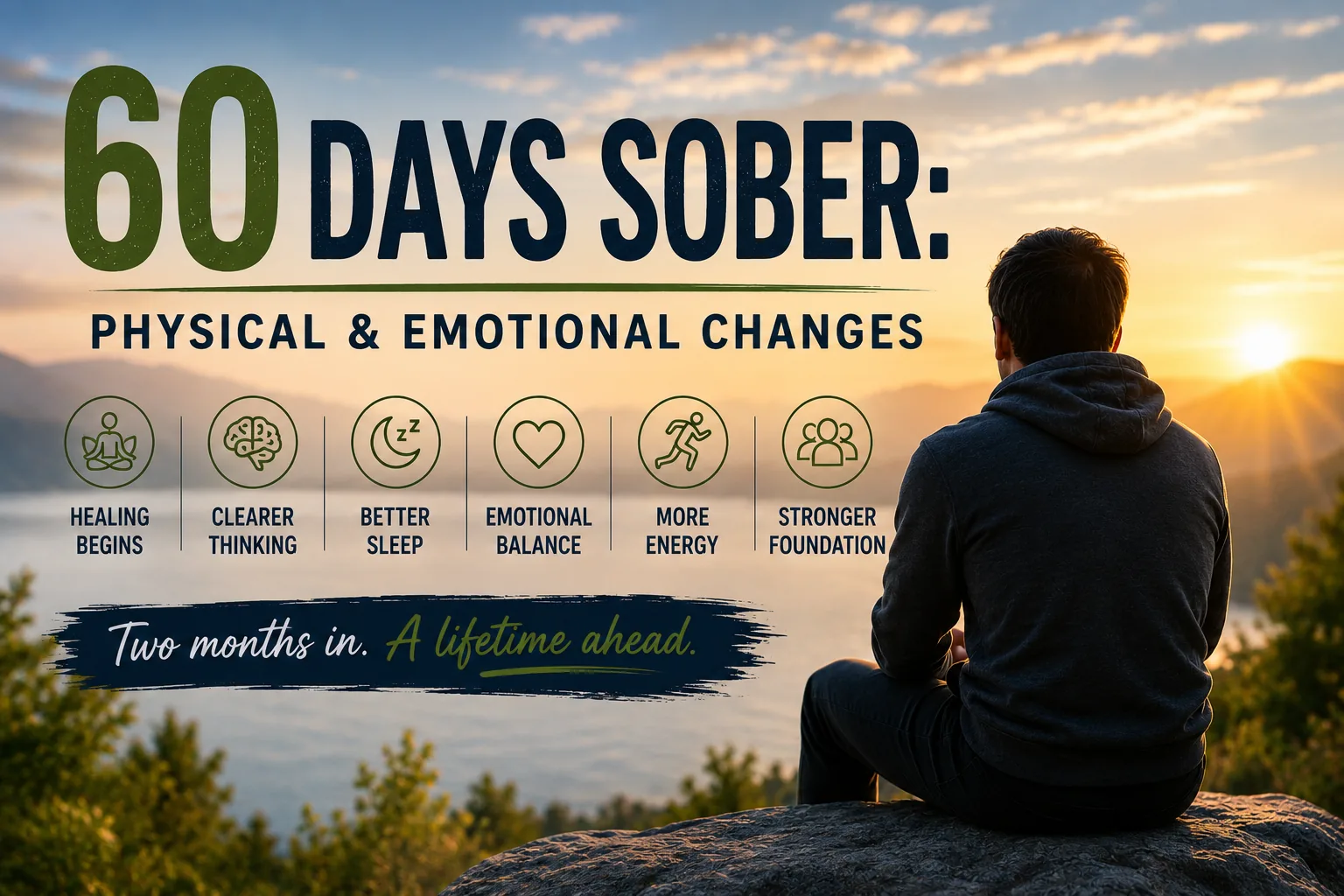


Reaching 60 days sober is a meaningful milestone in addiction recovery. Two months without drugs or alcohol may not sound like a long time compared with years of substance use, but a lot can begin changing during those first eight weeks.
For many people, the intense physical symptoms of withdrawal have passed. Sleep may be improving. Appetite may feel more normal. Thinking can become clearer. At the same time, emotions may still feel unpredictable, cravings can appear unexpectedly, and the reality of rebuilding life after addiction may begin to feel much more real.
If you are wondering what happens after 60 days of sobriety, remember that there is no universal timeline.
Recovery depends on the substance used, how long and heavily it was used, physical health, mental health, treatment, environment, and support system.
Sixty days is not the finish line.
It is often where recovery begins shifting from surviving to rebuilding.
Physical Changes After 60 Days Sober
During the first week sober, much of the body’s attention may be focused on withdrawal and stabilization.
By 60 days, many people are dealing with something different.
The body has had weeks without repeated exposure to alcohol or drugs. Depending on the individual, people may begin noticing improvements in areas such as:
- Sleep quality
- Appetite
- Energy
- Hydration
- Digestion
- Physical appearance
- Exercise tolerance
- Concentration
- Daily stamina
Someone who once woke up feeling sick, hungover, or exhausted may begin experiencing mornings differently.
There may be more energy to exercise, prepare meals, go to work, or complete everyday responsibilities.
But physical recovery is rarely complete after two months.
Long-term substance use can affect the brain, liver, cardiovascular system, nutrition, hormones, sleep, and other areas of health. Some effects improve relatively quickly after substance use stops. Others may require months, years, medical treatment, or ongoing monitoring.
That is why recovery should include healthcare—not just abstinence.
Your Brain Is Still Adjusting
One of the biggest misconceptions about sobriety is that the brain immediately returns to normal once withdrawal ends.
Recovery takes longer.
Repeated drug or alcohol use can affect systems involved in reward, stress, motivation, memory, decision-making, and emotional regulation.
When substances are removed, those systems need time to adapt.
At around 60 days sober, you might notice clearer thinking or better concentration than during the first few weeks.
But you might also experience periods of:
- Low motivation
- Difficulty concentrating
- Irritability
- Anxiety
- Restlessness
- Emotional sensitivity
- Trouble enjoying ordinary activities
- Sleep disturbances
These experiences do not necessarily mean recovery is failing.
Brain and emotional recovery can continue for months.
Healthy sleep, nutrition, exercise, treatment, social connection, and consistent routines can give your body and brain a better environment for continued healing.
Emotions Can Become More Complicated
The first month of sobriety can feel like an emergency.
By the second month, that immediate crisis may begin fading.
Then something interesting happens.
Life becomes quieter.
And your emotions may become louder.
Drugs or alcohol may have been used to manage sadness, stress, anger, trauma, loneliness, anxiety, or boredom. Once those substances are gone, the feelings underneath them may become easier to see.
You may begin thinking about damaged relationships.
Missed opportunities.
Debt.
Career problems.
Things you said.
People you hurt.
Time you cannot get back.
This can bring guilt or regret.
Recovery is not about pretending those things did not happen.
It is about learning how to face them without returning to substance use.
Counseling, peer support, family work, and a strong recovery support system can become especially valuable during this stage.
Cravings Can Still Surprise You
After 60 days, you may go much longer without thinking about drinking or using.
That progress can feel incredible.
Then suddenly, a craving appears.
Maybe you drive past an old bar.
Someone sends you a message.
A song brings back memories.
You have a stressful day.
Or maybe everything is going well and you suddenly think:
“Maybe I can handle it now.”
This is why a relapse prevention plan remains important even when you feel better.
Cravings often become easier to manage with experience, but they can still appear unexpectedly.
Know your triggers.
Know who you can call.
Have somewhere safe to go.
Recognize thoughts that romanticize past substance use while forgetting the consequences.
Sixty days sober can increase confidence.
Make sure confidence does not become complacency.
Your Daily Routine May Feel More Natural
During the first 30 days of sobriety, you may have needed to deliberately plan nearly everything.
Wake up.
Eat.
Go to treatment.
Attend a meeting.
Exercise.
Call someone.
Sleep.
After two months, those activities may begin feeling less forced.
That is a good sign.
A daily routine in addiction recovery can eventually become normal life.
You may start sleeping at predictable times.
Work becomes more consistent.
Exercise becomes a habit.
Recovery meetings are simply part of the week.
You stop debating every healthy decision because many of those decisions have become automatic.
This is how recovery capital grows.
Small habits begin creating stability.
Relationships May Start Changing
Two months of sobriety may also change relationships.
Some loved ones may begin trusting you more.
Others may remain cautious.
That can be frustrating.
You may feel like:
“I’ve been sober for two months. Why don’t they believe me?”
Remember that trust does not always heal on the same timeline as sobriety.
If addiction involved years of broken promises, people may need more than 60 days to feel safe again.
Do not try to convince them with words.
Show them.
Keep commitments.
Arrive on time.
Be honest.
Respect boundaries.
Let consistency do the talking.
Sixty Days Is Progress, Not Completion
At 60 days sober, recovery may begin feeling less like something happening to you and more like something you are actively building.
You may feel better physically.
You may think more clearly.
You may have more money.
Relationships may begin healing.
You may feel proud.
You may also feel anxious, emotionally raw, or uncertain about the future.
Both can be true.
The next stage of recovery is about continuing what is working.
Stay connected.
Keep your routine.
Pay attention to relapse warning signs.
Continue treatment or aftercare.
Build relationships with people who support the life you want.
Sixty days does not mean every part of addiction has disappeared.
It means you have already done something powerful.
You have given yourself two months to heal.
Two months to think differently.
Two months to practice living differently.
And those 60 days can become the foundation for the next 60—and eventually, for long-term addiction recovery.


