



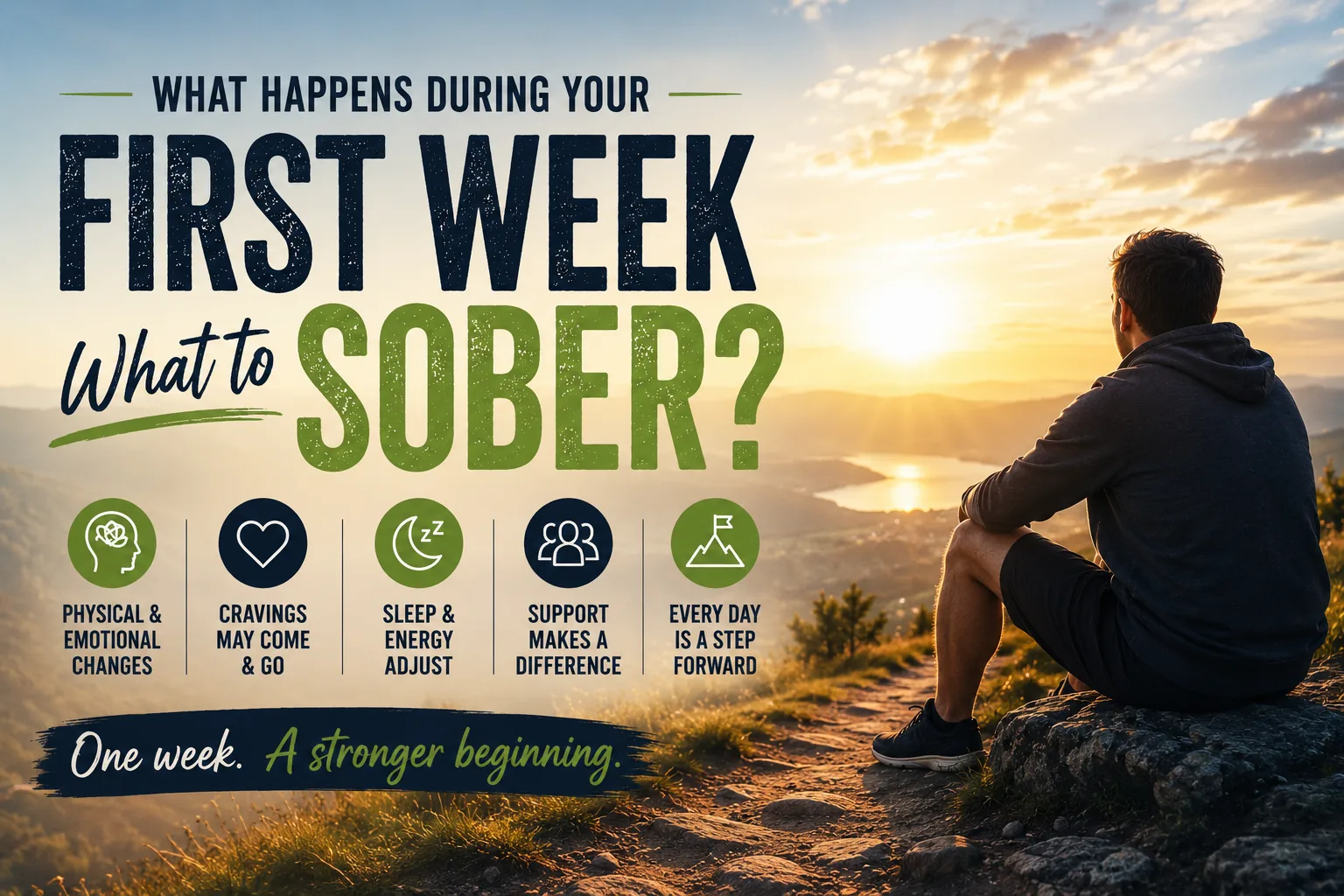


Your first week sober can feel like a major turning point. For some people, the first seven days bring relief, better sleep, clearer thinking, and a sense of hope. For others, the week may involve cravings, anxiety, exhaustion, mood swings, poor sleep, or physical withdrawal symptoms.
If you are wondering what happens during your first week sober, the answer depends on what substance you were using, how much you were using, how long you had been using, and your overall physical and mental health.
One thing is important from the start:
Withdrawal is not always safe to manage alone.
Alcohol and benzodiazepine withdrawal can become medically dangerous. Opioid withdrawal can be extremely uncomfortable. Stimulant withdrawal can involve severe depression or exhaustion.
The first week is not about becoming a completely new person.
It is about getting stable, staying safe, and beginning to build the foundation for recovery.
Days 1–3: Getting Through Withdrawal
The first few days are often the most physically intense.
During the first 24 hours without drugs or alcohol, your body begins adjusting to the absence of a substance it may have become dependent on.
Symptoms may include:
- Anxiety
- Sweating
- Trembling
- Nausea
- Headaches
- Fatigue
- Muscle aches
- Restlessness
- Trouble sleeping
- Mood changes
- Strong cravings
By the first 72 hours of sobriety, some symptoms may begin improving.
Others may become stronger.
Alcohol withdrawal deserves special attention because severe symptoms can include seizures, hallucinations, confusion, and delirium tremens.
Benzodiazepines such as Xanax, Klonopin, and Valium can also cause dangerous withdrawal.
People who have been using these substances heavily or regularly should talk with a medical professional before suddenly stopping.
For people coming off opioids, the first few days may include stomach problems, muscle aches, sweating, anxiety, runny nose, and intense cravings.
Stimulant withdrawal can feel very different.
Someone stopping methamphetamine or cocaine may sleep for long periods, feel emotionally flat, or experience depression.
This is why medical detox or professional evaluation can be so important.
Safety comes before pride.
Days 4–5: Your Body May Calm Down, but Your Mind Gets Louder
By the middle of the first week, some people begin noticing physical improvements.
You may start eating more normally.
Shaking or nausea may decrease.
You may feel slightly more rested.
But this is also when emotional challenges can become more noticeable.
The immediate crisis may be fading, and now you are left with your thoughts.
You may start thinking about relationships that were damaged.
Money that was lost.
Work problems.
Family members you hurt.
Things you said or did during addiction.
Do not try to solve everything at once.
Early recovery can make emotions feel unusually strong because drugs or alcohol may have been used to numb those feelings for years.
Guilt, anger, sadness, anxiety, and loneliness can all appear.
That does not mean sobriety is making your life worse.
It may mean you are beginning to feel things you had been avoiding.
Counseling, treatment, peer support, and honest conversations with trusted people can help.
Days 6–7: The First Signs of a New Routine
By the end of the first week, many people begin thinking less about immediate withdrawal and more about what comes next.
That is when structure becomes important.
A simple daily routine in addiction recovery can make early sobriety feel more manageable.
Try building your day around basic anchors:
Wake up at a consistent time.
Eat regular meals.
Attend treatment.
Take medications as prescribed.
Get outside.
Move your body.
Talk to someone supportive.
Go to bed around the same time.
You do not need to build the perfect recovery routine in seven days.
You only need enough structure to reduce chaos.
Boredom can become a surprising trigger during the first week.
Substance use may have taken up hours of your day.
Once it is gone, the empty time can feel uncomfortable.
Planning healthy activities in advance can help.
Exercise.
Cook.
Watch a movie.
Attend a meeting.
Spend time with family.
Go for a walk.
Call a sober friend.
Small activities can prevent long stretches of isolation.
Cravings Can Come and Go Without Warning
Cravings may still be strong during your first week sober.
They may happen when you are stressed.
But they can also happen when you are bored, excited, lonely, or simply reminded of past substance use.
A song.
A neighborhood.
A person.
A smell.
A Friday night.
All of these can trigger thoughts about using.
This is why beginning a relapse prevention plan early can be helpful.
Write down your biggest triggers.
Know who you can call.
Avoid high-risk places when possible.
Remove access to substances.
Keep recovery support close.
Most importantly, remember that a craving is temporary.
You do not have to act on it.
Sleep May Still Be Difficult
Many people expect sleep to improve immediately after getting sober.
Sometimes it does.
Sometimes it takes longer.
Your sleep schedule may have been disrupted for months or years.
During the first week, you may have trouble falling asleep, wake frequently, sleep too much, or have intense dreams.
Try not to panic.
Keep a consistent schedule.
Limit caffeine late in the day.
Get some movement or exercise.
Talk with a healthcare professional if sleep problems become severe.
Avoid trying to treat insomnia with alcohol, drugs, or medications that were not prescribed for you.
Recovery takes time.
Your First Week Is a Beginning
Seven sober days can feel enormous when getting through one hour once seemed impossible.
But completing your first week does not mean recovery is finished.
It means you have started.
The next steps may include addiction treatment, counseling, medications, sober living, recovery meetings, or building a stronger recovery support system.
This is also the time to begin thinking about aftercare, triggers, routines, relationships, and long-term goals.
Do not compare your first week with someone else’s fifth year.
Recovery develops gradually.
You may still feel tired.
You may still feel emotional.
You may still have cravings.
That is okay.
The goal of your first week is not to prove that addiction is completely behind you.
The goal is to keep moving forward safely.
One day becomes three.
Three days become seven.
And eventually, those first difficult days can become the beginning of a life you once could not imagine.


