



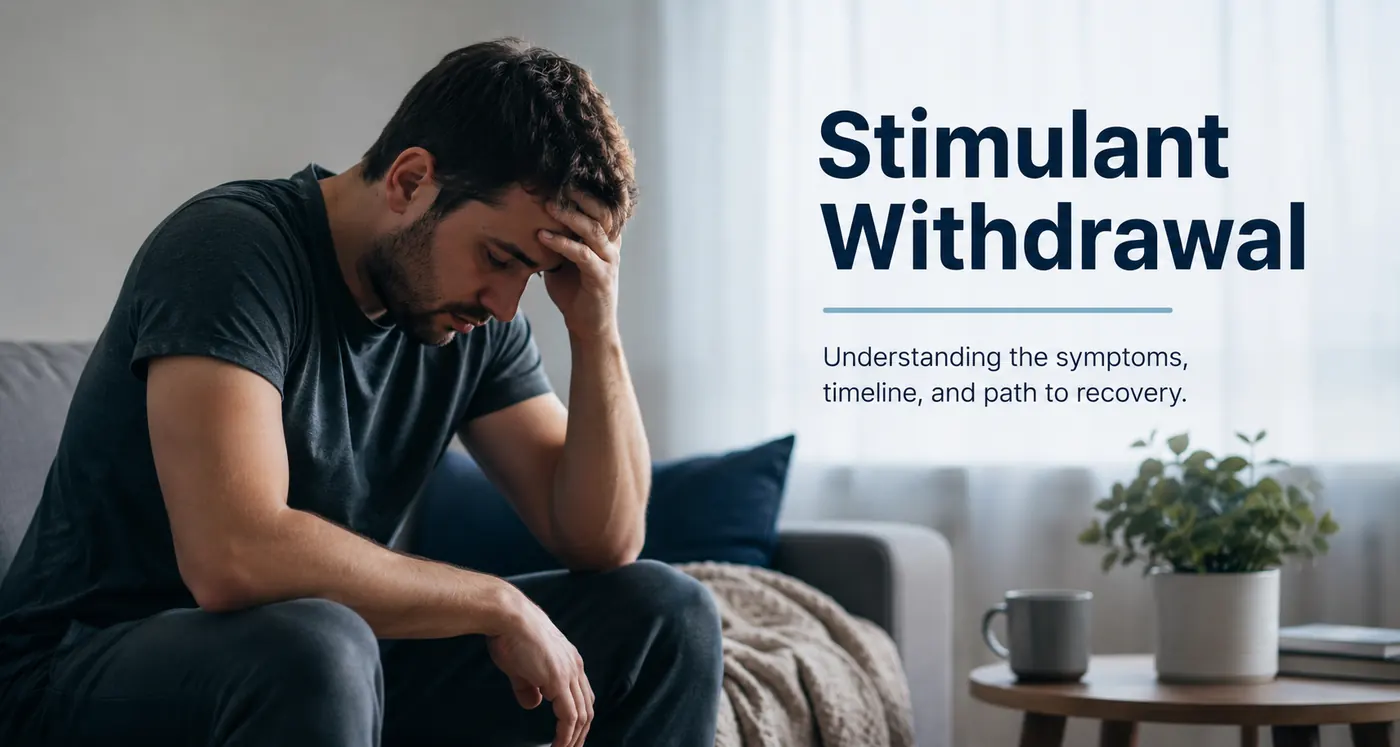


Stimulant withdrawal can feel like the body and brain are shutting down after being pushed too hard for too long. Common stimulant withdrawal symptoms can include extreme tiredness, depression, anxiety, intense cravings, sleep problems, hunger, body aches, and feeling emotionally empty. For some people, the crash is so severe that they feel hopeless or unsafe.
This is why stimulant withdrawal should never be brushed off as “just coming down.” Stimulants like methamphetamine, cocaine, Adderall, Ritalin, Vyvanse, and other amphetamines affect the brain’s reward system. When someone stops using them, the brain has to fight to find balance again. That process can be painful, scary, and risky.
In 2024, about 4.3 million people age 12 or older in the United States had a central nervous system stimulant use disorder. Among people with that disorder, about 2 in 5 had a severe disorder. Overdose data also shows how dangerous stimulant use can be. In 2024, 28,722 overdose deaths involved psychostimulants with abuse potential, and 21,945 involved cocaine.
As Russell Brand once said, “The mentality and behavior of drug addicts and alcoholics is wholly irrational until you understand that they are completely powerless over their addiction.” That does not mean people are hopeless. It means they need real support, not shame.
Navigating This Guide
This hub page serves as the entry point for deeper exploration. Use the links below to dive into specific areas of stimulant addiction:
Stimulant Withdrawal Symptoms to Watch For
Stimulant withdrawal symptoms can affect the body, mind, and emotions. The most common symptom is a hard crash. A person may sleep for long periods, feel weak, or struggle to get out of bed. They may also feel depressed, anxious, angry, restless, or emotionally numb.
Other symptoms may include:
- Strong cravings for stimulants
- Increased appetite
- Headaches
- Sweating
- Muscle aches or joint pain
- Trouble sleeping or sleeping too much
- Vivid dreams or nightmares
- Poor focus
- Irritability
- Paranoia or agitation
- Loss of interest in normal life
One of the most serious risks is depression. Stimulant withdrawal can make a person feel like nothing will ever get better. This can increase the risk of self-harm, especially in the first days or weeks after stopping. If someone talks about suicide, feels unsafe, is confused, paranoid, or out of control, seek emergency help right away.
Why Stimulant Withdrawal Happens in the Brain
Stimulants flood the brain with dopamine. Dopamine is a chemical tied to pleasure, reward, energy, and motivation. When someone uses stimulants over and over, the brain starts to expect that extra dopamine. Normal rewards like food, sleep, work, hobbies, love, or family may stop feeling good.
When the drug is removed, the brain may not make or use dopamine in a normal way at first. This is why people often feel flat, tired, depressed, and unmotivated during withdrawal. It is not laziness. It is not weakness. It is the addicted brain trying to recover.
Cravings are also part of this brain change. The brain remembers the drug as a fast way to feel energy or relief. Stress, certain people, old places, money, music, or even boredom can trigger the urge to use again. That is why withdrawal is not only physical. It is emotional, mental, and behavioral.
The good news is that the brain can heal. It takes time, safety, sleep, nutrition, support, and treatment. Recovery is not instant, but it is possible.
Stimulant Withdrawal Timeline
The stimulant withdrawal timeline can vary based on the drug used, how long a person used, how much they used, and their overall health. Cocaine withdrawal may be shorter than methamphetamine withdrawal. Prescription stimulant withdrawal can also happen, especially when medications are misused or stopped suddenly after heavy use.
In the first hours to few days, the person may crash. They may feel exhausted, depressed, anxious, and restless. They may sleep a lot or feel unable to sleep even though they are tired.
In the first week, cravings can be strong. Mood swings, hunger, poor focus, and sleep problems may continue. Some people feel irritable or paranoid. Others feel heavy sadness or guilt about what happened during active addiction.
Over the next 1 to 3 weeks, many symptoms may slowly improve. Fatigue, depression, anxiety, cravings, and concentration problems can still come and go. Methamphetamine withdrawal may last longer, sometimes several weeks.
Some people also deal with post-acute withdrawal. This can include low mood, low energy, lack of pleasure, cravings, and emotional ups and downs that last for months. These symptoms can be frustrating, but they do not mean recovery is failing. They mean the brain is still healing.
When Stimulant Withdrawal Becomes Dangerous
Stimulant withdrawal is not usually known for the same physical danger as alcohol or benzodiazepine withdrawal, but it can still be very serious. The biggest danger is often mental health. Severe depression, suicidal thoughts, paranoia, aggression, and intense cravings can put a person at risk.
Another danger is relapse. During withdrawal, the brain may scream for relief. A person may use again just to stop the crash. This can lead to binge use, overdose, or mixing stimulants with alcohol, opioids, benzodiazepines, or other drugs. Mixing substances can make overdose more likely.
Withdrawal can also uncover other problems. Some people were using stimulants to cover untreated ADHD, depression, trauma, anxiety, or exhaustion. Once they stop, those issues may feel stronger. This is one reason professional treatment can help. It gives the person support for both the withdrawal and the deeper reasons behind the drug use.
Getting Help for Stimulant Withdrawal
If you or someone you love is going through stimulant withdrawal, you do not have to handle it alone. Medical detox or treatment support can help keep the person safe, rested, hydrated, and connected to care. Treatment may include medical evaluation, mental health support, therapy, relapse prevention, peer support, and help planning the next step.
Loved ones can help by staying calm and direct. You might say, “I love you. I’m worried about your safety. You do not have to do this alone. Let’s get help today.” Avoid yelling, shaming, or arguing while the person is crashing or highly emotional.
Stimulant withdrawal can make a person believe they are broken. That is not true. The crash is not the end of the story. It can be the beginning of recovery.
With the right help, sleep can return. Emotions can settle. The brain can heal. Cravings can become manageable. Life can feel real again. If stimulant withdrawal has become part of your life or your family’s life, now is the time to reach out. Help is available, and recovery can start today.


