



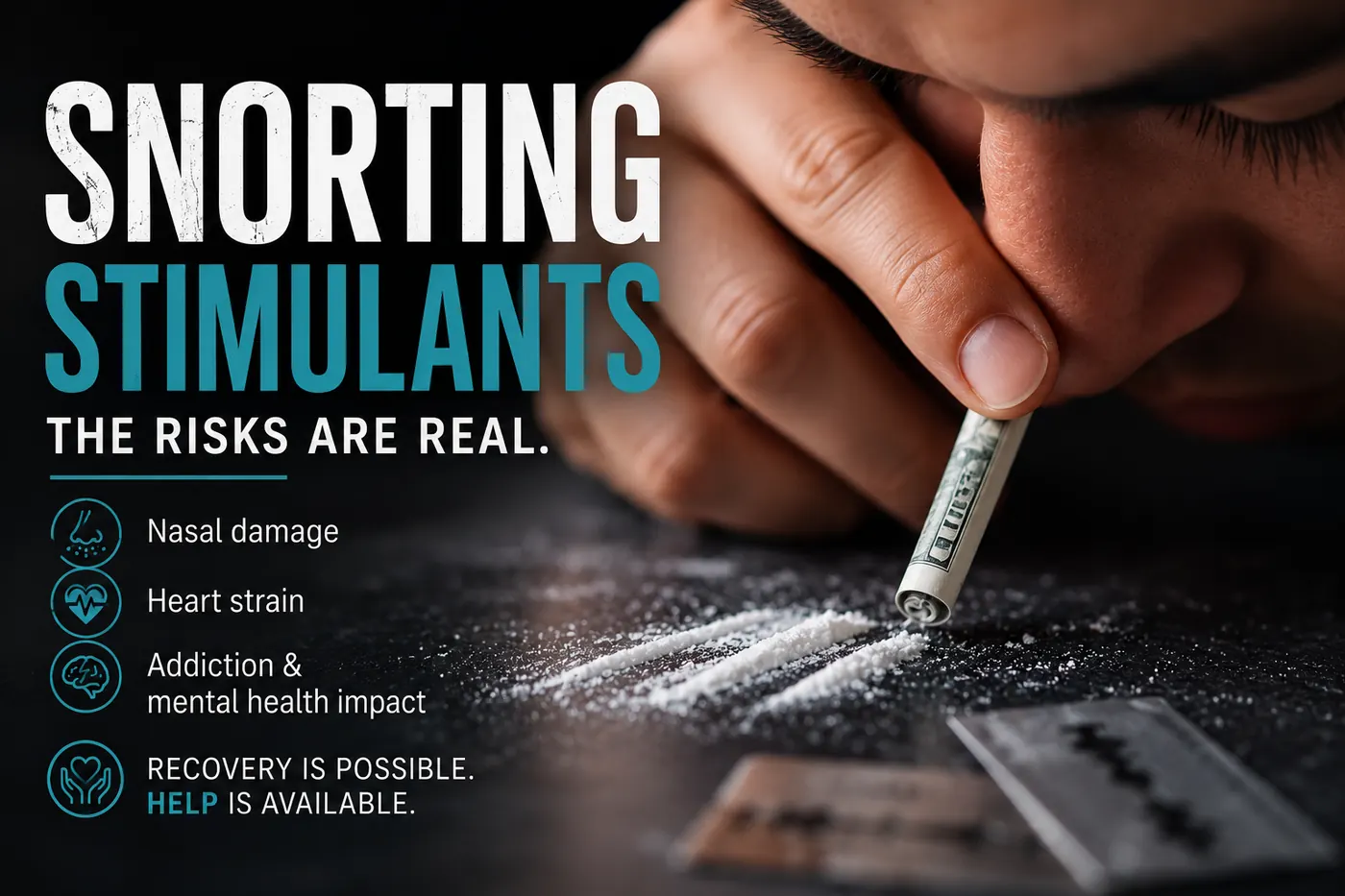


Snorting stimulants can seem less dangerous than smoking or injecting, but that belief can be deadly. The dangers of snorting stimulants include nose damage, heart strain, anxiety, paranoia, overdose, addiction, and a fast-moving cycle of cravings. Cocaine, methamphetamine, and crushed prescription stimulants can all harm the body and brain when used this way.
This is not just “recreational use.” It can turn into a medical crisis. In 2024, about 4.3 million people age 12 or older in the United States had a central nervous system stimulant use disorder. That same year, 28,722 overdose deaths involved psychostimulants with abuse potential, and 21,945 involved cocaine. Even when overdose deaths dropped overall, stimulants remained a major danger.
Navigating This Guide
This hub page serves as the entry point for deeper exploration. Use the links below to dive into specific areas of stimulant addiction:
As Johann Hari said, “The opposite of addiction isn’t sobriety; it is connection.” If snorting stimulants has become part of someone’s life, connection and treatment can help them find a way out.
How Snorting Stimulants Affects the Body
When someone snorts a stimulant, the drug is absorbed through the nasal tissue and enters the bloodstream. The effects may not hit as fast as smoking or injecting, but they can still be intense. A person may feel more awake, focused, confident, talkative, or restless.
The body also reacts quickly. Stimulants can raise heart rate, blood pressure, and body temperature. They can reduce appetite and make sleep feel impossible. A person may stay awake for hours or days, then crash hard when the drug wears off.
Snorting stimulants can also irritate the nose and sinuses. Cocaine is especially known for damaging nasal tissue. Over time, a person may have nosebleeds, a runny nose, sinus infections, loss of smell, pain, or damage to the inside of the nose. Crushed pills can also contain fillers and chemicals that were never meant to be inhaled.
Prescription stimulants like Adderall, Ritalin, and Vyvanse are meant to be taken only as prescribed. Crushing or snorting them can make the effects more unpredictable and dangerous.
Short-Term Risks and Warning Signs
The short-term effects of snorting stimulants can look different from person to person. Some people may seem excited, energetic, or overly focused. Others may become anxious, angry, suspicious, or paranoid.
Warning signs may include:
- Fast heartbeat
- High blood pressure
- Sweating
- Shaking
- Jaw clenching
- Dilated pupils
- Nosebleeds
- Sniffling or frequent nose wiping
- Loss of appetite
- Trouble sleeping
- Panic or anxiety
- Mood swings
- Aggression
- Paranoia
- Chest pain
- Crashing after use
These symptoms should not be ignored. Chest pain, trouble breathing, seizures, overheating, extreme confusion, severe paranoia, or loss of consciousness can be signs of a stimulant overdose or medical emergency. Call 911 right away if these happen.
Another risk is mixing substances. Many people use stimulants with alcohol, opioids, benzodiazepines, or other drugs. This can make the effects harder to predict and raise the risk of overdose. Some drug supplies may also be contaminated or stronger than expected.
Addiction, Cravings, and the Brain
Snorting stimulants can affect the brain’s reward system. Stimulants increase dopamine, a brain chemical linked to pleasure, energy, reward, and motivation. When dopamine surges, the brain learns, “Do that again.”
Over time, the brain may begin to connect snorting stimulants with relief, confidence, focus, or escape. Normal life may start to feel dull without the drug. Food, sleep, family, hobbies, school, and work may not feel as rewarding.
This is how addiction can grow. A person may begin using on weekends, then during stress, then before work, then just to feel normal. They may promise to stop but return to use when cravings hit. They may use more than planned, spend money they cannot afford, or hide what they are doing.
The crash can make the cycle worse. When the stimulant wears off, the person may feel depressed, anxious, tired, hungry, and emotionally empty. Using again may feel like the fastest way to escape that pain.
This is not just a lack of willpower. Addiction changes the brain. But the brain can heal with time, treatment, support, and safety.
When to Seek Help for Snorting Stimulants
If snorting stimulants is causing health problems, sleep loss, money issues, relationship damage, work trouble, legal problems, or mental health symptoms, it is time to ask for help. You do not have to wait for an overdose, arrest, or collapse.
Treatment may include medical evaluation, detox support, residential treatment, outpatient care, therapy, peer support, relapse prevention, and mental health care. Some people also need help for ADHD, anxiety, depression, trauma, or sleep problems. Treating the whole person can lower the risk of relapse.
Loved ones can help by speaking with care instead of shame. Try saying, “I love you. I’m worried about what I’m seeing. I want to help you get support.” Avoid yelling, name-calling, or threats you will not keep. Clear boundaries and steady support are often more effective than fear.
Snorting stimulants can make a person feel trapped and alone. But recovery is possible. The nose, body, brain, and relationships may begin to heal when stimulant use stops and support begins. If this page feels familiar, take it seriously. Help is available, and the next step can start today.


