



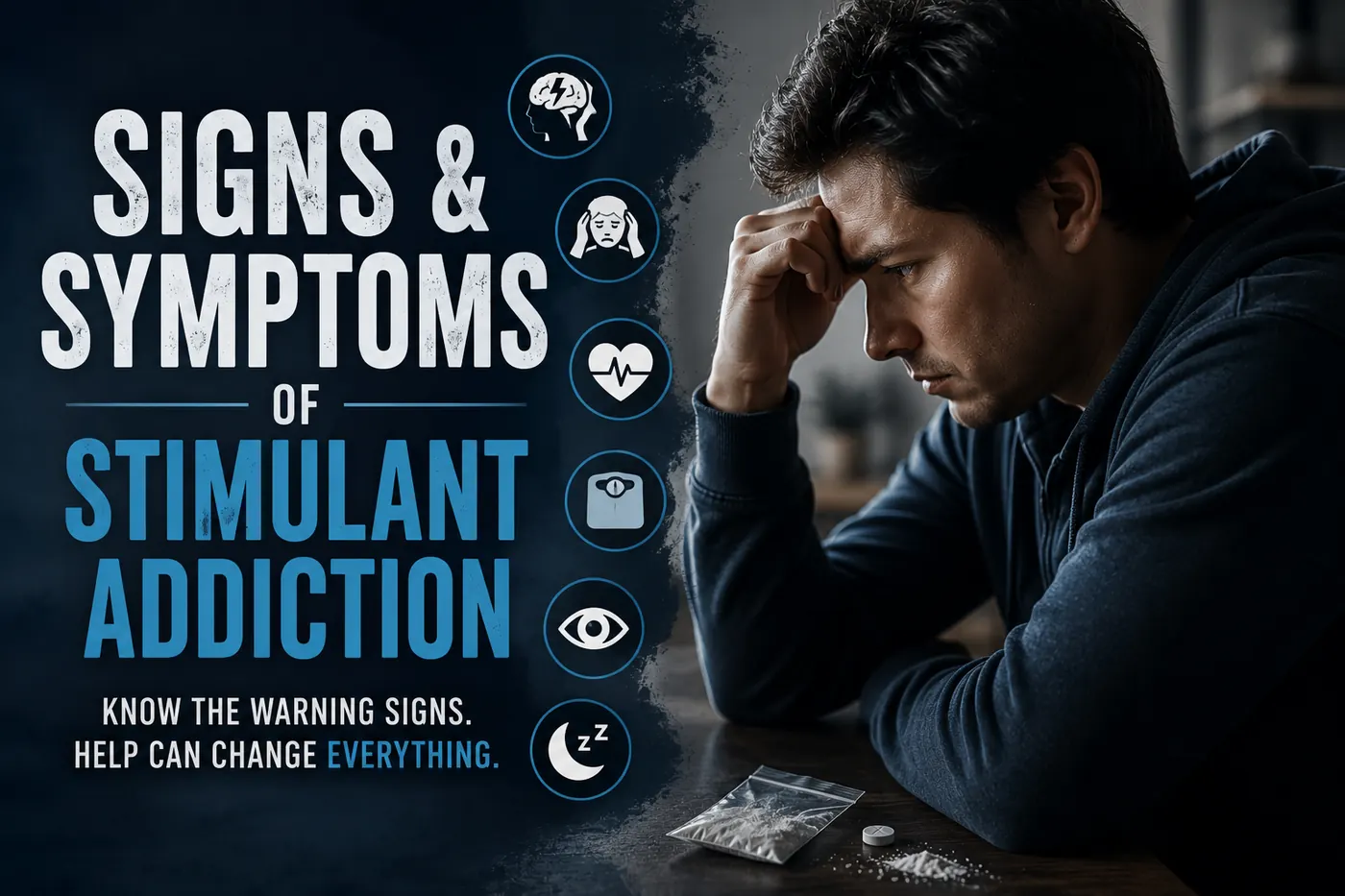


The signs and symptoms of stimulant addiction can be easy to miss at first. A person may seem more focused, energetic, social, or confident. But these early changes can quickly become stimulant addiction warning signs like paranoia, sleeplessness, weight loss, mood swings, cravings, lying, and using even when life is falling apart.
That is what makes stimulant addiction so dangerous. Drugs like cocaine, methamphetamine, Adderall, Ritalin, Vyvanse, and other stimulants can make the brain feel powerful while the body and mind begin to break down. In 2024, about 9 million people age 12 or older in the United States misused central nervous system stimulants. About 4.3 million had a central nervous system stimulant use disorder. That same year, more than 28,000 overdose deaths involved psychostimulants with abuse potential, and more than 21,000 involved cocaine.
As Johann Hari said, “The opposite of addiction isn’t sobriety; it is connection.” Recognizing the signs is one way to reconnect before addiction takes more.
Navigating This Guide
This hub page serves as the entry point for deeper exploration. Use the links below to dive into specific areas of stimulant addiction:
Physical Signs and Symptoms of Stimulant Addiction
Stimulants speed up the central nervous system. This can affect the heart, body temperature, appetite, sleep, and movement. Some physical signs may show up quickly. Others may build over time.
Common physical signs include:
- Fast heartbeat
- High blood pressure
- Sweating
- Shaking or tremors
- Dilated pupils
- Jaw clenching or teeth grinding
- Dry mouth
- Weight loss
- Loss of appetite
- Headaches
- Nausea
- Staying awake for long periods
- Crashing and sleeping for many hours
- Skin sores or picking at skin
- Nosebleeds or sinus problems from snorting drugs
Some people look wired or restless. Others may seem drained and sick after the drug wears off. With methamphetamine use, people may have dental problems, skin damage, and major weight loss. With cocaine use, people may have chest pain, nose damage, or heart-related symptoms. Prescription stimulant misuse can also cause serious health problems, especially when pills are taken in high doses or used in ways not prescribed.
Any chest pain, seizure, overheating, trouble breathing, fainting, or extreme confusion after stimulant use should be treated as a medical emergency.
Mental and Emotional Warning Signs
Stimulant addiction does not only affect the body. It can change how a person thinks, feels, and reacts. At first, a person may feel sharp, confident, excited, or more productive. But over time, the same drug can cause anxiety, anger, panic, depression, and paranoia.
Mental and emotional warning signs may include:
- Anxiety or panic attacks
- Mood swings
- Irritability
- Aggression
- Depression
- Feeling emotionally numb
- Paranoia
- Suspicious thoughts
- Hallucinations
- Trouble focusing without the drug
- Racing thoughts
- Suicidal thoughts
- Feeling unable to relax
A person may seem like two different people. When using, they may be intense, talkative, or restless. When crashing, they may be exhausted, hopeless, or withdrawn. Loved ones may feel like they are “walking on eggshells” because they never know what mood will show up.
Long periods without sleep can make these symptoms worse. Heavy stimulant use can lead to stimulant-induced psychosis, where a person may see, hear, or believe things that are not real. This can be scary for everyone involved and may require emergency care.
Behavioral Signs Families Often Notice First
Families and friends often see the behavior changes before the person using does. Addiction can make someone secretive, defensive, and hard to reach. They may lie, hide things, or blame others to protect their drug use.
Behavioral signs may include:
- Missing work or school
- Disappearing for hours or days
- Asking for money often
- Stealing or selling belongings
- Lying about where they have been
- Spending time with new people who use drugs
- Hiding pills, pipes, bags, or other items
- Driving while impaired
- Risky sexual behavior
- Legal trouble
- Broken promises to stop
- Using more than planned
- Needing stimulants to feel normal
One of the clearest signs of stimulant addiction is continuing to use despite harm. That harm may include job loss, relationship damage, health scares, money problems, arrests, or mental health crises. The person may truly want to stop but feel pulled back by cravings, withdrawal, and the addicted brain.
When to Get Help for Stimulant Addiction
You do not have to wait for an overdose, arrest, or breakdown to get help. If stimulant use is causing problems with health, sleep, mood, money, work, school, safety, or relationships, it is time to reach out.
Treatment may include medical assessment, detox support, residential treatment, outpatient care, therapy, peer support, relapse prevention, and mental health care. Some people also need help for ADHD, depression, anxiety, trauma, or sleep problems. Treating these deeper issues can lower the risk of going back to stimulant use.
Loved ones can help by speaking with calm honesty. Try saying, “I love you. I’m worried about what I’m seeing. I want to help you get support.” Avoid yelling, shaming, or making threats you will not keep. Clear boundaries and steady support work better than fear.
Stimulant addiction can make a person believe they are too far gone. That is not true. People recover every day. The brain can heal. Families can rebuild trust. Sleep, peace, and hope can return.
If you recognize these signs and symptoms of stimulant addiction in yourself or someone you love, take them seriously. The warning signs are not proof that life is over. They are proof that help is needed now.


