



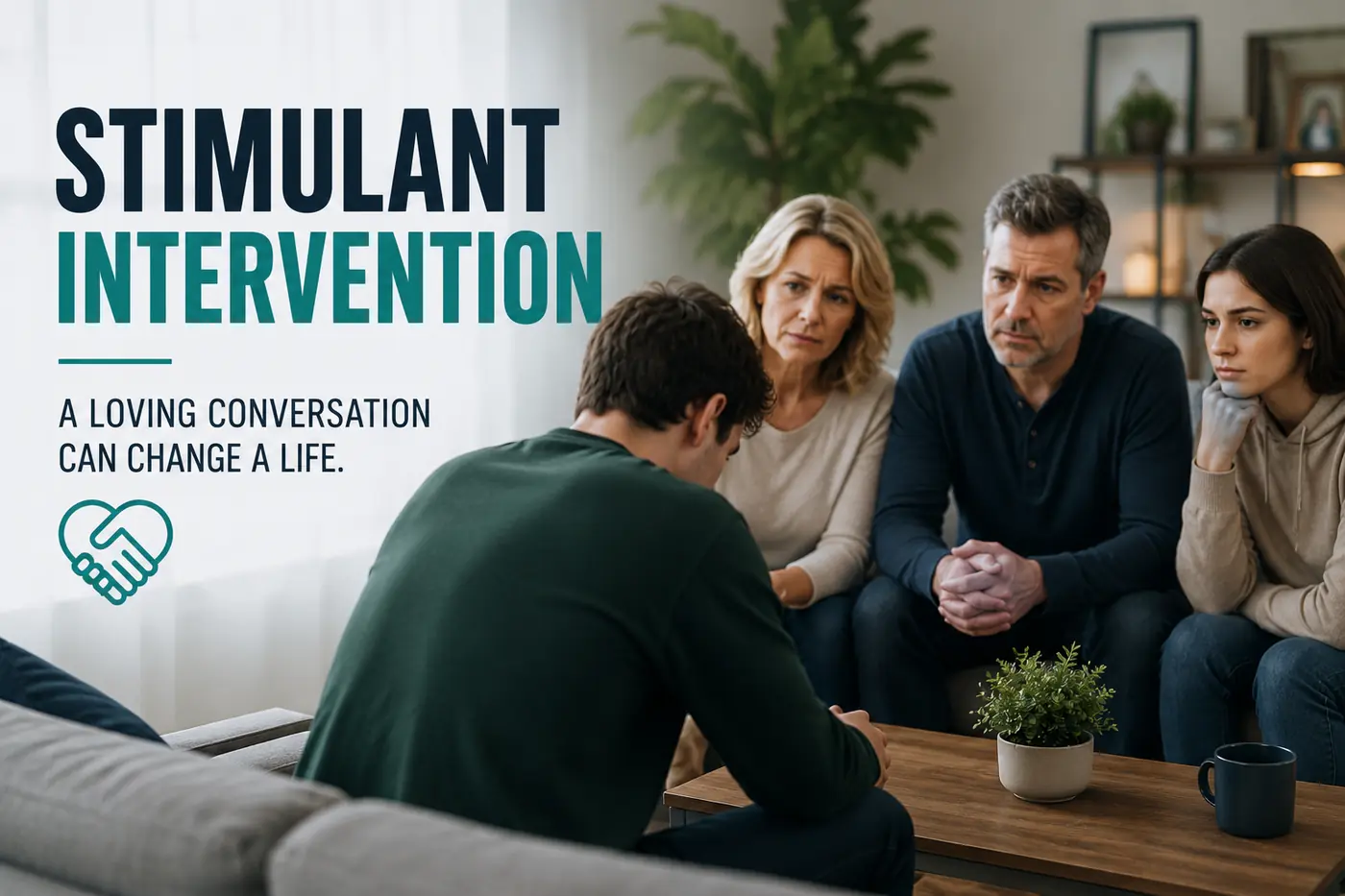


A stimulant intervention may be needed when someone you love is using cocaine, methamphetamine, or misusing prescription stimulants and refuses to see the danger. An intervention for stimulant addiction is not about blame, shame, or forcing someone to admit they are “bad.” It is about interrupting a deadly pattern before the next crash, overdose, arrest, heart problem, or mental health crisis happens.
Stimulants can make a person seem alert, confident, and full of energy. But behind the surface, these drugs can raise heart rate, blood pressure, anxiety, paranoia, and the risk of overdose. In 2024, about 4.3 million people age 12 or older in the United States had a central nervous system stimulant use disorder. That same year, more than 28,000 overdose deaths involved psychostimulants with abuse potential, and more than 21,000 involved cocaine.
As author Johann Hari said, “The opposite of addiction isn’t sobriety; it is connection.” A stimulant intervention is one way families can stop watching from the sidelines and start creating that connection with purpose.
Navigating This Guide
This hub page serves as the entry point for deeper exploration. Use the links below to dive into specific areas of stimulant addiction:
When a Stimulant Intervention May Be Needed
A stimulant intervention may be needed when a person’s drug use is causing harm, but they keep using anyway. This can happen with meth, cocaine, Adderall, Ritalin, Vyvanse, or other stimulants when they are misused.
Warning signs may include staying awake for long periods, losing weight fast, acting paranoid, becoming aggressive, missing work, lying about money, or disappearing for hours or days. Some people become very anxious or depressed. Others have a hard crash after using and may sleep for a long time.
Families often wait because they are scared. They may think, “Maybe it is not that bad,” or “Maybe they will stop on their own.” But stimulant addiction can move quickly. The person may promise to quit and truly mean it in the moment. Then cravings, withdrawal, stress, or the addicted brain pulls them back.
An intervention may be needed if the person is having health problems, legal trouble, job loss, broken relationships, unsafe behavior, or mental health symptoms. It may also be needed if loved ones are being manipulated, threatened, or emotionally worn down by the cycle.
How an Intervention for Stimulant Addiction Works
An intervention for stimulant addiction should be planned, calm, and focused. It is not a surprise attack. It is not a group argument. The goal is to help the person accept treatment while the family presents a clear and loving message.
Most interventions include a small group of trusted people. This may include parents, siblings, a partner, close friends, or another supportive person. In many cases, it helps to involve a professional interventionist, counselor, or treatment provider. This is especially important if the person has a history of violence, psychosis, severe paranoia, suicidal thoughts, or heavy substance use.
Before the intervention, the group should agree on the message, the treatment option, and the boundaries. Each person may write a short statement. The statement should include love, specific concerns, and a clear request for treatment.
For example: “I love you, and I am scared. I have seen you stay awake for days, miss work, and become someone I barely recognize. I am asking you to accept help today.”
The treatment plan should already be ready. Do not end the intervention with, “You should get help sometime.” Instead, have a real next step. This could mean calling a treatment center, entering detox, scheduling an assessment, or going directly to a program.
What to Say and What to Avoid
The words used during a stimulant intervention matter. People struggling with addiction often already feel shame, fear, and defensiveness. If the conversation becomes cruel or chaotic, they may shut down or leave.
Use simple, direct language. Talk about what you have seen, not what you assume. Say, “You missed three days of work,” instead of, “You do not care about anything.” Say, “I found you awake and scared at 3 a.m.,” instead of, “You are ruining everyone’s life.”
Avoid name-calling, yelling, threats you will not keep, or bringing up every past mistake. The goal is not to punish the person. The goal is to break through denial and offer a path to safety.
It is also important to set boundaries. Boundaries are not punishments. They are limits that protect everyone involved. A parent may say they will no longer give money. A partner may say they cannot continue living in chaos unless treatment begins. A family member may say they will not lie to employers, courts, or other loved ones anymore.
The key is to be loving and firm at the same time. Love without boundaries can become enabling. Boundaries without love can feel like rejection. A good intervention needs both.
Getting Help After the Intervention
The best outcome of a stimulant intervention is immediate movement into care. Stimulant addiction affects the brain’s reward system, decision-making, sleep, mood, and impulse control. That means the person may need more than a promise to stop.
Treatment may include medical assessment, detox support, residential treatment, outpatient care, therapy, mental health treatment, relapse prevention, peer support, and family education. Some people also need help for ADHD, depression, trauma, anxiety, or other mental health concerns that were tied to their stimulant use.
Families need support too. Addiction can make loved ones feel angry, scared, guilty, and exhausted. Family counseling, support groups, and education can help loved ones stop enabling, rebuild trust, and learn how recovery works.
If the person says no to treatment, the intervention is not a failure. The seed has been planted. The family must follow through with the boundaries they set. Sometimes people accept help later when they realize the old system is no longer working.
If there is immediate danger, do not wait for a planned intervention. Call 911 if someone has chest pain, seizures, trouble breathing, extreme confusion, violent behavior, severe paranoia, or thoughts of self-harm.
A stimulant intervention can feel scary, but silence can be more dangerous. You do not have to wait for the next overdose, arrest, or breakdown. Help exists. Treatment works. Recovery is possible. The most loving thing you can do may be to speak up today.


