



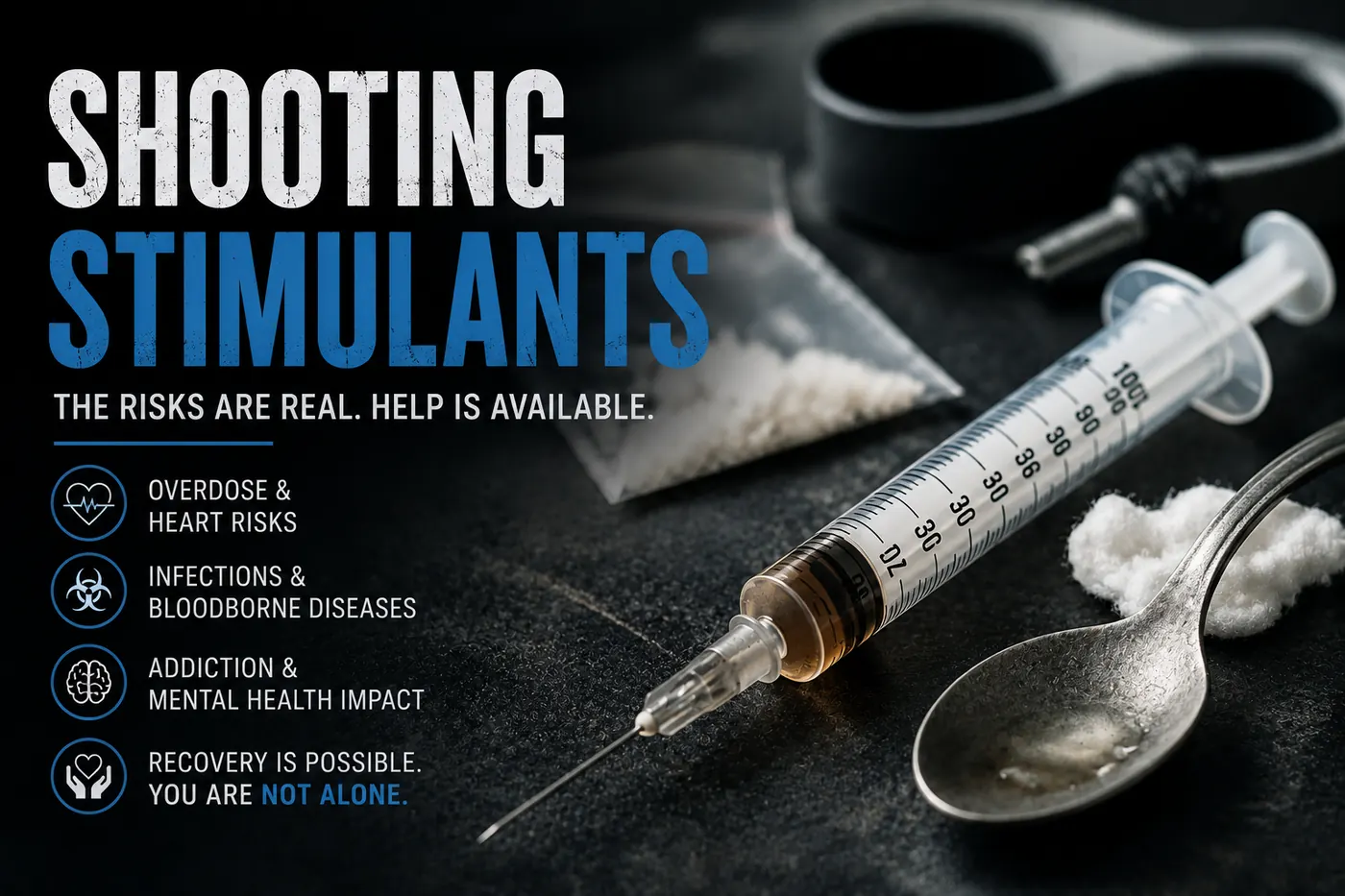


Shooting stimulants is one of the riskiest ways a person can use drugs like methamphetamine, cocaine, or crushed prescription stimulants. The dangers of injecting stimulants include overdose, heart attack, stroke, infections, collapsed veins, abscesses, HIV, hepatitis, paranoia, addiction, and sudden death. The drug can hit the bloodstream fast, and the body may not have time to react before a medical emergency starts.
This is not just “a more intense high.” It can be a life-or-death situation. In 2024, about 4.3 million people age 12 or older in the United States had a central nervous system stimulant use disorder. That same year, 28,722 overdose deaths involved psychostimulants with abuse potential, and 21,945 involved cocaine. During January 2021 through June 2024, CDC data found that 59% of overdose deaths involved stimulants.
Navigating This Guide
This hub page serves as the entry point for deeper exploration. Use the links below to dive into specific areas of stimulant addiction:
As Johann Hari said, “The opposite of addiction isn’t sobriety; it is connection.” If shooting stimulants has become part of someone’s life, connection and treatment may be the thing that helps them survive and recover.
Why Shooting Stimulants Is So Dangerous
When stimulants are injected, they enter the bloodstream quickly. This can create a strong rush, but it also puts heavy stress on the heart, brain, blood vessels, and nervous system. A person may feel awake, powerful, or intensely focused for a short time. But the risks can start almost immediately.
Stimulants can raise heart rate, blood pressure, and body temperature. They can also cause anxiety, panic, shaking, chest pain, and paranoia. With higher doses or repeated use, the risk of seizure, stroke, heart attack, overheating, and overdose rises.
Injecting also brings risks that do not happen in the same way with swallowing or snorting. The skin and veins can become damaged. Bacteria can enter the body. This can lead to skin infections, abscesses, blood infections, and endocarditis, which is a dangerous infection of the heart lining or valves.
Sharing or reusing injection equipment can also spread bloodborne infections. These may include HIV, hepatitis B, and hepatitis C. A person may not know they have been exposed until much later.
Short-Term Effects and Emergency Warning Signs
The short-term effects of shooting stimulants can be intense and unpredictable. Someone may become restless, talkative, sweaty, shaky, or unable to sit still. They may stop eating or sleeping. They may become suspicious, aggressive, or afraid.
Warning signs may include:
- Fast or irregular heartbeat
- Chest pain
- High blood pressure
- Heavy sweating
- Shaking or tremors
- Severe anxiety or panic
- Confusion
- Paranoia
- Hallucinations
- Fever or overheating
- Seizures
- Trouble breathing
- Fainting or loss of consciousness
Call 911 right away if someone has chest pain, seizures, trouble breathing, extreme confusion, severe paranoia, overheating, or cannot stay awake. Do not wait to see if they “sleep it off.” A stimulant overdose can turn deadly fast.
If opioids may also be involved, naloxone should be given if available while waiting for emergency help. Naloxone does not reverse stimulant effects, but it can reverse an opioid overdose if opioids are part of the emergency.
Addiction, Mental Health, and the Brain
Shooting stimulants can strongly affect the brain’s reward system. Stimulants increase dopamine, a chemical tied to pleasure, motivation, and learning. When the drug hits fast, the brain may remember it as powerful relief or escape.
That memory can drive cravings. A person may start using again to chase the rush, avoid the crash, or feel normal. Over time, normal life may feel flat. Sleep, food, family, work, and hobbies may not feel rewarding anymore.
This is one reason addiction can be so hard to understand from the outside. A person may know the drug is hurting them and still feel pulled back to it. They may promise to stop, then use again when cravings, withdrawal, shame, or stress become too much.
Mental health can also get worse. Shooting stimulants can lead to anxiety, depression, paranoia, panic, aggression, hallucinations, and stimulant-induced psychosis. Long periods without sleep can make these symptoms much more severe.
This does not mean the person is hopeless. It means the brain and body need real help, not shame.
When to Seek Treatment for Shooting Stimulants
If someone is shooting stimulants, it is time to seek help now. You do not have to wait for an overdose, infection, arrest, or hospital stay. This method of use is already a serious warning sign.
Treatment may include medical evaluation, detox support, residential care, outpatient treatment, therapy, peer support, relapse prevention, and mental health care. Some people also need testing and treatment for infections, wound care, or help for anxiety, depression, trauma, ADHD, or sleep problems.
Loved ones can help by staying calm and direct. Try saying, “I love you. I’m scared because this can kill you. I want to help you get treatment today.” Avoid yelling, shaming, or making threats you will not keep. Clear boundaries and steady support are more helpful than panic.
Recovery is possible. The brain can heal. The body can begin to repair. Trust can be rebuilt. But shooting stimulants is too dangerous to ignore. If this is happening to you or someone you love, reach out now. The next step could save a life.


