



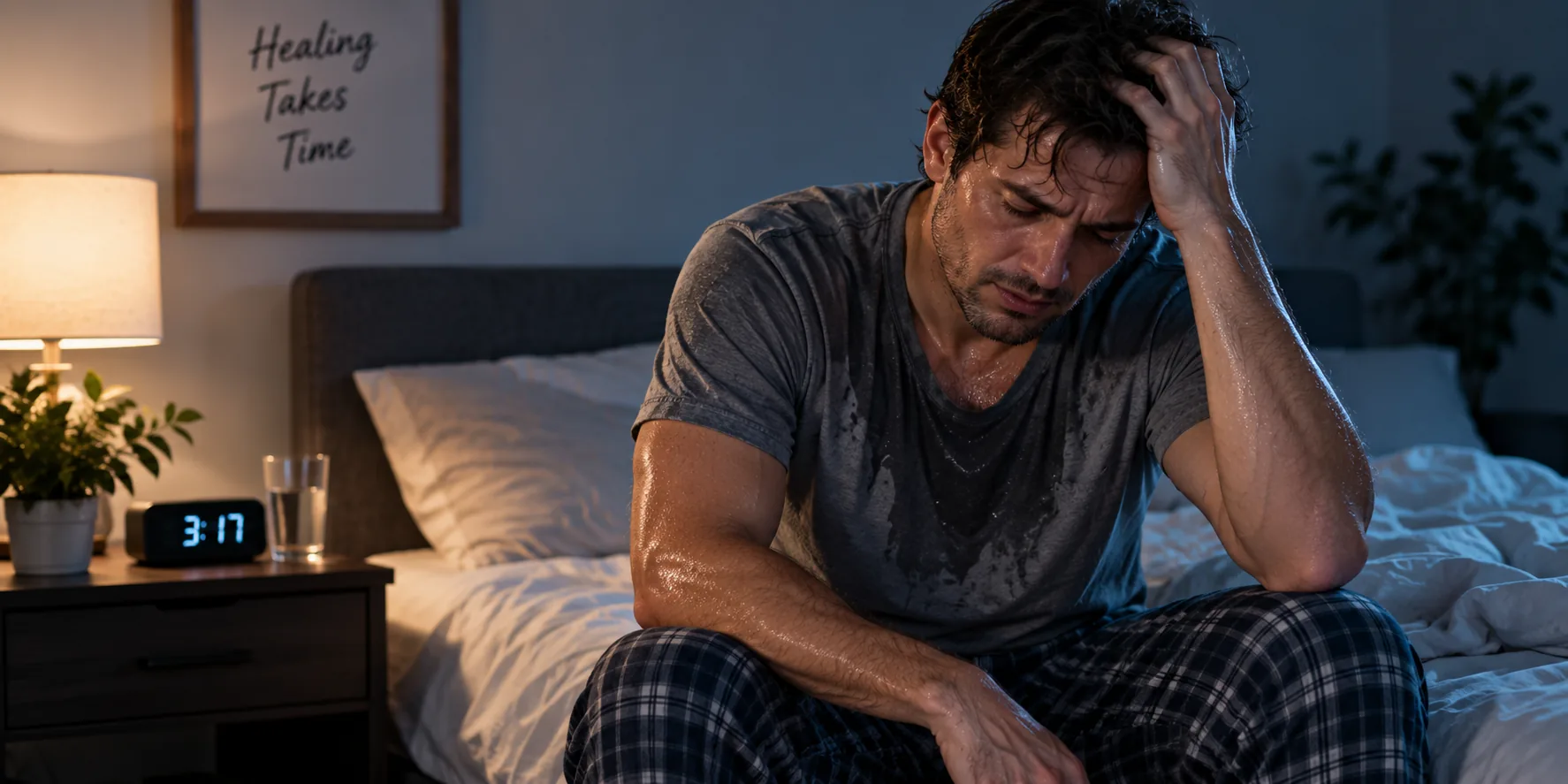


Night sweats after quitting drugs or alcohol can be an uncomfortable and surprisingly common part of early recovery. You may wake up with damp clothes, soaked sheets, chills, or the feeling that your body cannot decide whether it is too hot or too cold.
For some people, sweating lasts only a few nights. For others, it may continue off and on while the body adjusts to life without substances.
Why does this happen?
Alcohol and many drugs affect the nervous system, sleep, body temperature, hormones, hydration, and stress responses. After long-term substance use, suddenly removing a substance can temporarily throw those systems out of balance.
Night sweats do not automatically mean something dangerous is happening. However, severe withdrawal symptoms or sweating that continues without improvement should not simply be ignored.
Why Do Night Sweats Happen After Getting Sober?
Your autonomic nervous system helps control processes you normally do not think about, including heart rate, blood pressure, digestion, and sweating.
Some substances repeatedly suppress or stimulate this system.
When the substance disappears, the nervous system can temporarily become overactive.
That may cause:
- Heavy sweating
- Hot flashes
- Chills
- Shaking
- Rapid heartbeat
- Restlessness
- Anxiety
- Trouble sleeping
The addicted brain and nervous system need time to adjust after repeated exposure to drugs or alcohol.
Sweating may be especially noticeable at night because withdrawal and poor sleep often occur together.
You may wake multiple times, become anxious about the sweating, change clothes, and then have difficulty falling asleep again.
Alcohol Withdrawal Can Cause Heavy Sweating
Sweating is a well-known symptom of alcohol withdrawal.
Someone who drinks heavily and regularly may develop physical dependence. When alcohol is suddenly removed, the brain and nervous system can become unusually active.
The phases of alcohol withdrawal may involve sweating along with:
- Tremors
- Anxiety
- Nausea
- Headaches
- Insomnia
- Rapid heart rate
- Agitation
Severe alcohol withdrawal can become life-threatening.
Seizures, hallucinations, severe confusion, delirium, or rapidly worsening symptoms require immediate medical attention.
Do not assume that soaking night sweats plus severe withdrawal symptoms are something you simply need to “push through.”
Medical detox may be appropriate for people with significant alcohol dependence.
Alcohol can also affect many organs beyond the nervous system. Long-term heavy drinking can contribute to alcohol-related liver disease, making continued sobriety especially important when liver damage is present.
You can also learn how long the liver may take to heal after quitting alcohol.
Other Drugs Can Cause Sweating During Withdrawal
Alcohol is not the only substance associated with sweating.
Opioid withdrawal commonly causes sweating, chills, goosebumps, restlessness, muscle aches, nausea, diarrhea, and insomnia.
Stimulant recovery may produce major changes in sleep, body temperature, anxiety, and energy.
Benzodiazepine withdrawal may also cause sweating and nervous-system symptoms and can become medically dangerous when dependence has developed.
The exact symptoms depend on what you used, how long you used it, how heavily you used it, and whether multiple substances were involved.
Our guide to how your body heals after you stop using drugs explains why physical recovery can involve many temporary changes after substance use stops.
Withdrawal should be treated as an individual medical issue rather than assuming every person will experience the same symptoms.
How Long Do Night Sweats Last After Quitting?
There is no exact timeline.
Some people notice sweating mainly during the first several days of withdrawal.
Others experience occasional night sweats for longer as sleep patterns and the nervous system stabilize.
The broader sobriety timeline shows why physical recovery rarely follows one universal schedule.
Your experience can depend on:
- Substance used
- Amount used
- Length of use
- Physical dependence
- Other medications
- Hydration
- Sleep quality
- Stress
- Overall health
Sleep itself may remain disrupted even after sweating begins improving. Read more about how long sleep problems can last after getting sober.
If night sweats remain severe for weeks, begin after withdrawal should have passed, or are accompanied by unexplained weight loss, persistent fever, enlarged lymph nodes, severe weakness, or other concerning symptoms, talk with a healthcare professional.
Not every night sweat is caused by recovery.
How to Make Night Sweats More Manageable
You may not be able to stop withdrawal-related sweating immediately, but you can make nights more comfortable.
Keep the bedroom cool.
Use breathable bedding.
Wear lightweight sleep clothes.
Keep an extra shirt or towel near the bed.
Drink adequate fluids during the day, especially if you are sweating heavily.
Regular nutrition matters too. Sweating, poor appetite, vomiting, diarrhea, and irregular meals can leave you feeling depleted. Our guide to nutrition during addiction recovery explains how consistent meals and hydration can support physical recovery.
Try to protect your sleep routine as much as possible.
Your body may need additional rest during this stage. Learn more about how much sleep you need in early recovery.
Avoid using alcohol or sedatives simply because you want to sleep through the sweating.
Temporary relief can quickly become a return to the same substance-use cycle you are trying to leave behind.
When Night Sweats Need Medical Attention
Night sweats can be part of withdrawal, but they can also occur with infections, hormone problems, medications, sleep disorders, and other medical conditions.
Pay attention to the bigger picture.
Seek prompt medical care if sweating occurs with seizures, hallucinations, severe confusion, chest pain, difficulty breathing, severe vomiting, fainting, or rapidly worsening withdrawal symptoms.
Also get evaluated if you develop jaundice, abdominal swelling, severe abdominal pain, or other possible signs of serious liver problems.
Recovery means taking physical symptoms seriously—not assuming everything will disappear on its own.
Continue building your addiction recovery around medical care when needed, healthy routines, sleep, nutrition, and support.
And if exhaustion or physical discomfort starts making you think about using again, recognize that as a possible relapse warning sign.
Night sweats after quitting drugs or alcohol may happen while your nervous system, sleep patterns, and body temperature regulation adjust to sobriety. For many people, they improve as withdrawal passes and physical recovery continues. Stay hydrated, make your sleeping environment comfortable, and pay attention to severe or persistent symptoms. Getting sober gives your body the chance to heal—even when the first signs of that adjustment are uncomfortable.


