






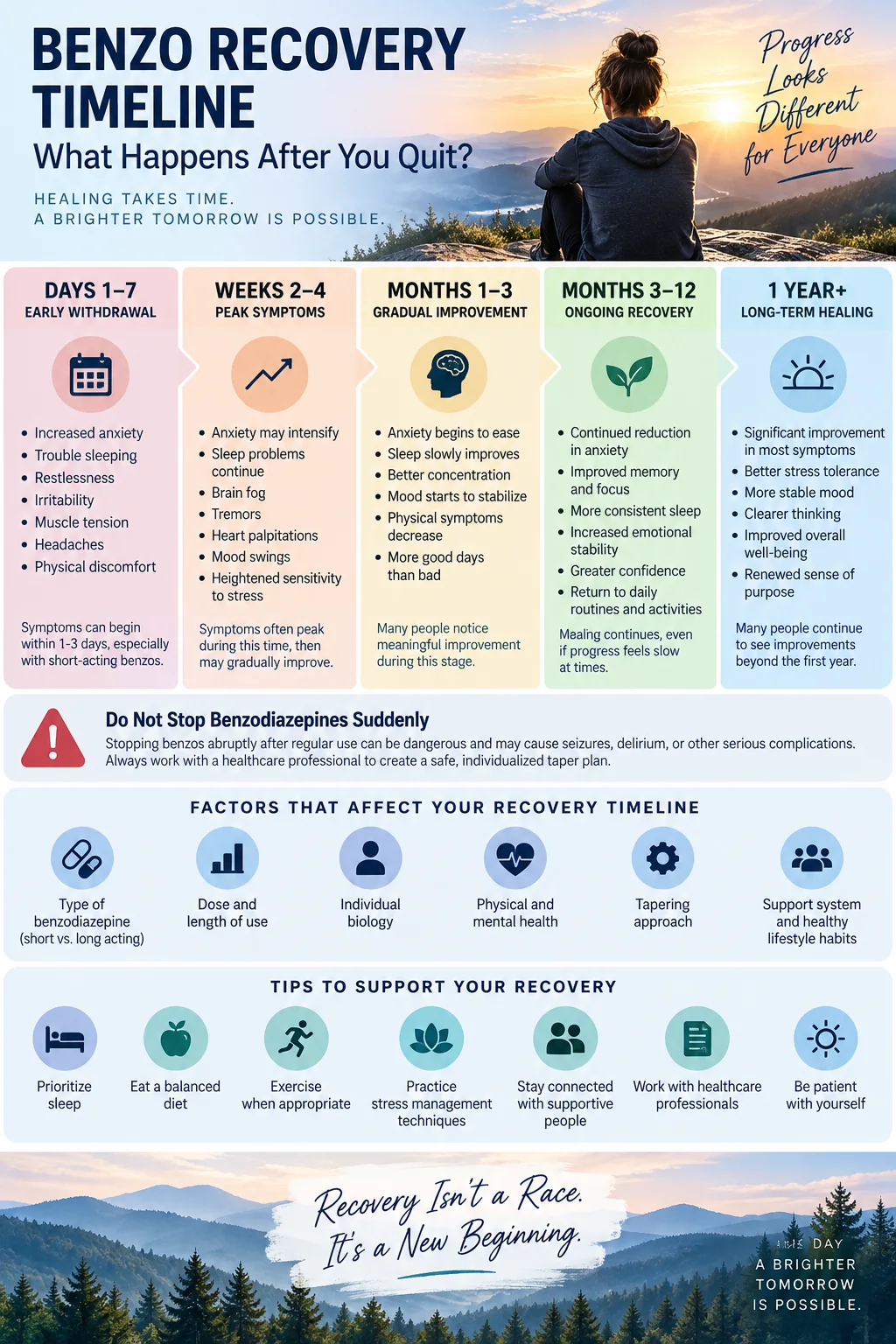
The benzo recovery timeline can look very different from one person to another. Some people begin feeling better within weeks, while others experience anxiety, insomnia, brain fog, physical symptoms, or emotional changes for months after reducing or stopping benzodiazepines.
One thing is especially important: benzodiazepines should not be stopped suddenly after regular use without medical guidance. Withdrawal can become dangerous and may include seizures, confusion, or other serious complications. Recovery often begins with a gradual, individualized taper supervised by a healthcare professional.
Understanding the benzodiazepine recovery timeline after quitting can make the process less frightening. Symptoms may change from week to week, but difficult days do not necessarily mean you are going backward.
Your nervous system needs time to adjust.
Why Benzodiazepine Recovery Can Take Time
Benzodiazepines such as Xanax, Ativan, Klonopin, and Valium affect the central nervous system. They enhance the effects of GABA, a neurotransmitter involved in calming brain activity.
With regular use, the brain adapts to the medication.
This can result in physical dependence even when someone takes benzodiazepines exactly as prescribed.
When the medication is reduced, the nervous system has to adjust again.
That transition can produce symptoms including:
- Anxiety
- Insomnia
- Restlessness
- Irritability
- Tremors
- Muscle tension
- Headaches
- Difficulty concentrating
- Increased sensitivity to light or sound
- Heart palpitations
- Depression
Severe withdrawal can include seizures, delirium, hallucinations, or other dangerous symptoms.
Our guide to benzodiazepine withdrawal symptoms explains why stopping suddenly can be risky.
Physical dependence is also not automatically the same thing as addiction. Someone can become physically dependent while taking medication as prescribed, although benzodiazepines can also be misused and become part of a substance use disorder. Learn more about benzodiazepine addiction and dependence.
The First Days and Weeks of Benzo Recovery
There is no universal Day 1 because many people gradually taper rather than abruptly stop.
The specific benzodiazepine also matters. Shorter-acting medications may produce withdrawal symptoms differently than longer-acting medications.
During early recovery, anxiety and sleep problems are common concerns.
Someone may think:
My anxiety is worse than it was before I ever took benzos.
That does not necessarily mean the medication was permanently necessary.
Some people experience rebound anxiety, meaning anxiety temporarily becomes more intense when benzodiazepines are reduced. Others experience withdrawal-related anxiety that gradually improves as the nervous system adjusts.
Our guide to how long anxiety can last after benzodiazepine withdrawal explores this issue in greater detail.
Sleep can also become difficult.
You may have trouble falling asleep, wake frequently, experience vivid dreams, or feel tired despite spending hours in bed.
These symptoms can be exhausting, but early withdrawal is not necessarily a prediction of your long-term recovery.
Weeks to Months: The Nervous System Keeps Adjusting
As recovery progresses, symptoms may gradually become less intense.
But benzodiazepine recovery is not always linear.
You might have several good days followed by a difficult week.
Anxiety may return unexpectedly.
Sleep may improve and then temporarily worsen.
Brain fog may lift slowly.
Some people experience periods where symptoms seem to come in waves.
The question how long benzo withdrawal symptoms last does not have one simple answer because duration depends on factors such as the medication, dose, length of use, tapering process, health, and individual response.
For people who used benzodiazepines for a long time, tapering itself may take months or longer.
Some people also experience lingering symptoms after the medication has been discontinued.
This does not mean everyone will experience prolonged withdrawal.
Many people improve significantly with time.
Brain and Emotional Recovery After Benzodiazepines
One of the biggest fears people have is that their brain will never feel normal again.
You may experience:
Brain fog. Concentrating or processing information can feel harder.
Memory problems. Remembering names, appointments, or conversations may take more effort.
Emotional sensitivity. Stress may feel much stronger than it once did.
Anxiety. Situations that previously felt manageable can temporarily feel overwhelming.
Sleep problems. Poor sleep can make every other symptom feel worse.
These symptoms can improve as recovery continues.
Our guide to brain recovery after benzodiazepines explains why neurological adjustment may continue beyond the acute withdrawal period.
Recovery can also become about rebuilding confidence.
You handle an anxious moment without immediately reaching for medication.
You sleep through the night.
You make it through a stressful day.
You realize your concentration is better than it was last month.
These are meaningful signs of progress.
Building a Life After Benzodiazepine Dependence
Eventually, recovery becomes less about counting withdrawal symptoms and more about building a stable life.
That can mean developing new ways to manage anxiety, stress, and insomnia.
Healthy routines may include consistent sleep, exercise when appropriate, therapy, relaxation techniques, peer support, medical care, and addressing the original reason benzodiazepines were prescribed.
Our guide to life after benzodiazepine dependence explores what longer-term healing can look like.
It is also important to recognize warning signs of relapse, particularly during periods of severe anxiety or insomnia.
Mixing benzodiazepines with opioids, alcohol, or other central nervous system depressants can significantly increase the risk of dangerous sedation and drug overdose.
So, what does the benzo recovery timeline look like?
For some people, noticeable improvement happens over weeks.
For others, recovery unfolds over months or longer.
The important thing is not comparing your calendar with someone else’s.
Recovery is not a race.
Work with a healthcare professional, taper safely when appropriate, pay attention to serious symptoms, and give your nervous system the time it needs.
Long-term addiction recovery is rarely about waking up one morning completely healed.
It is usually quieter than that.
You sleep better.
Your thinking becomes clearer.
Anxiety becomes manageable.
Good days begin outnumbering bad ones.
Eventually, you realize that recovery is no longer something you are waiting for.
It is already happening.


