



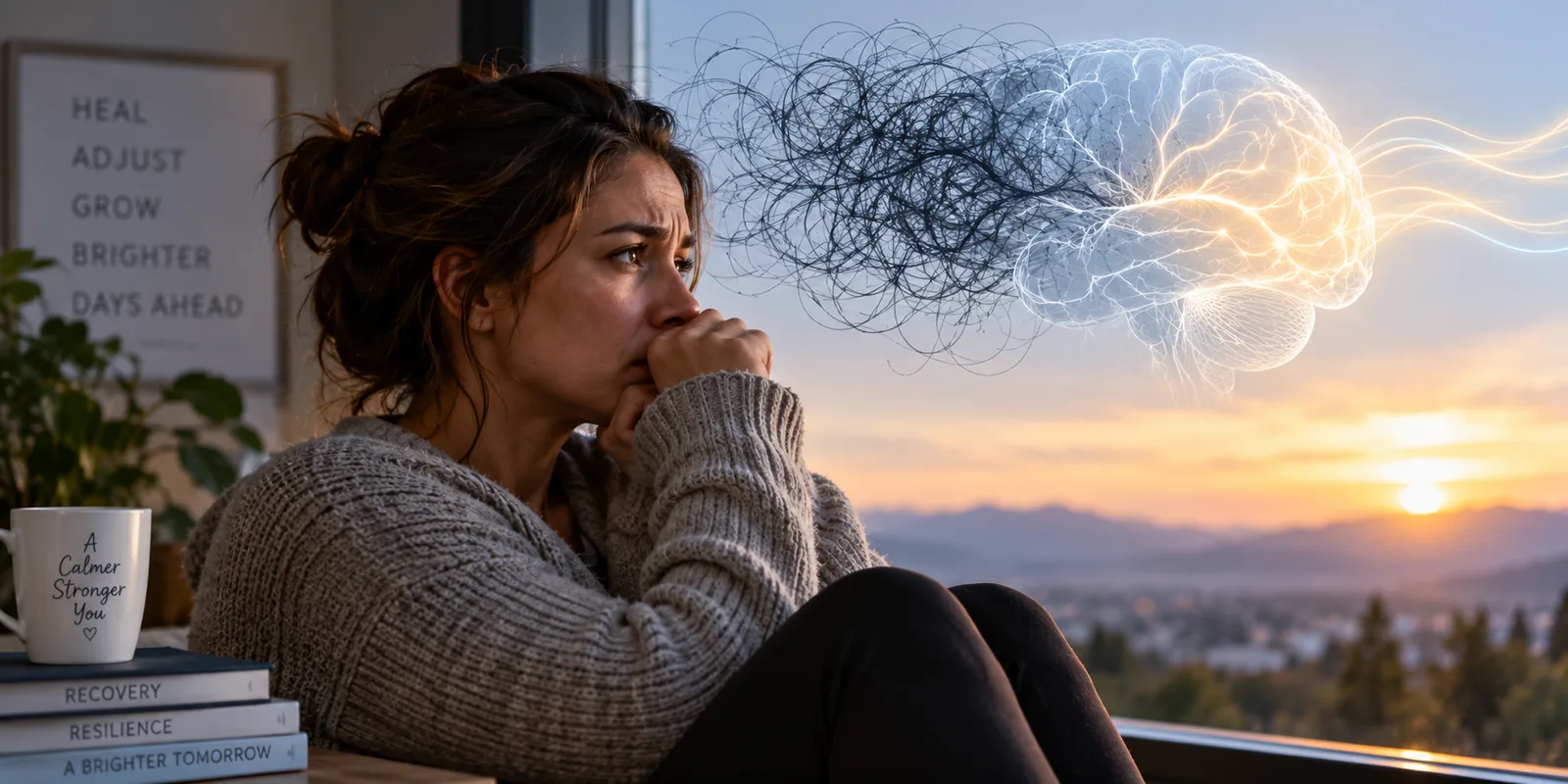


How long does anxiety last after benzodiazepine withdrawal? For some people, anxiety begins easing within a few weeks. For others, nervousness, panic, restlessness, and sensitivity to stress can continue for months. A smaller group may experience prolonged withdrawal symptoms that last even longer.
There is no single timeline because benzodiazepines such as Xanax, Klonopin, Ativan, and Valium affect people differently.
One thing is especially important: do not suddenly stop benzodiazepines after regular use without medical guidance. Abrupt withdrawal can cause dangerous complications, including seizures and delirium. A healthcare professional can create a gradual taper based on the medication, dose, length of use, and your individual response.
Understanding the broader benzo recovery timeline after quitting can help explain why anxiety sometimes continues even after the medication has left your system.
Why Does Anxiety Get Worse After Stopping Benzos?
Benzodiazepines calm activity in the central nervous system by increasing the effects of GABA, a chemical messenger that helps reduce brain activity.
With regular use, the brain adapts.
When the medication is reduced, your nervous system has to learn how to regulate itself with less help from the drug.
During that adjustment, anxiety can temporarily become intense.
You may experience:
- Racing thoughts
- Panic attacks
- Restlessness
- Irritability
- Muscle tension
- Heart palpitations
- Trouble concentrating
- Sensitivity to noise or light
- Insomnia
- A constant feeling that something is wrong
These symptoms are part of the larger range of benzodiazepine withdrawal symptoms.
If you are trying to understand withdrawal more broadly, our guide to drug withdrawal symptoms explains why the body reacts when it has adapted to a substance and that substance is reduced or removed.
Withdrawal Anxiety vs. Your Original Anxiety
This distinction can be difficult.
Many people originally received benzodiazepines because they already had anxiety, panic attacks, or insomnia.
After reducing the medication, anxiety may suddenly become much stronger.
You might think:
This proves I can’t live without benzos.
Not necessarily.
Some people experience rebound anxiety, where symptoms temporarily become more intense after benzodiazepines are reduced. Withdrawal itself can also cause anxiety that was not present before treatment.
At the same time, an underlying anxiety disorder may still exist and need treatment.
It can take time to separate these issues.
This is one reason gradual tapering and ongoing medical care matter. As withdrawal symptoms settle, you and your healthcare provider can get a clearer picture of your baseline anxiety.
How Long Can Benzo Withdrawal Anxiety Last?
There is no expiration date that applies to everyone.
Anxiety may occur during the taper itself and continue after the final dose.
Some people improve considerably over several weeks. Others experience symptoms for months.
Factors that can affect the timeline include:
Length of use. Someone taking benzodiazepines for years may have a different experience than someone taking them for several weeks.
Dose. Higher doses may create greater physical dependence.
Type of benzodiazepine. Shorter-acting medications may produce a different withdrawal pattern from longer-acting drugs.
Taper speed. Reducing medication too quickly may make symptoms harder to tolerate.
Mental health. Existing panic disorder, generalized anxiety, PTSD, or depression can affect recovery.
Sleep. Persistent insomnia can dramatically increase anxiety.
Our guide to how long benzo withdrawal symptoms last explores why some symptoms disappear relatively quickly while others take longer.
Why Anxiety Can Come in Waves
One of the strangest parts of benzodiazepine recovery is that symptoms may not improve in a straight line.
You might feel almost normal for several days.
Then anxiety suddenly returns.
That does not necessarily mean you are getting worse.
Stress, poor sleep, illness, relationship problems, caffeine, or changes in your taper may temporarily make symptoms feel stronger.
Brain recovery can also take time. Learning how the brain recovers after benzodiazepines can help explain why concentration, stress tolerance, sleep, and emotional regulation may improve gradually.
Instead of judging recovery hour by hour, look for the larger trend.
Are there more good days than last month?
Are panic attacks less intense?
Are you sleeping better?
Can you handle stress a little more easily?
Those changes matter.
What Helps Anxiety During Benzo Recovery?
First, work with your healthcare provider.
If withdrawal symptoms become difficult, the taper may need to be slowed or adjusted rather than forced forward.
Other strategies may include:
- Cognitive behavioral therapy
- Consistent sleep routines
- Relaxation exercises
- Mindfulness
- Regular meals
- Exercise when appropriate
- Reducing unnecessary stimulants
- Peer or recovery support
- Treatment for an underlying anxiety disorder
Life after benzodiazepines is about more than surviving withdrawal. Our guide to life after benzodiazepine dependence explores how people rebuild confidence, routines, sleep, relationships, and healthy ways of managing stress.
Most importantly, do not compare your recovery calendar with someone else’s.
Your nervous system has its own timeline.
Anxiety Can Improve With Time
So, how long does anxiety last after benzodiazepine withdrawal?
For many people, anxiety gradually becomes more manageable over weeks or months. Some experience symptoms for longer, especially after long-term use.
Recovery does not require never feeling anxious again.
It means reaching a point where anxiety no longer controls every decision.
Pay attention to relapse warning signs, especially if severe anxiety leads you to romanticize benzodiazepines or seek pills outside medical care. Mixing benzodiazepines with opioids, alcohol, or other depressants can also increase the risk of a dangerous drug overdose.
Long-term addiction recovery takes patience.
One day, you handle a stressful conversation.
Another day, you sleep through the night.
Then you realize a panic feeling came and went without controlling you.
Those moments may seem small.
Together, they are evidence that your nervous system is learning how to find calm again.


