



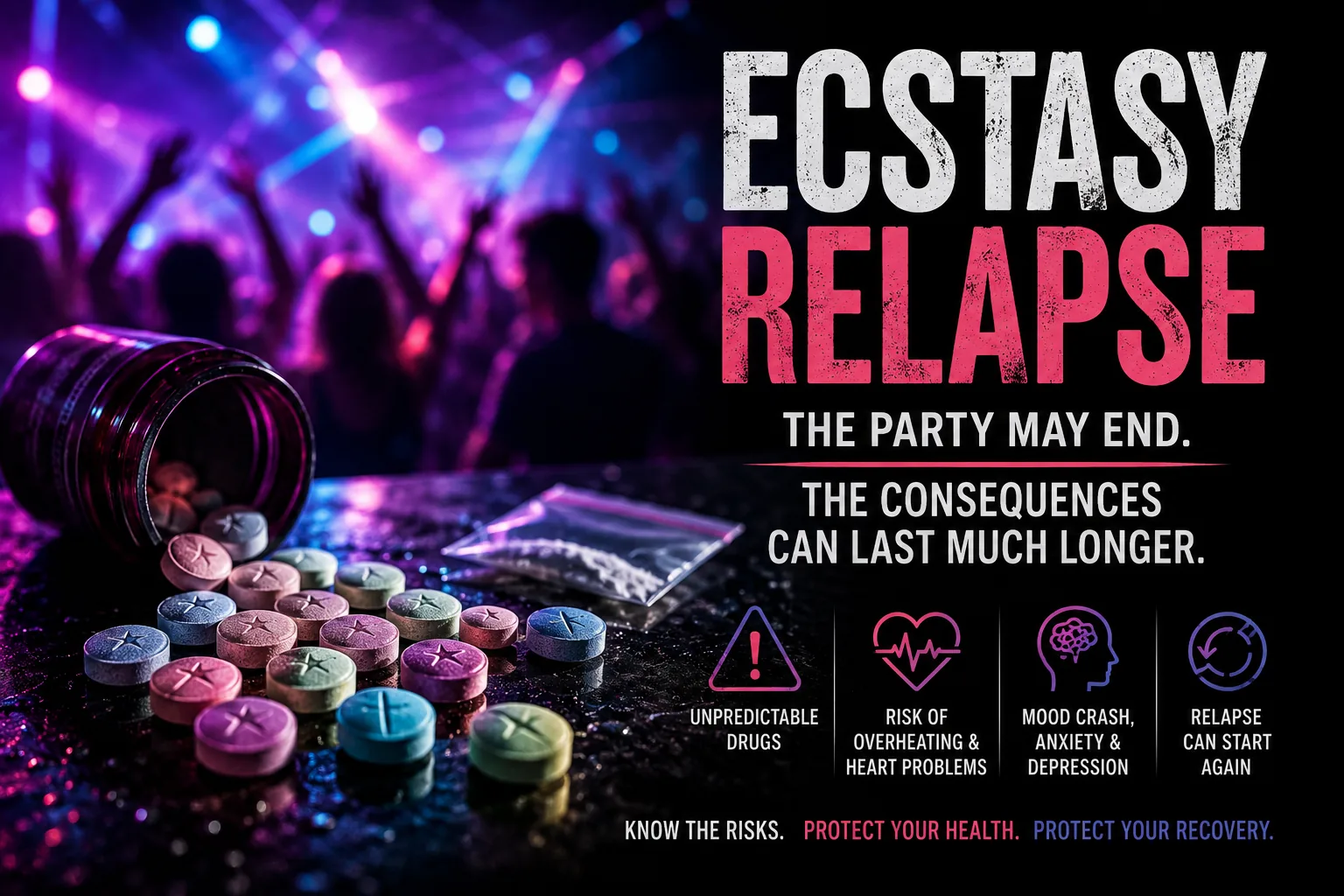


An ecstasy relapse can feel different from returning to alcohol, opioids, or other drugs because MDMA is often connected with parties, concerts, festivals, clubs, and social situations. Someone may tell themselves they are not “really using again.” They may think they are simply going out with friends and taking something for one night.
That thinking can make relapse easier to minimize.
Ecstasy, also called MDMA or Molly, is a synthetic drug with both stimulant and hallucinogenic effects. The DEA describes it as a party drug that can produce increased energy, altered perception, euphoria, emotional closeness, and reduced inhibitions.
Those effects can make MDMA especially appealing in nightlife settings. But a club drug is still a drug, and returning to ecstasy can expose someone to serious medical risks, an unpredictable illegal drug supply, and the possibility of returning to other substances.
Why an Ecstasy Relapse Can Be Easy to Rationalize
Relapse does not always begin with someone deciding to return to daily drug use.
Sometimes it begins with:
“It is just one concert.”
“I only use ecstasy when I go out.”
“I have been sober for months. One pill will not matter.”
“MDMA was never my real problem anyway.”
For someone who previously used multiple substances, that one decision can reopen old patterns.
Taking MDMA may lower inhibitions and place someone around alcohol, marijuana, cocaine, ketamine, stimulants, or other drugs. A person who planned to take only ecstasy may make very different choices once intoxicated.
That does not mean everyone who takes MDMA will automatically progress to other substances. The danger is that a return to the environments, people, emotions, and routines connected with past drug use can make other forms of substance use easier to justify.
If someone is recovering from addiction, returning to the party scene may itself be a powerful trigger.
The Drug Sold as Ecstasy May Not Be What You Think
One of the biggest dangers of illegal party drugs is uncertainty.
A pill with a familiar color, logo, or shape does not guarantee what is inside it.
DEA information has documented that tablets sold as ecstasy can contain substances other than MDMA, including stimulants and other drugs. DEA continues to describe MDMA and Molly as common synthetic party drugs in the illegal market.
SAMHSA also warns that products sold as hallucinogens may contain unexpected or unknown substances, increasing the risk of harmful effects.
That means someone who thinks they are returning to the same drug they used years ago may actually be taking a completely different combination.
There is no pharmacist checking the dose.
There is no medical label.
There is no guarantee that two pills that look identical contain the same thing.
This unpredictability makes relapse particularly dangerous.
Ecstasy Can Cause a Medical Emergency
MDMA is sometimes described casually as a “love drug” or harmless festival drug.
That description can hide the real medical risks.
MDMA can increase heart rate, blood pressure, and body temperature. Serious reactions can include dangerous overheating, especially when someone is dancing for hours in a hot, crowded environment. SAMHSA has linked ecstasy use with severe overheating, high blood pressure, and serious heart and kidney complications.
NIDA has also documented MDMA-related hyperthermia and the drug’s powerful effects on serotonin and other brain systems.
Risk can increase when a person:
- Takes repeated doses
- Mixes MDMA with alcohol or other drugs
- Uses an unknown pill or powder
- Dances heavily for long periods
- Is in a hot or crowded environment
- Has underlying heart or medical problems
Call 911 if someone using ecstasy becomes severely confused, collapses, has a seizure, develops extreme overheating, loses consciousness, has chest pain, or appears dangerously ill.
Do not assume they simply need to “sleep it off.”
Mixing Party Drugs Can Make Relapse Much More Dangerous
Ecstasy is often not used alone.
Alcohol may be present at the party. Someone may use marijuana to relax. Cocaine or another stimulant may be offered later in the night. Ketamine or other drugs may also be available.
Mixing substances makes the body’s response harder to predict.
Alcohol can also affect judgment, making someone more likely to take another dose or another drug they had not planned to use. SAMHSA has specifically examined emergency department visits involving both ecstasy and alcohol, reflecting the importance of this combination in real-world MDMA use.
For someone in addiction recovery, there is another concern.
The relapse may not end when the party ends.
The next morning may bring exhaustion, low mood, anxiety, guilt, poor sleep, or cravings. Someone may use another substance to feel better or stay awake.
Soon the thought changes from:
“It was just ecstasy one night.”
to:
“I already broke my sobriety, so what difference does another drug make?”
That is the point where one night can become a much larger return to substance use.
What to Do After an Ecstasy Relapse
Do not wait to see whether things get worse.
Tell someone what happened.
Contact your counselor, sponsor, recovery coach, addiction treatment program, or another trusted person.
Then get away from the situations that make another use more likely.
That may mean temporarily avoiding:
- Clubs
- Raves
- Festivals
- Friends who regularly use drugs
- After-parties
- Dealers
- Group chats centered around partying
- Alcohol-heavy events
Next, ask yourself what really led to the relapse.
Was it loneliness?
Social pressure?
A desire to feel connected?
Boredom?
Wanting to dance and stay awake?
Missing your old nightlife?
Alcohol lowering your judgment?
Thinking ecstasy was safer than the substance you originally struggled with?
Understanding the reason matters because simply saying “I will never do it again” does not fix the trigger.
One Night Does Not Have to Become a Full Relapse
If you used ecstasy again after a period of recovery, take it seriously—but do not use shame as an excuse to continue.
A relapse does not erase the progress you already made.
It may show that your recovery plan needs stronger boundaries around nightlife, alcohol, certain friendships, or environments connected with drug use.
Treatment may include counseling, cognitive behavioral therapy, relapse-prevention planning, peer support, outpatient addiction treatment, or a higher level of care when multiple substances are becoming involved.
Ecstasy can look different from drugs people traditionally associate with addiction because it is wrapped in music, lights, parties, friendship, and celebration.
That does not make it harmless.
Party drugs can still cause medical emergencies, expose you to unknown substances, lower your judgment, and reopen patterns of addiction you worked hard to leave behind.
If you recognize that happening, act early.
One night does not have to become another year of addiction.


