



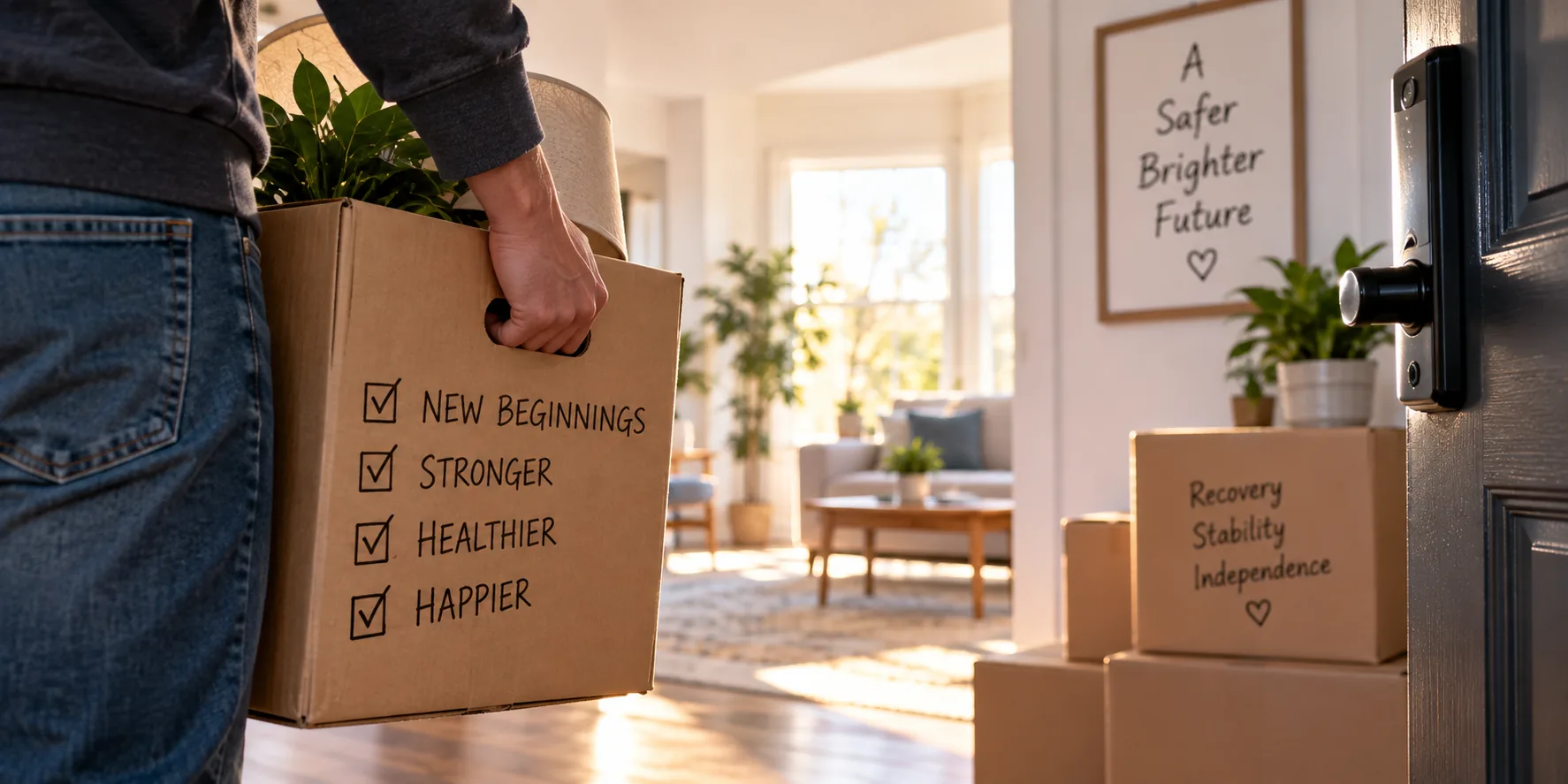


Finding housing after rehab can be one of the most important decisions you make in early recovery. Where you live can affect your stress level, access to drugs or alcohol, relationships, daily routine, and ability to stay connected with treatment and support.
Leaving rehab without a safe place to live can feel frightening.
Maybe you cannot return to your previous apartment. Perhaps the people you lived with still use drugs. You might be rebuilding your finances, repairing family relationships, or trying to find somewhere affordable while starting over.
The good news is that you have options.
Stable housing does not guarantee sobriety, but a safe environment can make addiction recovery much easier to protect.
Your goal is not necessarily to find your perfect home immediately.
Your first goal is to find somewhere safe, stable, and supportive of the life you are trying to build.
Consider Whether Going Back Home Is Really Safe
Returning home after treatment may seem like the easiest option.
It may also be the most affordable.
But before moving back, think carefully about what that environment was like during active addiction.
Ask yourself:
- Are drugs or alcohol regularly used there?
- Do people respect my recovery?
- Was the home connected with past substance use?
- Is there constant conflict?
- Will I have enough structure?
- Can I get to treatment, meetings, work, or appointments?
Moving home can work well when family members are supportive and clear boundaries are established.
However, returning to the exact environment where your addiction was strongest may create unnecessary risk.
Our guide on whether you should move back home after rehab can help you evaluate the advantages and risks before deciding.
Do not choose housing simply because it is familiar.
Choose what supports your recovery now.
Sober Living Can Provide Structure After Rehab
For many people, sober living after addiction treatment can provide a useful transition between rehab and completely independent living.
Sober living homes generally provide a substance-free environment where residents are expected to follow rules designed to support recovery.
Depending on the home, expectations may include:
Maintaining sobriety.
Following curfews.
Attending recovery meetings.
Working or attending school.
Helping with household responsibilities.
Participating in drug or alcohol testing.
Sober living can be particularly helpful if your previous home environment involved substance use or if you do not yet feel ready to live alone.
Structure is not punishment.
In early recovery, knowing what your day looks like can reduce uncertainty and help healthy habits become routine.
This can be especially important after treatment for substances with a high overdose risk, including fentanyl addiction and dependence. Returning to opioid use after a period of abstinence can be extremely dangerous, making a supportive recovery environment especially important.
Think Carefully Before Living Alone
Having your own place can feel like independence.
For some people, it is exactly what they need.
For others, early recovery can become lonely.
If you spent years using drugs or alcohol alone, an empty apartment may bring back old routines.
You may also struggle when difficult emotions appear and nobody is nearby to notice that you are withdrawing or isolating.
Our guide to living alone in early recovery can help you decide whether independent housing fits your current stage of recovery.
If you do live alone, create connection intentionally.
Stay in contact with supportive family members.
Attend recovery activities.
Build friendships.
Maintain treatment appointments.
Have people you can call when cravings increase.
The goal is independence without isolation.
Create a Home Environment That Protects Sobriety
Wherever you live, the environment itself matters.
Learning how to create a safe home environment for recovery can help turn your home into a place associated with stability rather than substance use.
Remove drugs and alcohol.
Get rid of paraphernalia.
Avoid inviting people over who are actively using.
Create predictable routines.
Keep your space reasonably clean.
Stock food.
Make sleep a priority.
Display reminders of goals that matter to you.
You may also need boundaries with visitors.
Someone might say:
“I won’t use anything. I’ll just bring it with me.”
That may not be good enough.
Your home should be somewhere you can relax without constantly thinking about substances.
If cravings increase, isolation grows, or you begin reconnecting with people and places associated with using, recognize those as possible warning signs of addiction relapse.
Protect the environment before a high-risk situation becomes a crisis.
What if You Cannot Afford Stable Housing?
Housing costs can be one of the biggest barriers after rehab.
You may have little savings.
Bad credit.
An employment gap.
Debt.
No rental history.
That does not mean there are no options.
Start by asking your treatment center, case manager, local social-service agencies, or recovery organizations about transitional housing and community resources.
If you currently have nowhere safe to stay, looking for homeless shelter and emergency housing resources may provide a temporary path toward greater stability.
Do not let embarrassment stop you from asking for help.
Temporary housing is better than returning to a dangerous environment simply because you feel ashamed.
You may need to:
Rent a room.
Share housing.
Stay in sober living.
Live temporarily with supportive family.
Use transitional housing.
Work with community organizations while rebuilding income.
Housing can improve as your recovery, employment, and finances improve.
Your first place after treatment does not need to be permanent.
Should You Move Somewhere New to Protect Your Recovery?
Sometimes people believe they need to leave their city completely to stay sober.
A new environment can reduce exposure to old people, places, and routines.
But geography alone does not cure addiction.
Our guide on moving away to get sober and whether it actually helps explores the benefits and limitations of starting over somewhere new.
Moving may help if your current environment is filled with drugs, unsafe relationships, or constant triggers.
But recovery still has to come with you.
You still need support.
Healthy routines.
Treatment when appropriate.
A way to manage stress.
And people you can contact when things get difficult.
The broader effects of substance use and addiction do not disappear simply because your ZIP code changes.
Finding housing after rehab is ultimately about creating a place where recovery has room to grow.
You may move home.
Choose sober living.
Rent a room.
Live alone.
Use transitional housing.
Or relocate completely.
There is no single housing choice that works for everyone.
Look for safety.
Stability.
Support.
Distance from active substance use.
And an environment where the person you are becoming has a better chance to succeed.
Your first home after rehab does not have to represent where you will live forever.
It simply needs to help you keep moving toward the life you came out of treatment to build.


