



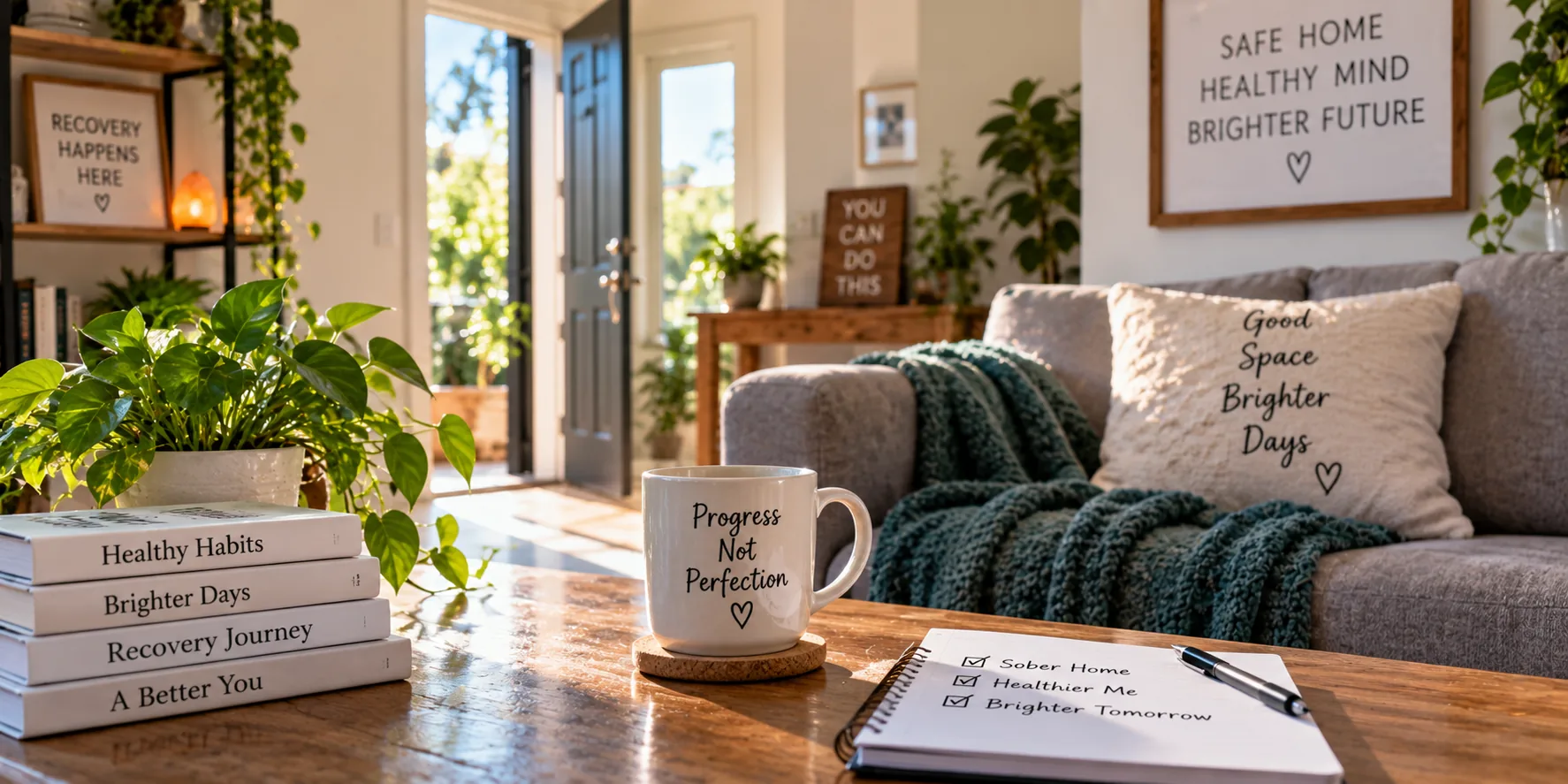


Learning how to create a safe home environment for recovery can help turn your living space into a place that supports sobriety instead of reminding you of active addiction. Your home affects your sleep, stress, routines, relationships, access to substances, and what happens when cravings appear.
You do not need an expensive apartment or a perfect house.
You need a space where recovery is easier to protect.
After treatment, seemingly small details can matter. Alcohol in the refrigerator, old drug paraphernalia, contact with people who still use, or even spending long periods isolated in a room where you previously got high can bring back powerful memories.
Your home should support your broader addiction recovery, not constantly challenge it.
Creating that environment starts with removing obvious risks and building healthier routines in their place.
Remove Drugs, Alcohol and Reminders of Substance Use
Start with the most obvious step.
Remove substances from your living environment whenever possible.
That may include:
- Alcohol
- Illegal drugs
- Drug paraphernalia
- Empty bottles
- Hidden stashes
- Items strongly associated with past substance use
You may also need to delete dealer contacts, block certain numbers, or remove objects connected with your old routine.
Understanding how the addicted brain connects environmental cues with cravings can help explain why these reminders matter.
A familiar object, room, smell, or routine may trigger memories before you consciously realize what is happening.
For someone recovering from fentanyl addiction and opioid dependence, reducing access to opioids and separating from environments connected with previous fentanyl use can be especially important because a return to opioid use can carry a severe overdose risk.
Do not keep substances nearby just to prove you can resist them.
Recovery is not a test of willpower.
Make the healthier choice easier.
Set Rules for Visitors and People in Your Home
A substance-free home becomes difficult to maintain if visitors regularly bring drugs or alcohol inside.
Create clear expectations.
You may need to say:
“You are welcome here, but you cannot bring drugs into my home.”
Or:
“I am not keeping alcohol here while I am working on my recovery.”
Some people will respect that immediately.
Others may complain.
Your recovery is more important than avoiding an uncomfortable conversation.
If you live with family, discuss the household expectations together. Our guide on moving back home after rehab explains why clear expectations can make returning to family housing safer and less stressful.
If the people you live with refuse to respect your recovery, another housing arrangement may eventually be necessary.
A healthy home requires cooperation from the people sharing it.
Create Structure Instead of Chaos
Addiction often disrupts ordinary routines.
Meals become irregular.
Sleep disappears.
The house becomes messy.
Bills go unopened.
Days begin blending together.
A safe recovery environment should create more predictability.
Try establishing regular times for:
Waking up.
Meals.
Work or school.
Exercise.
Treatment or recovery support.
Household chores.
Relaxation.
Sleep.
Structure reduces the number of decisions you have to make when you are tired or stressed.
Keep your home reasonably organized.
You do not need perfection.
But waking up surrounded by chaos can increase stress, while a clean and functional space may make healthier routines easier.
If you are still deciding where to live, finding housing after rehab can help you compare housing options based on safety, affordability, structure, and recovery support.
Make Sure Independence Does Not Become Isolation
A quiet home can feel peaceful.
It can also become lonely.
This matters especially if you are living alone in early recovery.
You may have complete control over your environment, but nobody automatically notices when you stop answering the phone, sleep all day, or begin withdrawing from recovery support.
Create connection intentionally.
Invite sober friends over.
Call family.
Attend meetings or community activities.
Keep treatment appointments.
Exercise outside the house.
Make plans for weekends.
The safest home is not necessarily the home where you spend every minute.
Human connection remains an important part of recovery.
If isolation starts increasing along with secrecy, cravings, or thoughts about substances, recognize these as possible warning signs of addiction relapse.
Reach out early rather than waiting until cravings become overwhelming.
Consider Sober Living if Your Current Home Is Unsafe
Sometimes you cannot make an existing home safe enough.
Maybe roommates continue using drugs.
Family members drink heavily.
Your neighborhood gives you constant access to substances.
Or your apartment is strongly connected with previous drug use.
In these situations, sober living after addiction treatment may provide a more structured environment.
Sober living can offer:
A substance-free home.
Accountability.
Other residents focused on recovery.
House rules.
Regular responsibilities.
Greater connection.
For some people, this provides an important bridge between treatment and complete independence.
Moving somewhere new may also help when your current environment is saturated with triggers. Our guide on moving away to get sober explains why relocation can help reduce exposure to old patterns but cannot replace an actual recovery plan.
You still need structure and support wherever you go.
Build a Home That Represents the Life You Want
Once obvious risks are removed, begin adding things that support your new life.
Keep healthy food available.
Create a comfortable place to sleep.
Set up an area for exercise, reading, journaling, meditation, or other healthy activities.
Display reminders of goals that matter to you.
Maybe that is a picture of your children.
A calendar.
A recovery milestone.
A work goal.
A savings plan.
A quote.
Your environment should gradually stop looking like a place where addiction happened and start looking like a place where a different life is being built.
You may still have difficult days.
A safe home does not eliminate cravings, stress, or emotional pain.
It gives you a stronger environment in which to handle them.
Learning how to create a safe home environment for recovery ultimately means reducing unnecessary risks and increasing healthy structure.
Remove substances.
Set boundaries.
Protect your sleep.
Stay connected.
Create routines.
Choose supportive people.
And be willing to change housing if your current environment consistently threatens your sobriety.
Recovery happens inside a person, but environment matters.
The safer and more stable your home becomes, the more energy you can spend building the life you want instead of constantly defending yourself from the life you are trying to leave behind.


