



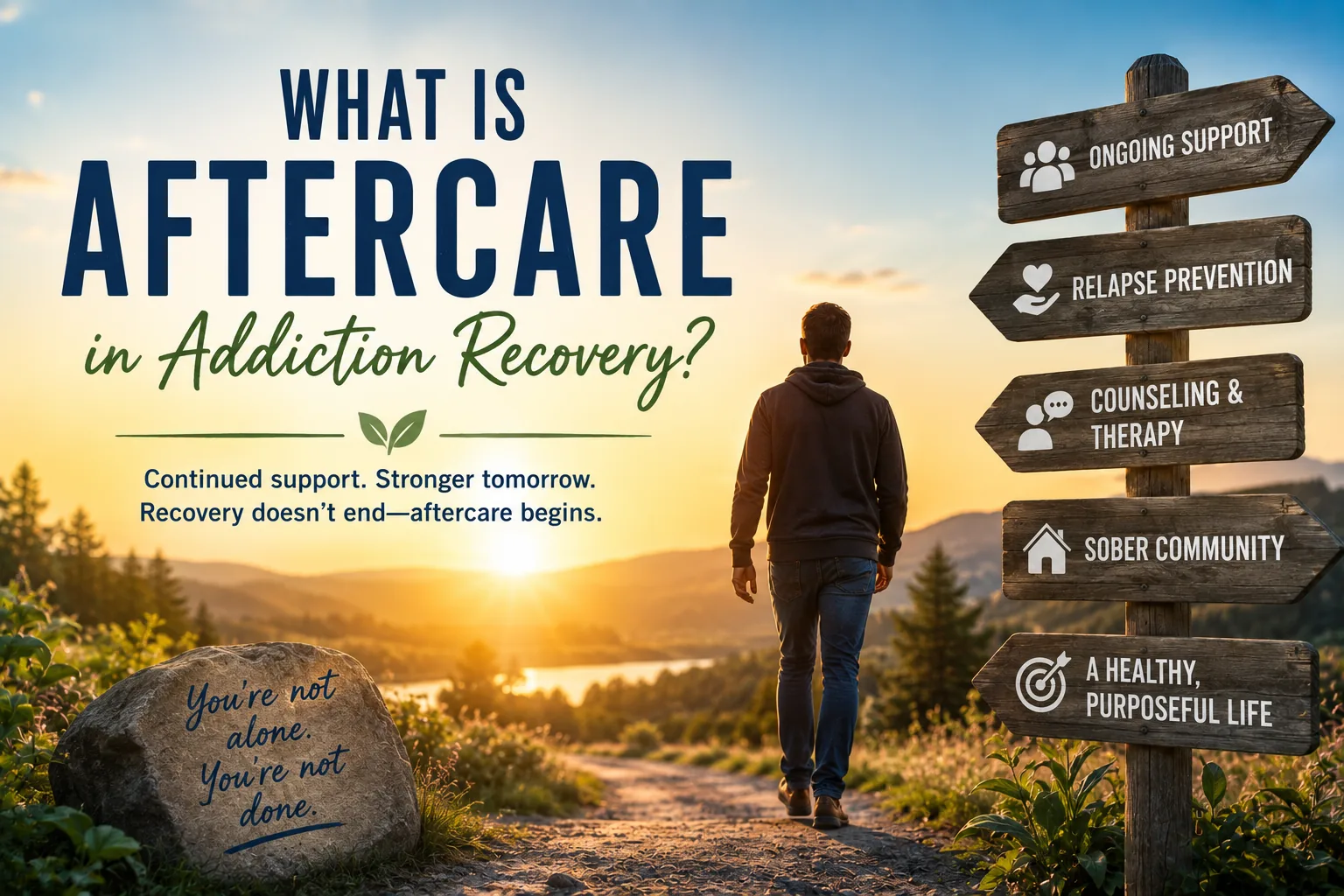


Aftercare in addiction recovery is the ongoing support a person receives after completing a formal treatment program such as residential rehab, inpatient care, or an intensive outpatient program. It helps bridge the gap between structured treatment and everyday life, where stress, relationships, work, cravings, and old triggers can return.
Finishing rehab is a major accomplishment, but it does not mean recovery is finished.
In many ways, treatment is where recovery skills are learned. Addiction aftercare is where those skills are practiced in the real world.
A strong aftercare plan can include counseling, peer-support groups, sober living, medication management, outpatient treatment, recovery coaching, family involvement, and relapse prevention planning.
The exact plan should be based on the person’s needs.
Why Is Aftercare Important After Rehab?
Residential treatment provides structure.
There may be scheduled meals, therapy sessions, groups, recovery activities, and limited access to drugs or alcohol. When someone leaves that environment, they suddenly have much more freedom.
Freedom can be exciting.
It can also be risky.
A person may return to the same neighborhood, relationship problems, financial stress, workplace pressure, or social circles that existed before treatment.
That is why life after rehab requires planning.
Aftercare creates continuity.
Instead of going from constant support to no support, someone gradually transitions into greater independence while staying connected to people and services that strengthen recovery.
This can be especially important during early recovery, when cravings, emotional changes, sleep problems, and stress may still be difficult to manage.
What Is Included in an Addiction Aftercare Plan?
Aftercare is not one specific program.
It is usually a combination of services and supports.
Outpatient treatment may allow someone to continue counseling or group treatment while living at home and returning to work or school.
Individual counseling can help address stress, trauma, depression, anxiety, relationships, and other issues that may affect recovery.
Peer-support groups can provide connection with people who understand the challenges of addiction.
Sober living can offer a structured, substance-free environment for someone who is not ready to return home or whose home environment may put recovery at risk.
Medication management may be part of aftercare for people who take medications for opioid use disorder, alcohol use disorder, mental health conditions, or other medical needs.
Recovery coaching may provide accountability, goal setting, and practical support.
Family involvement can help repair communication, rebuild trust, and teach loved ones how to support recovery in healthy ways.
A strong plan may use several of these approaches at the same time.
How Long Does Addiction Aftercare Last?
There is no universal aftercare timeline.
Some people may need intensive support for several months.
Others may remain connected to treatment, counseling, medications, or recovery groups for years.
The right amount of support often changes as recovery becomes stronger.
Someone leaving residential treatment may begin with multiple outpatient appointments each week.
Later, those appointments may become less frequent.
A person may move from sober living into independent housing.
Recovery meetings may remain part of life even after formal treatment ends.
The goal is not to stop support as quickly as possible.
The goal is to gradually build enough stability, coping skills, and recovery capital that someone can manage everyday life without returning to substance use.
Aftercare and Relapse Prevention
One of the most important parts of aftercare is creating and maintaining a relapse prevention plan.
Relapse often begins before someone actually drinks or uses drugs.
Changes may appear in behavior, thinking, mood, relationships, or daily routines.
Someone may begin isolating.
They may stop attending appointments.
Sleep may deteriorate.
They may reconnect with people associated with substance use.
They may begin thinking about past drug or alcohol use in a positive way while forgetting the consequences.
Aftercare gives people somewhere to bring these warning signs before they become a crisis.
A counselor may help identify a new trigger.
A sponsor may recognize changes in behavior.
A doctor may adjust medication.
A sober living program may provide additional structure.
A support group may remind someone they are not alone.
The earlier a problem is addressed, the more options someone usually has.
Building a Recovery Support System
Aftercare also helps people develop a strong recovery support system.
This matters because treatment eventually becomes less frequent.
People need relationships and resources that exist outside the treatment center.
That support system may include family members, sober friends, sponsors, recovery coaches, therapists, doctors, and peers.
It does not need to be large.
It needs to be dependable.
Someone should know who they can call when they are struggling.
They should know where they can go when they feel isolated.
They should know how to ask for help before a craving or stressful situation becomes overwhelming.
Those relationships become part of the foundation for long-term recovery.
Aftercare Is About Building a Life
The best aftercare plans do more than prevent substance use.
They help people rebuild.
A person may need help finding employment.
They may need stable housing.
They may want to return to school.
Relationships may need repair.
Financial problems may need attention.
Physical and mental health may need ongoing treatment.
These practical areas matter because recovery becomes stronger when life becomes more stable.
Aftercare can help someone move from simply asking:
“How do I stay sober?”
to asking:
“What kind of life do I want to build?”
That transition is important.
Recovery is not meant to remain centered around addiction forever.
Over time, it can become centered around family, health, work, purpose, relationships, and goals.
Recovery Does Not End When Rehab Ends
Completing treatment is not the end of addiction recovery.
It is a transition.
A strong aftercare plan helps make that transition safer and more manageable.
At first, aftercare may involve frequent treatment and considerable structure.
Later, it may look like occasional counseling, recovery meetings, supportive friendships, healthy routines, and knowing when to ask for help.
The level of support can change.
The purpose stays the same:
protect the progress that has already been made while continuing to build a healthier life.
Rehab may provide the beginning.
Aftercare helps turn that beginning into long-term recovery.


