



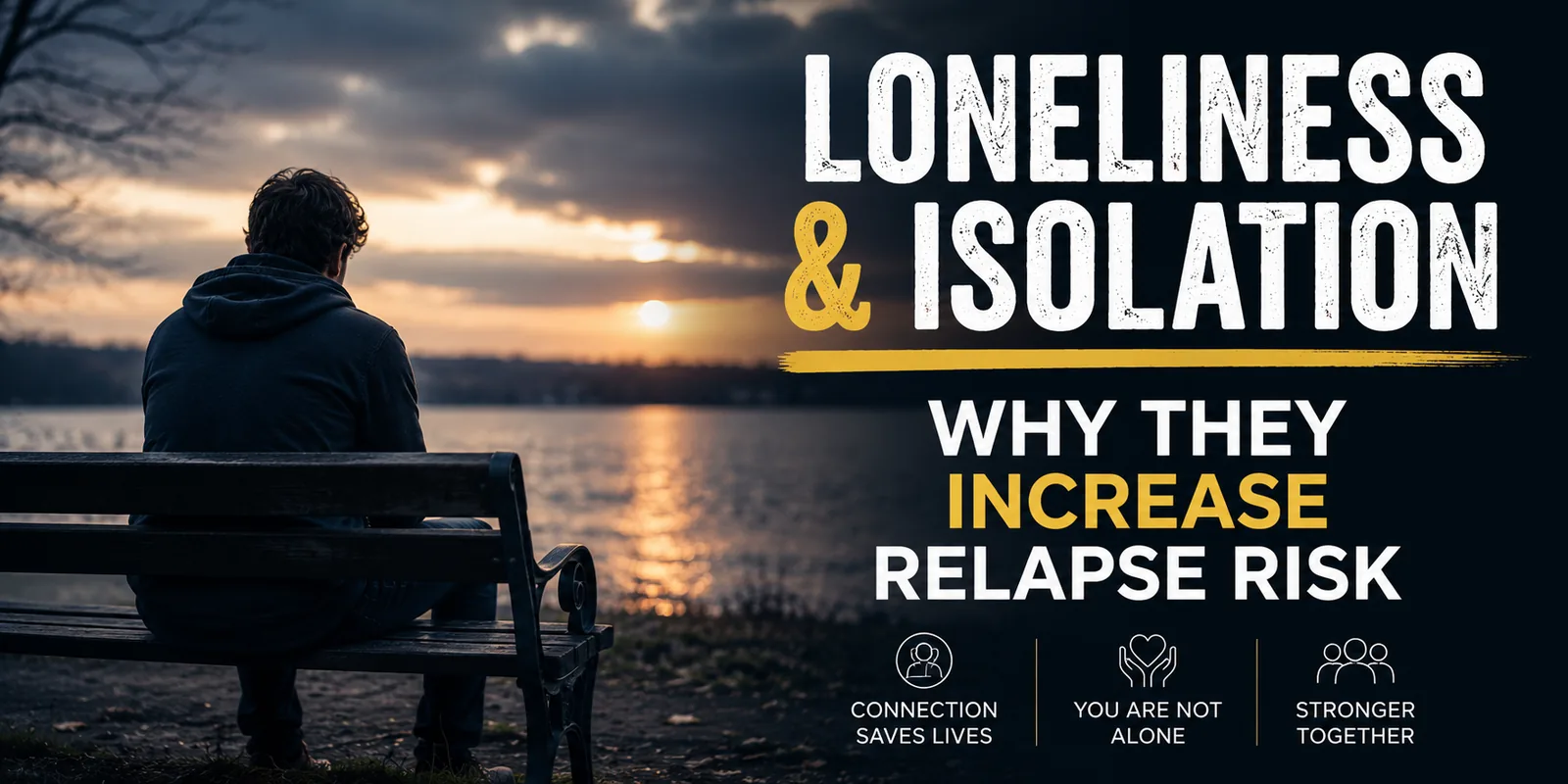


Loneliness and isolation can significantly increase relapse risk because recovery is much harder when someone tries to do everything alone. A person may be sober, attending work, and staying away from drugs or alcohol, yet slowly begin pulling away from the people who support them.
At first, isolation may even feel comfortable.
You do not have to explain how you are feeling.
You do not have to answer questions.
You do not have to admit that recovery has been difficult lately.
But the longer someone stays disconnected, the easier it can become for stress, depression, cravings, and old thoughts about substance use to grow without anyone noticing.
A relapse often does not begin with the first drink, pill, or drug.
Sometimes it begins when someone stops answering the phone.
Why Isolation Can Be Dangerous in Recovery
Addiction often thrives in secrecy.
During active addiction, people may hide how much they are drinking, where they are going, how much money they are spending, or what substances they are using.
Recovery usually requires the opposite.
It requires honesty.
Connection.
Accountability.
Support.
When someone begins isolating again, some of those protections disappear.
A person who normally talks to a sponsor every day may stop calling.
Someone attending counseling every week may begin canceling appointments.
Family invitations get turned down.
Texts go unanswered.
Eventually, nobody knows how the person is actually doing.
That creates space for thoughts such as:
“Nobody would know if I used once.”
Or:
“I can handle this myself.”
Those thoughts can become dangerous quickly.
Loneliness Can Make Old Relationships Look Better Than They Were
Recovery sometimes changes a person’s social life dramatically.
Friends who were once around every weekend may disappear when the drinking stops.
People who used drugs together may no longer be safe to spend time with.
Bars, clubs, parties, and other familiar social environments may need to be avoided.
That can leave someone feeling like they lost an entire community.
After enough lonely nights, old relationships may start looking attractive again.
Someone may think:
“They were always there for me.”
But what they may really mean is:
“They were always there when we were using.”
The mind can begin remembering the laughter, parties, and excitement while forgetting the arguments, overdoses, arrests, missed responsibilities, withdrawals, and chaos.
Loneliness can make unhealthy relationships seem better simply because they are familiar.
Reconnecting with those people may expose someone to the exact substances and situations they worked hard to escape.
Isolation Can Make Cravings Feel Stronger
A craving is easier to manage when someone can talk about it.
It becomes more dangerous when it stays secret.
Imagine someone who has not used cocaine in nine months.
They have a terrible week.
They feel lonely and discouraged.
One night, they suddenly begin thinking about cocaine.
If they call someone in recovery and say:
“I’m having a really strong craving tonight,”
the thought is no longer trapped inside their own head.
Someone can remind them why they stopped.
They can make plans.
They can leave the house.
They can attend a meeting.
They can get through the night.
But if they tell nobody, the conversation happens only between them and the craving.
The mind begins negotiating.
“Just once.”
“Nobody has to know.”
“I’ve been sober long enough to control it.”
Isolation removes the voices that might challenge those thoughts.
Loneliness and Mental Health Often Overlap
Sometimes isolation is not simply a recovery problem.
It can also be a sign that depression, anxiety, trauma, or another mental health condition is becoming worse.
Someone may stop returning calls because they are depressed.
They may avoid meetings because anxiety makes social situations uncomfortable.
They may feel ashamed about something that happened and decide other people would be better off without them.
That can create a cycle:
Someone feels bad.
They isolate.
Isolation makes them feel worse.
They begin thinking about substances.
They isolate even more because they are ashamed of the cravings.
Eventually, using begins to look like relief.
This is why mental health should be taken seriously in addiction recovery.
If you are withdrawing from people because you feel persistently depressed, anxious, hopeless, or emotionally numb, professional support may be needed.
Watch for the Early Signs of Isolation
Isolation does not always mean someone disappears completely.
It can begin with small changes.
Warning signs may include:
- Not answering calls or texts
- Missing recovery meetings
- Canceling counseling appointments
- Spending most free time alone
- Avoiding family gatherings
- Stopping hobbies or social activities
- Pulling away from sober friends
- Becoming increasingly secretive
- Spending more time online instead of with people
- Reconnecting with people who use substances
- Saying, “Nobody understands me”
- Thinking frequently about past drinking or drug use
One missed phone call is not a relapse.
But when several of these changes begin happening together, pay attention.
Connection Does Not Mean Being Around People Constantly
Preventing isolation does not mean you have to become extremely social.
Some people naturally need more alone time than others.
Healthy solitude and dangerous isolation are different.
Healthy solitude may involve reading, hiking, exercising, creating something, resting, or enjoying time alone while still staying connected to supportive people.
Dangerous isolation often feels different.
You are hiding.
Avoiding.
Disconnecting.
Not telling people how you actually feel.
The question is not:
“Am I alone?”
It is:
“Am I still connected?”
What to Do When You Start Isolating
Start small.
You do not need to rebuild your entire social life overnight.
Call one person.
Attend one meeting.
Have coffee with someone.
Go for a walk with a family member.
Return to counseling.
Volunteer.
Join a recovery group.
Spend time somewhere safe where other people are present.
If you have been avoiding someone because you are struggling, consider saying:
“I’ve been isolating lately, and I don’t think it’s good for my recovery.”
That one sentence can reopen a connection.
Build regular contact into your recovery plan before you desperately need it.
Schedule calls.
Plan meetings.
Create weekend activities.
Know who you will contact when cravings appear.
The goal is to make connection a normal part of recovery rather than something you only seek during a crisis.
You Do Not Have to Recover Alone
Substance use can create isolation, and isolation can pull someone back toward substance use.
Breaking that cycle takes connection.
You need people who notice when something changes.
People you can call when cravings return.
People who remind you what life looked like before recovery.
People who can sit with you when things are difficult without expecting you to pretend everything is fine.
Recovery is ultimately your responsibility, but that does not mean it has to be a lonely responsibility.
When you begin pulling away from everyone, pay attention. Isolation can make old substances look like comfort, old relationships look safer than they were, and cravings feel much stronger than they need to be.
Reach out before the craving becomes a plan.
Sometimes protecting recovery starts with something as simple as answering the phone.


