



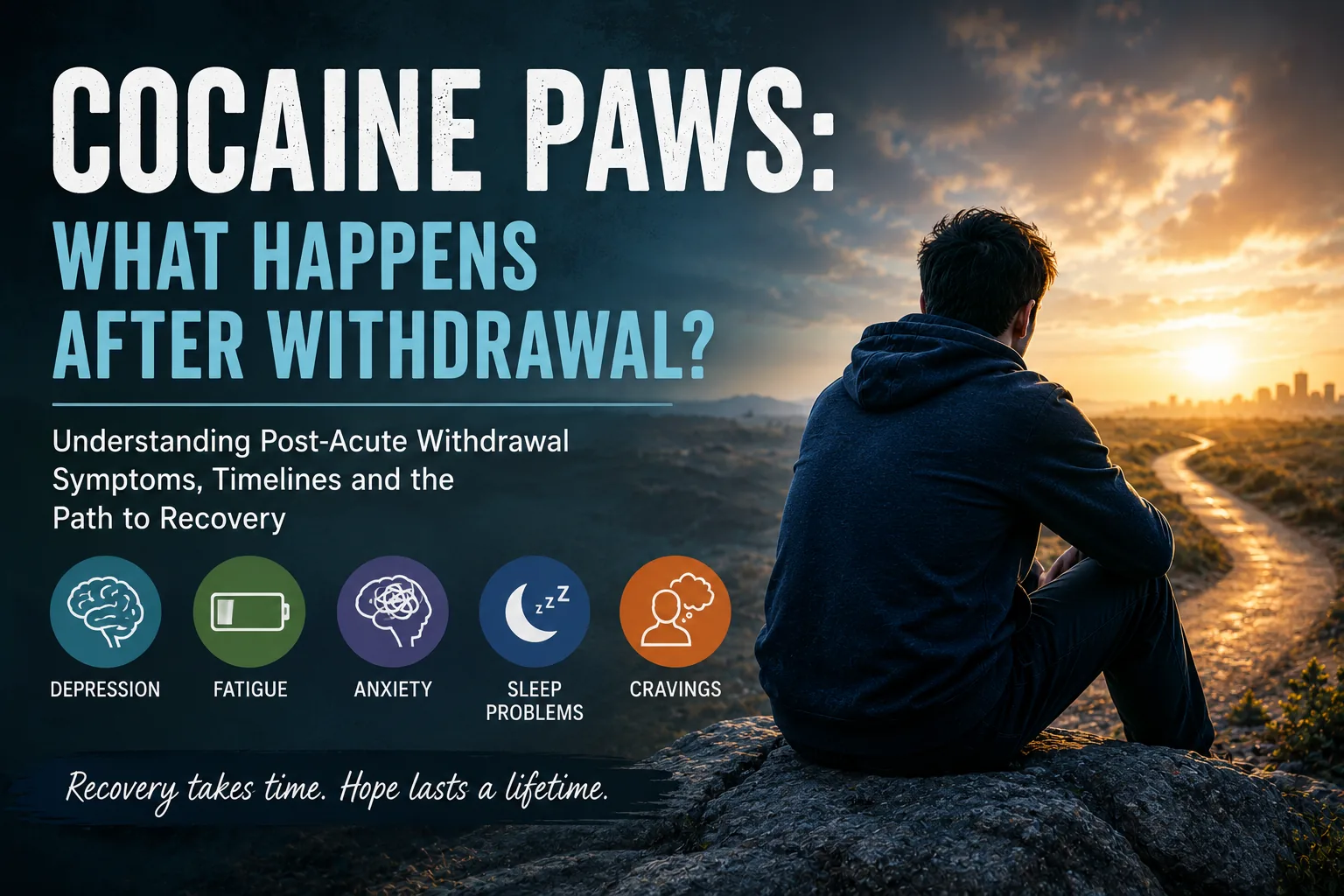


Cocaine PAWS can make recovery confusing because the most intense withdrawal symptoms may improve while depression, fatigue, poor concentration, sleep problems, anxiety, and cravings continue. Someone may stop using cocaine, get through the initial crash, and still feel emotionally flat or exhausted weeks later.
You may wonder:
“Why do I still feel bad if the cocaine is already out of my system?”
The answer is that recovery from cocaine substance use involves more than simply removing the drug from the body.
Repeated cocaine use can affect brain systems involved in reward, motivation, stress, sleep, and mood. When cocaine use stops, those systems may need time to adjust.
Lingering symptoms after the acute withdrawal period are sometimes described as Post-Acute Withdrawal Syndrome, or PAWS.
Understanding what may happen next can make the recovery process feel less frightening and help you recognize when additional support is needed.
What Happens During Cocaine Withdrawal?
Cocaine withdrawal often looks different from withdrawal from substances such as alcohol or benzodiazepines.
Instead of severe physical withdrawal being the main concern, many people experience intense emotional and psychological symptoms.
The first phase is sometimes called a crash.
Symptoms can include:
- Extreme fatigue
- Increased sleep
- Depression
- Anxiety
- Irritability
- Increased appetite
- Difficulty concentrating
- Restlessness
- Strong cocaine cravings
For some people, these symptoms begin improving within days.
Others continue experiencing problems after the initial crash.
Our complete guide to Post-Acute Withdrawal Syndrome symptoms, timeline and recovery explains why some withdrawal-related symptoms may persist or return after the acute stage has ended.
Common Cocaine PAWS Symptoms
Cocaine PAWS may affect mood, sleep, concentration, motivation, and energy.
Commonly reported symptoms can include:
- Depression
- Low motivation
- Fatigue
- Anxiety
- Irritability
- Trouble concentrating
- Brain fog
- Memory problems
- Insomnia
- Excessive sleeping
- Emotional numbness
- Reduced pleasure
- Cocaine cravings
These symptoms can be especially difficult because they are not always obvious to other people.
Someone may look completely sober and physically healthy while struggling to get out of bed or feel interested in anything.
Understanding how the addicted brain changes during recovery can help explain why motivation and pleasure sometimes take time to return.
Cocaine produces powerful effects on the brain’s reward system. After repeated use, ordinary activities may temporarily feel less satisfying once cocaine is gone.
That does not mean they will always feel that way.
Depression and Low Motivation After Cocaine
Depression can be one of the hardest parts of cocaine PAWS.
A person may feel sad, hopeless, emotionally numb, or disconnected.
Even activities that used to feel enjoyable may seem meaningless.
Work may feel impossible.
Socializing may feel exhausting.
Exercise may require more motivation than you can find.
Our guide to depression during Post-Acute Withdrawal Syndrome explains why persistent low mood deserves attention during recovery.
Do not assume severe depression is something you simply have to tolerate.
Withdrawal-related depression can overlap with an existing depressive disorder or another mental health condition.
If depression becomes severe, continues worsening, or includes suicidal thoughts, seek immediate professional help.
Recovery should never mean suffering silently.
Fatigue, Anxiety and Sleep Problems
Cocaine is a powerful stimulant.
People using heavily may stay awake for long periods, eat poorly, and repeatedly push the body beyond normal limits.
Once cocaine use stops, exhaustion can become intense.
You may sleep for many hours and still feel tired.
Other people experience the opposite problem.
They cannot sleep normally.
They may wake repeatedly, experience strange dreams, or struggle to fall asleep at all.
Learn more about insomnia during Post-Acute Withdrawal Syndrome.
Anxiety may also increase during cocaine recovery.
You may feel restless, nervous, or unusually sensitive to stress. Ordinary responsibilities can suddenly feel overwhelming.
Our guide to anxiety during Post-Acute Withdrawal Syndrome explores this symptom in greater detail.
Sleep, anxiety, and fatigue can feed into each other.
Poor sleep can increase anxiety.
Anxiety makes sleep harder.
Both can make cravings more difficult to manage.
How Long Can Cocaine PAWS Last?
There is no exact cocaine PAWS timeline.
Some people experience significant improvement within several weeks.
Others may continue having episodes of depression, low energy, sleep problems, anxiety, or cravings for several months.
The broader question of how long Post-Acute Withdrawal Syndrome lasts depends on factors such as:
- How long cocaine was used
- Frequency of use
- Amount used
- Whether crack cocaine was involved
- Use of other substances
- Sleep deprivation
- Nutrition
- Physical health
- Mental health
- Stress
- Treatment and recovery support
Recovery can also happen in waves.
You may feel noticeably better for a week and then suddenly feel tired or depressed again.
That does not automatically mean you are starting over.
The larger sobriety timeline can help put those changes in perspective.
Stimulant withdrawal also varies between drugs. For comparison, read about meth PAWS, depression, fatigue and cravings.
Cocaine Cravings and Relapse Risk
Cocaine cravings can return suddenly.
Stress may trigger them.
So can boredom.
A familiar nightclub, neighborhood, person, payday, or memory may create an unexpected urge.
Sometimes the craving is connected directly to PAWS symptoms.
You feel exhausted and remember the energy cocaine produced.
You feel emotionally numb and remember the rush.
You feel depressed and want immediate relief.
These thoughts can increase relapse risk.
Do not treat a craving as proof that you need cocaine.
Change your environment.
Contact someone supportive.
Avoid people and places connected with past cocaine use.
Attend treatment or recovery meetings.
Give yourself time before making decisions.
Cravings can pass.
Using again may only restart the cycle you have already worked hard to escape.
Recovery After Cocaine Withdrawal Takes Time
Recovery from cocaine PAWS may feel slow, but small improvements matter.
Maybe you slept better last night.
Maybe you enjoyed a meal.
Maybe you exercised.
Maybe you were able to focus for an hour.
Maybe you made it through a stressful day without using.
Those are signs of progress.
Build your addiction recovery around consistent routines, supportive relationships, professional treatment, nutrition, sleep, physical activity, and realistic expectations.
Do not compare your recovery timeline with someone else’s.
Your brain and body have their own history.
Severe depression, suicidal thoughts, psychosis, hallucinations, chest pain, extreme agitation, or other serious medical or psychiatric symptoms require immediate professional evaluation and should not simply be blamed on PAWS.
Cocaine PAWS can involve depression, fatigue, anxiety, sleep problems, low motivation, and cravings after the initial withdrawal period ends. Recovery does not always happen in a straight line, but symptoms can become easier to manage over time. Stay connected to support, treat serious symptoms appropriately, and keep moving forward even when progress feels slower than you hoped.


