



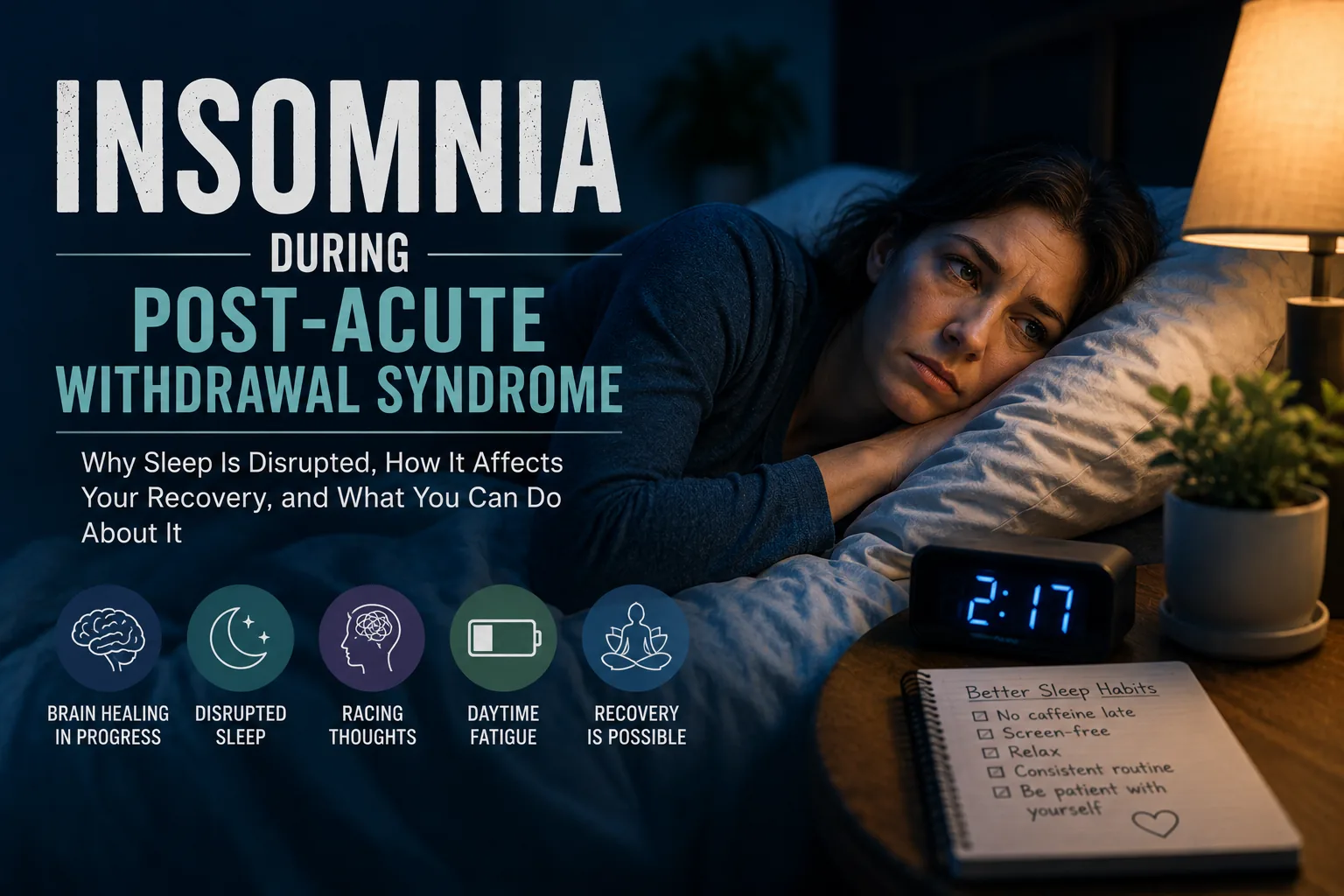


Insomnia during Post-Acute Withdrawal Syndrome can make recovery feel much harder than expected. You may be physically sober, past the worst stage of withdrawal, and still find yourself lying awake at 2 a.m. wondering why your sleep has not returned to normal.
You may struggle to fall asleep.
You may wake up every few hours.
You may have vivid dreams or feel exhausted even after spending most of the night in bed.
For some people, sleep problems improve quickly. For others, they can come and go for weeks or months.
This does not automatically mean your recovery is failing.
Repeated substance use can affect brain systems involved in sleep, stress, reward, and emotional regulation. Once drugs or alcohol are removed, those systems may need time to adjust.
Understanding why insomnia happens during PAWS can make sleepless nights less frightening and help you protect your recovery while your sleep slowly improves.
Why Does PAWS Cause Insomnia?
Post-Acute Withdrawal Syndrome, or PAWS, describes symptoms that may continue or appear after the initial withdrawal period has ended.
Our complete guide to Post-Acute Withdrawal Syndrome symptoms, timeline and recovery explains why these symptoms can vary from person to person.
Sleep is especially vulnerable during addiction and recovery.
Alcohol may have made you feel sleepy, even though it can disrupt normal sleep quality.
Benzodiazepines may have been used specifically to help with anxiety or sleep.
Opioids can change sleep patterns.
Stimulants such as methamphetamine or cocaine can keep someone awake for long periods and seriously disrupt the body’s normal sleep-wake rhythm.
The addicted brain during recovery may need time to reestablish more stable patterns.
That process does not always happen immediately.
What Does PAWS Insomnia Feel Like?
Insomnia during recovery does not always mean being completely unable to sleep.
It may include:
- Difficulty falling asleep
- Waking repeatedly during the night
- Waking too early
- Restless or shallow sleep
- Vivid dreams
- Nightmares
- Feeling tired after sleeping
- Sleeping at unusual times
- Anxiety about bedtime
- Racing thoughts at night
- Daytime fatigue
- Difficulty concentrating
One of the most frustrating parts is becoming worried about sleep itself.
You look at the clock.
You calculate how many hours you have left before morning.
You think:
“If I do not fall asleep right now, tomorrow will be terrible.”
That anxiety can make it even harder to relax.
Sleep problems can also overlap with anxiety during Post-Acute Withdrawal Syndrome, creating a cycle in which anxiety prevents sleep and poor sleep increases anxiety.
How Long Can Insomnia During PAWS Last?
There is no exact timeline for sleep recovery.
Some people begin sleeping better within several weeks. Others experience disrupted sleep that improves gradually over several months or occurs in waves.
Our guide to how long Post-Acute Withdrawal Syndrome can last explains why individual timelines differ.
Factors may include:
- Substance used
- Length of use
- Amount and frequency of use
- Previous sleep problems
- Mental health
- Stress
- Caffeine intake
- Daily routines
- Physical health
- Recovery environment
The substance involved can also affect sleep differently.
People experiencing alcohol PAWS symptoms during recovery may struggle with fragmented sleep or vivid dreams.
Sleep problems can also occur during opioid PAWS and benzo PAWS recovery.
Stimulant recovery can include changing sleep patterns as well. Both meth PAWS and cocaine PAWS after withdrawal may involve periods of excessive sleep, fatigue, or insomnia.
Poor Sleep Can Affect Mood and Cravings
Sleep affects nearly every part of daily life.
When you do not sleep well, small problems can feel much bigger.
You may become irritable.
Concentration gets harder.
Motivation drops.
Stress becomes more difficult to manage.
Low mood can also become worse, which is why depression during Post-Acute Withdrawal Syndrome deserves attention when insomnia continues.
Poor sleep can also increase cravings.
If you once used alcohol, benzodiazepines, opioids, or other substances to fall asleep, you may start thinking:
“I know what would make me sleep.”
That thought can become dangerous.
Using a substance may seem like a quick solution, but it can restart the same cycle you are trying to leave behind.
Persistent sleep problems can therefore become a relapse risk if they are ignored.
How to Improve Sleep During PAWS
You may not be able to force perfect sleep, but you can create conditions that make healthy sleep more likely.
Try keeping the same wake-up time every day.
Get outside during daylight when possible.
Exercise during the day.
Limit caffeine, especially later in the afternoon or evening.
Keep your bedroom dark, quiet, and comfortable.
Avoid spending hours on your phone in bed.
Develop a calming routine before sleep.
Reading, stretching, taking a warm shower, or listening to relaxing audio may help signal that the day is ending.
Try not to turn bedtime into a battle.
If you cannot sleep, becoming angry with yourself usually makes relaxation harder.
Recovery also requires realistic expectations.
The sobriety timeline is rarely perfectly smooth. Sleep may improve gradually along with mood, energy, concentration, and stress tolerance.
When Insomnia Needs Professional Help
Not every sleep problem should automatically be blamed on PAWS.
Persistent insomnia can have many causes, including anxiety disorders, depression, sleep apnea, medications, medical conditions, and other sleep disorders.
Talk with a healthcare professional if insomnia continues, becomes severe, or significantly affects your ability to function.
Do not begin, stop, or change sleep medications without medical guidance, particularly if you have a history of substance dependence.
This is especially important with benzodiazepines because physical dependence and dangerous withdrawal can occur.
Seek immediate medical attention for severe confusion, hallucinations, seizures, suicidal thoughts, or other serious symptoms.
Recovery does not require you to endure every symptom without help.
Insomnia during Post-Acute Withdrawal Syndrome can be exhausting, but difficult sleep does not mean sobriety is not working. Your brain and body may still be adjusting after substance use. Build healthy routines, address anxiety and depression when they appear, ask for professional help when needed, and give recovery time to unfold. Sleep may not improve overnight, but gradual improvement is still progress.


