






The fentanyl recovery timeline begins when fentanyl use stops, but recovery continues long after the drug leaves your system. The first days may involve intense withdrawal, cravings, anxiety, stomach problems, muscle aches, and difficulty sleeping. During the following weeks and months, the body and brain gradually begin adjusting to life without opioids.
There is no exact timeline that applies to everyone. Recovery can depend on how often fentanyl was used, the amount used, how long use continued, other substances involved, physical health, and whether medications are used during treatment.
Because illicit fentanyl is extremely potent and frequently mixed with other substances, people may not even know exactly what they have been taking. That can make withdrawal and recovery less predictable.
If you are struggling with fentanyl addiction, remember that getting through withdrawal is only the beginning. Long-term recovery is about controlling cravings, reducing overdose risk, allowing the brain to heal, and building a stable life without fentanyl.
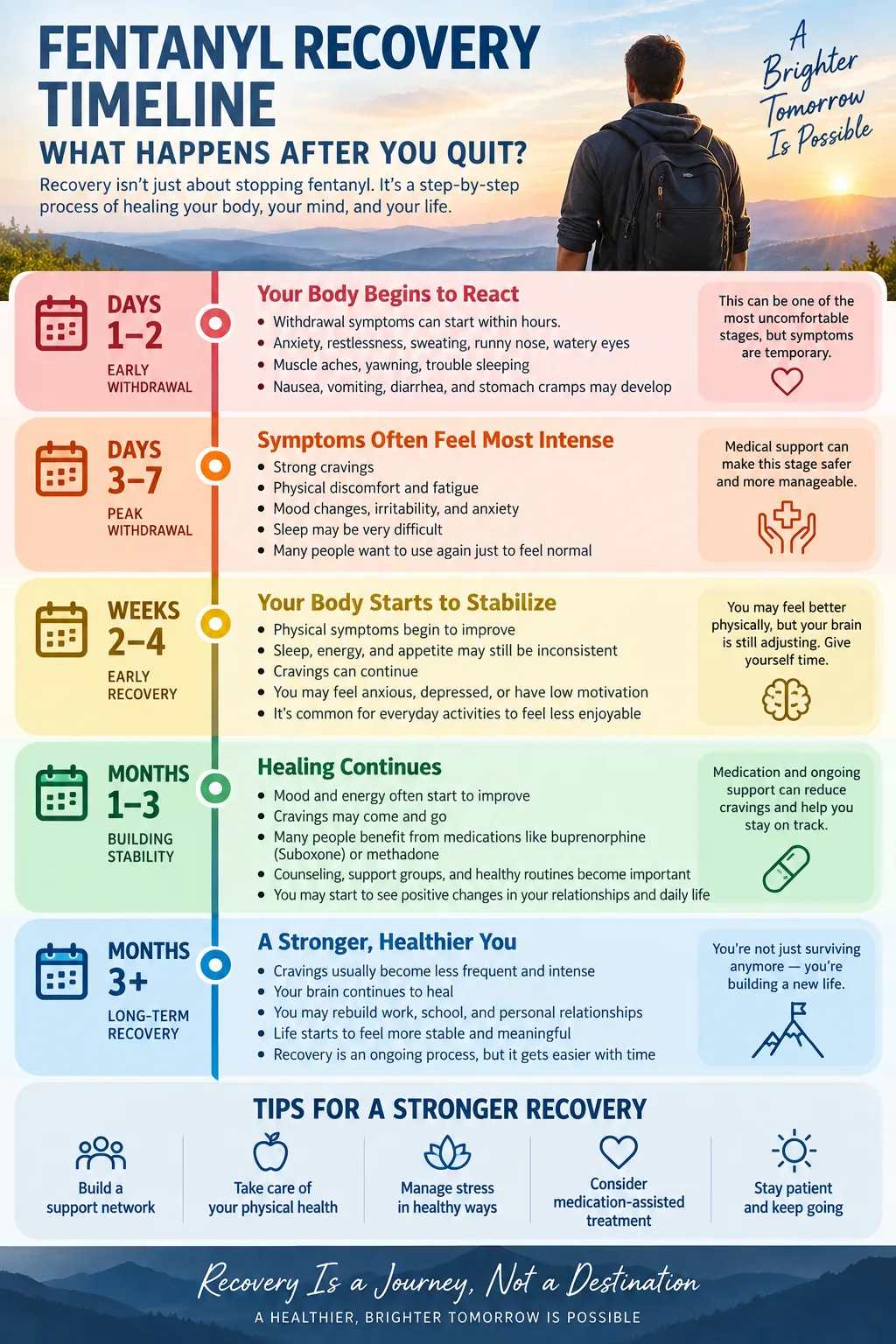
The First Days After Stopping Fentanyl
Withdrawal can begin as the body adjusts to no longer receiving fentanyl.
Early symptoms may include:
- Anxiety
- Restlessness
- Sweating
- Muscle and joint aches
- Runny nose
- Watery eyes
- Yawning
- Trouble sleeping
- Strong fentanyl cravings
As withdrawal develops, symptoms may include nausea, vomiting, diarrhea, stomach cramps, chills, and severe physical discomfort.
Fentanyl withdrawal may not follow exactly the same pattern for every person. Regular fentanyl exposure can create significant physical dependence, and the unpredictable illicit drug supply can complicate what someone experiences after stopping.
Our broader opioid recovery timeline explains how the withdrawal period fits into the months of healing that can follow.
The first goal should be getting through this stage safely rather than trying to prove that you can do it alone.
Days 2 Through 7: Withdrawal and Cravings Can Be Intense
The first week can be physically and emotionally exhausting.
Sleep may be poor.
Your stomach may feel terrible.
Your muscles may ache.
You may feel anxious, depressed, irritated, or unable to sit still.
At the same time, your brain may be sending a very clear message: use fentanyl again and all of this discomfort will stop.
That makes cravings particularly dangerous during early recovery.
Understanding how long opioid cravings can last can help you recognize that cravings are part of recovery rather than a sign that treatment is failing.
This period is also when overdose prevention becomes critical.
After someone stops fentanyl, opioid tolerance can decrease. Returning to an amount previously used can increase the risk of a fatal opioid overdose.
That danger is one reason continuing treatment after withdrawal matters so much.
Weeks 2 Through 4: The Body Improves Before Everything Feels Normal
After the most intense physical withdrawal begins improving, some people expect to immediately feel good again.
Recovery may not work that quickly.
You may still experience:
- Poor sleep
- Low energy
- Anxiety
- Depression
- Irritability
- Difficulty concentrating
- Low motivation
- Opioid cravings
- Little interest in activities you once enjoyed
Repeated fentanyl use affects brain systems involved in reward, motivation, stress, and pleasure. When fentanyl disappears, ordinary life may temporarily feel flat.
Our guide to brain recovery after opioid addiction explains why emotional and cognitive recovery may continue long after the worst withdrawal symptoms end.
Structure becomes important during this stage.
Regular sleep, nutrition, exercise when appropriate, medical appointments, counseling, recovery meetings, and supportive relationships can begin replacing the routines associated with fentanyl use.
Months 1 Through 3: Medication Can Support Recovery
Recovery does not require someone to battle opioid cravings without medical help.
Medications such as buprenorphine and methadone can be important tools in treating opioid use disorder. They can reduce cravings and withdrawal symptoms while helping someone create a more stable daily life.
A buprenorphine treatment program may be one option. Some people receive Suboxone, which contains buprenorphine and naloxone.
Others may receive treatment through a methadone maintenance clinic.
Unfortunately, stigma sometimes convinces people that using medication means they are not truly sober.
Our discussion of Suboxone and medication-assisted recovery explores why recovery should be measured by health, stability, and freedom from destructive opioid use—not by whether someone takes an appropriate medication.
There is also no universal deadline for discontinuing medication. The appropriate length of buprenorphine treatment during recovery should be determined individually with a qualified healthcare provider.
Months 3 and Beyond: Recovery Becomes About Rebuilding Life
As physical recovery becomes more stable, the focus often shifts.
Where will you live?
Who will you spend time with?
How will you manage stress?
What will you do when cravings return?
How will you deal with pain, loneliness, boredom, or grief without fentanyl?
These questions matter because addiction relapse can begin long before someone actually uses a drug.
You may begin isolating.
You might stop treatment.
You may start contacting old friends connected with fentanyl use.
You may begin thinking that using “just once” would not hurt.
Those changes deserve attention.
The longer someone remains away from fentanyl, the lower their opioid tolerance may become. That means relapse after a period of recovery can carry an especially serious overdose risk.
Reach out early rather than waiting until fentanyl is already in front of you.
Fentanyl Recovery Does Not Have an Expiration Date
The fentanyl recovery timeline does not end after seven days, 30 days, or three months.
Early recovery may be about surviving withdrawal.
Later recovery becomes about building something.
Improving your health.
Repairing relationships.
Returning to work.
Finding stable housing.
Learning how to experience stress without opioids.
Allowing your brain time to recover.
Creating relationships with people who want you alive and healthy.
Long-term opioid addiction recovery may include medication, counseling, medical care, peer support, recovery meetings, and other services.
The broader process of addiction recovery is not about reaching a day when you never struggle again.
It is about reaching a point where fentanyl no longer controls what happens next.
Withdrawal eventually ends.
Cravings can become more manageable.
Your brain and body can continue adjusting.
And with treatment, support, and time, recovery can become much more than simply surviving another day.


