






Life on Suboxone can bring up a surprisingly emotional question: if you take medication every day to treat opioid addiction, are you really sober?
For some people in recovery, the answer is immediately yes. Others have been told that taking Suboxone means they are simply replacing one opioid with another. That belief can create shame around a treatment that may reduce cravings, prevent withdrawal, and help people build stable lives.
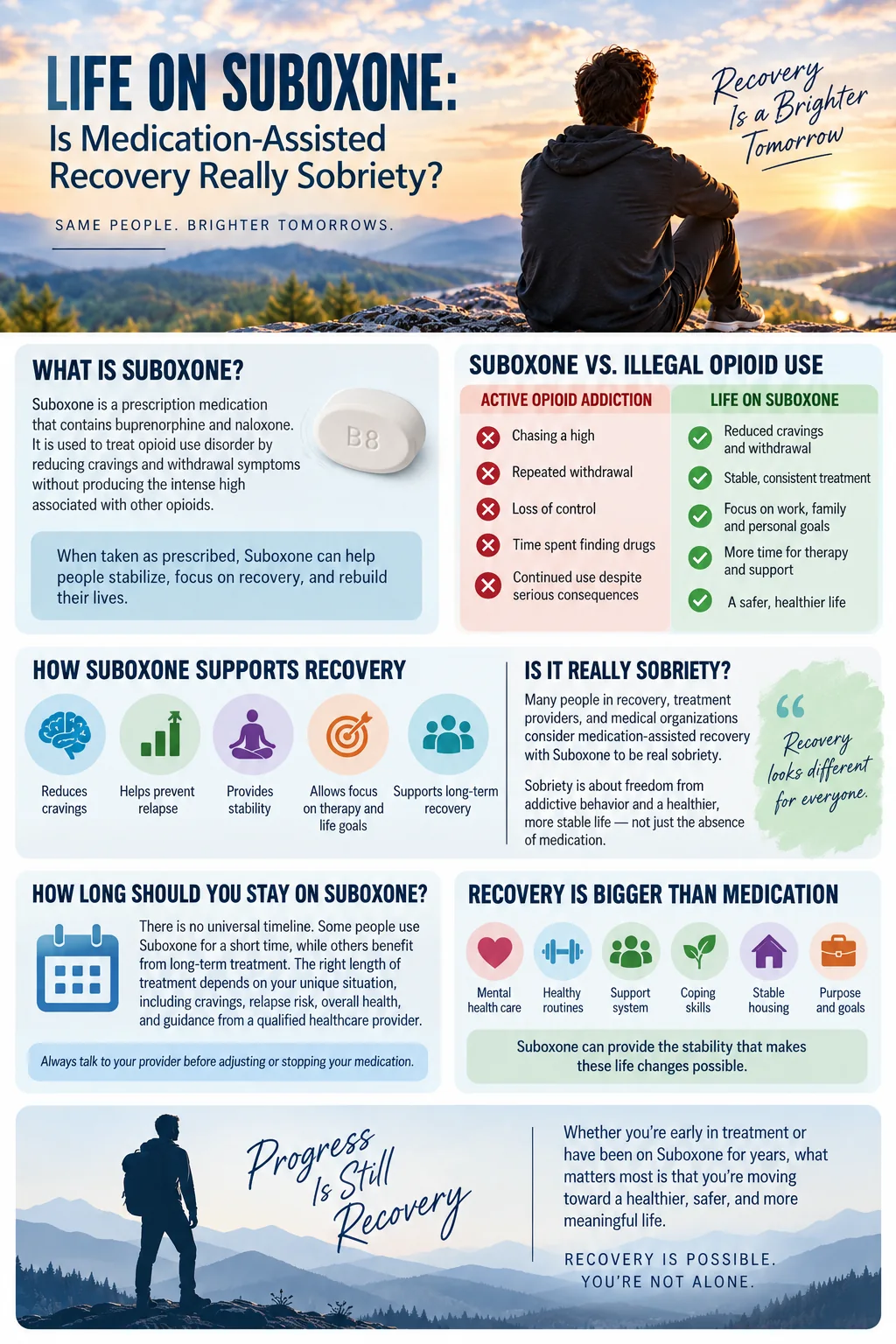
Suboxone contains buprenorphine and naloxone. Buprenorphine is a partial opioid agonist used to treat opioid use disorder. When taken as prescribed, its purpose is not to recreate the cycle of intoxication, withdrawal, obsession, and compulsive drug-seeking associated with active addiction.
Recovery is bigger than whether someone takes a medication.
It is about what happens to their life.
Is Taking Suboxone the Same as Using Opioids?
Suboxone contains an opioid medication, but taking prescribed buprenorphine for opioid use disorder is very different from uncontrolled opioid use.
Active addiction may involve chasing a high, experiencing repeated withdrawal, spending significant time finding drugs, losing control over use, and continuing despite serious consequences.
A person stable on Suboxone may instead wake up, take their medication as directed, go to work, care for their children, attend treatment, rebuild relationships, and live without constantly thinking about obtaining opioids.
That distinction matters.
Physical dependence can occur with buprenorphine. If someone suddenly stops taking it, withdrawal symptoms may occur. But physical dependence and addiction are not identical.
Addiction involves behaviors such as loss of control, compulsive use, and continuing despite harm.
Understanding the larger opioid recovery timeline can help explain why stabilization is such an important part of long-term recovery.
Why Suboxone Can Help With Opioid Recovery
One of the biggest challenges after stopping opioids is the intense drive to use again.
Opioid cravings can continue long after the worst physical withdrawal symptoms disappear. Stress, pain, memories, certain people, and familiar environments can suddenly trigger powerful urges.
Buprenorphine can reduce withdrawal symptoms and cravings, allowing someone to focus on the rest of recovery.
That breathing room can be enormous.
Instead of spending every day fighting the urge to use, a person may be able to focus on:
- Employment
- Family
- Housing
- Mental health
- Physical health
- Relationships
- Meetings or peer support
- Counseling
- Building new routines
Recovery also gives the brain time to adjust. The process of brain healing after opioid addiction may continue for months or longer as reward, motivation, sleep, mood, and responses to triggers gradually change.
Stability matters during that process.
Does Suboxone Count as Sobriety?
There is no single organization that gets to define sobriety for every person.
Some recovery groups define sobriety as complete abstinence from all mind-altering substances. Other people define sobriety as freedom from addictive behavior and nonmedical drug use while allowing medications prescribed for legitimate medical conditions.
From a treatment perspective, someone appropriately taking medication for opioid use disorder is receiving medical care.
A person taking insulin is still managing diabetes.
A person taking an antidepressant is still working on their mental health.
Someone taking Suboxone as prescribed can still be actively recovering from opioid addiction.
The question may become more useful when phrased differently:
Is this medication helping the person build a healthier, safer, more stable life?
If someone is no longer buying heroin or fentanyl, overdosing, experiencing repeated withdrawal, lying to loved ones, or organizing every day around getting opioids, those changes matter.
Recovery should be measured by more than whether a prescription bottle exists.
How Long Should Someone Stay on Suboxone?
There is no universal countdown.
Some people use buprenorphine for a shorter period. Others remain on it for years, and some may benefit from long-term maintenance.
Our guide to how long someone should stay on buprenorphine explains why treatment length should be based on individual stability, cravings, relapse risk, health, and guidance from a qualified healthcare provider.
Stopping simply because someone feels embarrassed about taking medication can be risky.
So can stopping because friends, relatives, or people in a recovery group say someone is “not really sober.”
Anyone considering reducing or stopping buprenorphine should talk with their healthcare provider rather than abruptly discontinuing it.
Suboxone is also not the only medication used in opioid recovery. Methadone treatment can provide another option for some people with opioid use disorder.
The right treatment is the one that safely helps the individual move forward.
Recovery Is About Building a Life You Do Not Want to Lose
The argument over whether medication-assisted recovery is “real sobriety” can distract from what is actually at stake.
Opioid addiction can be deadly.
Returning to opioids after a period of abstinence may create a serious opioid overdose risk, particularly when tolerance has decreased. Fentanyl in the illicit drug supply makes returning to use even more dangerous.
If Suboxone helps someone remain stable, avoid illicit opioids, manage cravings, and participate in recovery, that progress should not be dismissed.
Medication alone may not solve every problem. Long-term recovery can also involve rebuilding relationships, addressing mental health concerns, creating structure, developing coping skills, and recognizing warning signs of opioid relapse.
But medication can provide the stability that makes those changes possible.
So, is life on Suboxone really sobriety?
For many people, yes.
Recovery does not have to look identical for everyone.
The bigger goal is not winning an argument about labels. It is helping someone move away from addiction, overdose, chaos, and compulsive opioid use—and toward health, stability, connection, purpose, and a sustainable life in long-term addiction recovery.
If prescribed Suboxone helps someone accomplish that, medication is not taking recovery away from them.
It may be helping make recovery possible.


