






The opioid recovery timeline begins when opioids leave your system, but recovery continues long after physical withdrawal ends. The first days can bring flu-like symptoms, anxiety, insomnia, stomach problems, and intense cravings. Over the following weeks and months, sleep, mood, energy, brain function, and daily life may gradually become more stable.
There is no exact timeline that applies to everyone.
Recovery can look different depending on whether someone has been using heroin, fentanyl, prescription painkillers, or longer-acting opioids. The amount used, length of use, physical health, mental health, and whether medications are used during treatment can also affect what happens.
Most importantly, opioid recovery is not simply about surviving withdrawal. Effective recovery from opioid addiction is about reducing overdose risk, controlling cravings, rebuilding stability, and creating a life that supports long-term change.
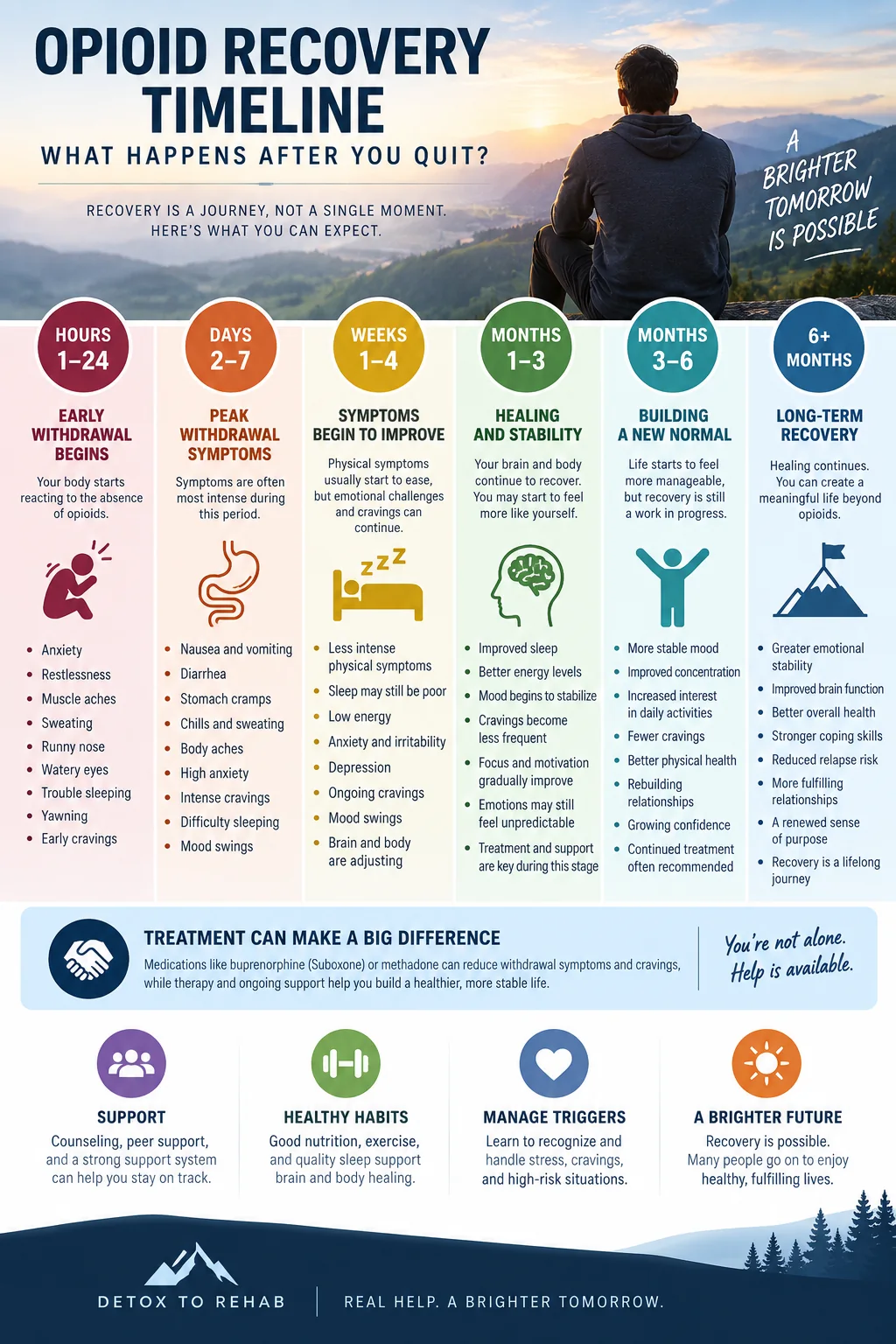
The First Few Days After Quitting Opioids
Opioid withdrawal can begin after the body no longer receives the substance it has become dependent on.
Early symptoms may include:
- Anxiety
- Restlessness
- Muscle aches
- Sweating
- Runny nose
- Watery eyes
- Trouble sleeping
- Yawning
- Strong opioid cravings
As withdrawal progresses, symptoms can include nausea, vomiting, diarrhea, stomach cramps, chills, and significant discomfort.
The timing can vary depending on the opioid involved. Someone going through heroin recovery after stopping use may have a different withdrawal experience than someone stopping fentanyl or a long-acting prescription opioid.
Fentanyl withdrawal and recovery can be especially complicated because illicit fentanyl exposure varies widely and people may not know exactly what substances they have been taking.
Withdrawal itself is usually not the only danger.
After stopping opioids, tolerance can fall. Returning to a dose that someone previously tolerated can dramatically increase the risk of a fatal opioid overdose.
The First Week: Withdrawal May Improve, but Cravings Continue
Physical withdrawal symptoms often begin easing after the acute stage, but that does not mean someone suddenly feels normal.
Sleep may still be poor.
Energy may be extremely low.
Anxiety, irritability, and depression can become difficult.
Cravings may remain intense.
This stage can be dangerous because someone may think, “I just need one dose to feel normal again.”
Understanding how long opioid cravings can last can help set realistic expectations. Cravings are not evidence that recovery is failing. They are part of the brain and body adjusting after repeated opioid exposure.
Professional treatment can make this period safer and more manageable.
Medications such as buprenorphine and methadone can reduce withdrawal symptoms and opioid cravings. They are not simply substitutes for illicit opioids. They are evidence-based treatments for opioid use disorder.
Someone considering buprenorphine may benefit from learning about a buprenorphine detox and treatment program, while others may receive care through a methadone maintenance clinic.
The First Month: Your Brain and Body Are Adjusting
By several weeks into recovery, the worst physical withdrawal may be behind you, but the brain can still be adjusting.
Opioids repeatedly stimulate reward and stress systems. When opioid use stops, normal activities may temporarily feel less rewarding.
You might think:
Why am I still tired?
Why don’t I enjoy anything?
Why can’t I sleep normally?
Why am I thinking about opioids even though I know what they did to me?
Brain recovery takes time.
Our guide to how the brain recovers from opioid addiction explains why mood, motivation, cravings, concentration, and reward can continue changing well after physical withdrawal ends.
This stage is also when structure becomes extremely important.
Treatment appointments, medications, recovery meetings, exercise, regular meals, healthy sleep routines, and supportive relationships can help replace the chaos associated with active opioid use.
One to Six Months: Recovery Becomes About More Than Withdrawal
At this point, the question may no longer be, “Can I survive withdrawal?”
It becomes, “How do I build a life without opioids?”
That can be harder than it sounds.
Stress still happens.
Relationships still become difficult.
Money problems do not disappear.
Pain may still exist.
Old friends may still use opioids.
This is where long-term treatment becomes important.
Some people worry that taking medication means they are not truly sober. But recovery while taking Suboxone can provide stability while significantly reducing cravings and withdrawal.
There is also no universal deadline for stopping buprenorphine. The appropriate length of buprenorphine treatment during recovery depends on the individual and should be decided with a qualified healthcare provider.
Stopping medication simply to prove you can live without it may create unnecessary relapse risk.
Cravings and Relapse Risk Can Continue
Months of recovery do not make someone immune to opioid cravings.
A stressful event, pain, grief, certain people, or returning to a familiar environment can suddenly trigger thoughts of using.
That does not erase your progress.
But it does deserve attention.
Understanding addiction relapse and its warning signs can help you recognize changes before opioid use occurs.
Maybe you stop attending appointments.
Maybe you isolate.
Maybe you begin contacting people connected with past drug use.
Maybe you convince yourself you could use only once.
These thoughts are signals to reconnect with support.
With opioids, relapse carries an additional danger because decreased tolerance can make overdose much more likely.
Opioid Recovery Continues Long After Withdrawal
The opioid recovery timeline does not end after seven days, 30 days, or six months.
Someone recovering from opioid addiction may need ongoing medication, counseling, medical care, peer support, stable housing, or recovery meetings.
People recovering from fentanyl addiction may need especially strong overdose-prevention and treatment support because of fentanyl’s extraordinary potency and the unpredictability of the illicit drug supply.
Over time, the focus of recovery can change.
At first, success may mean simply making it through the day.
Later, it may mean going back to work.
Repairing relationships.
Improving your health.
Learning how to experience stress without using.
Finding purpose again.
Opioid withdrawal ends.
Recovery keeps going.
And with the right treatment, medication when appropriate, support, and time, life can become much bigger than simply trying not to use.


