






Heroin recovery begins when heroin use stops, but getting the drug out of your body is only the first stage. The days that follow can involve withdrawal, cravings, poor sleep, anxiety, low energy, stomach problems, and intense emotional changes. Over the following weeks and months, the body and brain can gradually begin adjusting to life without opioids.
There is no exact recovery schedule that fits everyone. How long symptoms last depends on how heavily and frequently heroin was used, how long the addiction continued, overall health, other substances being used, and whether medications are part of treatment.
People struggling with heroin addiction should also understand that recovery carries a serious overdose concern. After even a relatively short period without heroin, opioid tolerance can decrease. Returning to a previously tolerated amount can become deadly.
Recovery is not simply about getting through withdrawal. It is about staying alive long enough to build a life that no longer depends on heroin.
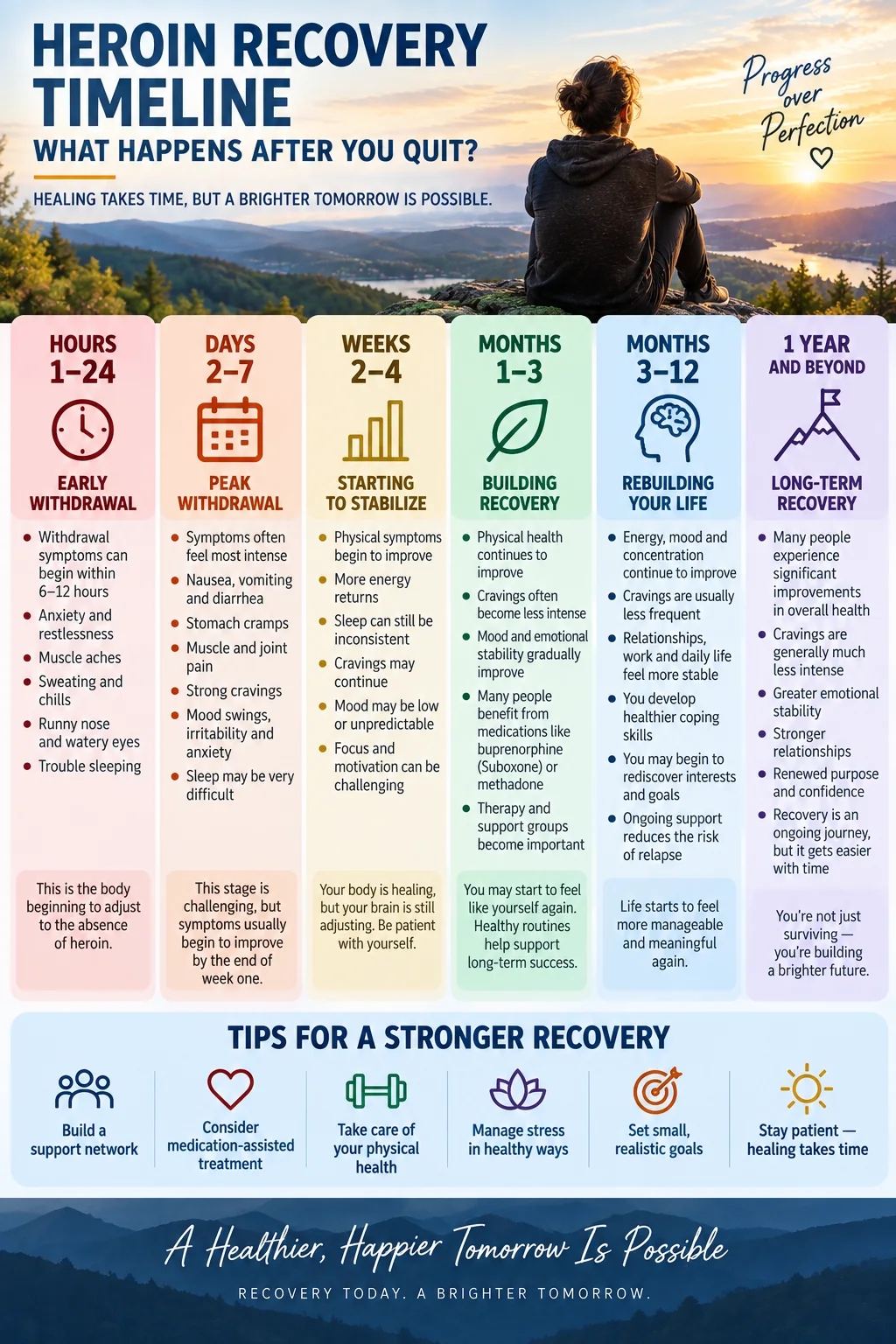
The First Hours After Stopping Heroin
Heroin is a relatively short-acting opioid, so withdrawal symptoms can begin fairly quickly after the last use.
Early symptoms may include:
- Anxiety
- Restlessness
- Sweating
- Muscle aches
- Runny nose
- Watery eyes
- Yawning
- Insomnia
- Strong heroin cravings
As withdrawal progresses, nausea, vomiting, diarrhea, stomach cramps, chills, and additional physical discomfort may develop.
For someone with significant physical dependence, these symptoms can make returning to heroin feel like the fastest way to get relief.
Professional drug detox can provide medical monitoring and access to treatments that make withdrawal safer and more manageable.
The broader opioid recovery timeline helps explain how these first uncomfortable days fit into a much longer healing process.
What Happens During the First Week?
The first several days can be among the hardest parts of heroin recovery.
Physical symptoms may become intense before gradually easing. Sleep can be difficult. Your entire body may feel uncomfortable, and cravings can become powerful.
You may feel exhausted but unable to sleep.
You may feel anxious, irritable, depressed, or emotionally overwhelmed.
Even when the worst physical withdrawal begins improving, you may not immediately feel “normal.”
This is important because people sometimes assume withdrawal ending means recovery is complete.
It is not.
The brain has adapted to repeated opioid exposure and still needs time to readjust. Cravings may remain long after diarrhea, sweating, and muscle aches have improved.
Understanding how long opioid cravings can last can help you prepare rather than becoming discouraged when the urge to use returns.
The First Month: Your Brain Is Still Adjusting
During the first several weeks, physical withdrawal may fade while sleep, motivation, mood, and concentration remain unpredictable.
Ordinary activities may not feel enjoyable.
You might wonder why you are still exhausted or why nothing seems exciting.
Heroin strongly affects the brain’s reward system. After repeated opioid use, it can take time for the brain to adjust to functioning without that constant chemical stimulation.
Our guide to brain recovery after opioid addiction explains why motivation, pleasure, concentration, and mood can take longer to improve than many physical withdrawal symptoms.
This is where structure becomes especially valuable.
Regular meals, sleep routines, exercise when appropriate, counseling, recovery meetings, medical appointments, and supportive relationships can help rebuild daily life.
The wider sobriety timeline also shows why early recovery should be viewed in months and years rather than simply counting the days since the last use.
Medication Can Be Part of Heroin Recovery
You do not have to prove your recovery by suffering through cravings without help.
Medications such as buprenorphine and methadone are commonly used to treat opioid use disorder because they can reduce withdrawal symptoms and cravings.
Someone considering buprenorphine may benefit from learning about a buprenorphine treatment program.
Methadone is another established treatment option that may be provided through a specialized methadone maintenance clinic.
Some people worry that medication-assisted recovery is not “real” sobriety. Our discussion of life on Suboxone and medication-assisted recovery explains why recovery should be measured by health and stability rather than whether someone takes an evidence-based medication.
There is also no universal deadline for discontinuing buprenorphine. The appropriate length of buprenorphine treatment should be individualized with a healthcare professional.
Relapse Can Be Especially Dangerous After Heroin
A return to heroin use can happen after days, months, or even years without using.
Stress, grief, pain, loneliness, familiar environments, or contact with old drug-using friends can bring cravings back unexpectedly.
Learning to recognize relapse warning signs can help you act before those thoughts turn into heroin use.
With opioids, relapse also brings an immediate physical danger.
Tolerance decreases during abstinence.
Someone who returns to the amount of heroin they previously used may experience a fatal opioid overdose.
The illicit drug supply can also contain fentanyl, making potency unpredictable. People recovering from heroin may therefore face risks associated with fentanyl addiction and exposure even when they did not intentionally seek fentanyl.
Heroin Recovery Continues Long After Withdrawal
Heroin recovery is not finished when withdrawal ends.
The first goal may be simply making it through the night without using.
Later, recovery becomes about rebuilding.
Going back to work.
Repairing relationships.
Improving physical health.
Learning how to manage stress.
Finding people who support your recovery.
Discovering ways to experience pleasure without opioids.
Long-term addiction recovery may include medication, counseling, medical care, peer support, meetings, stable housing, and healthier routines.
Some days will be easier than others.
What matters is continuing forward.
Withdrawal eventually ends. Cravings can become more manageable. The brain can continue adapting. Relationships can heal.
Heroin may have controlled your life for a long time.
Recovery is the process of taking that life back.


