



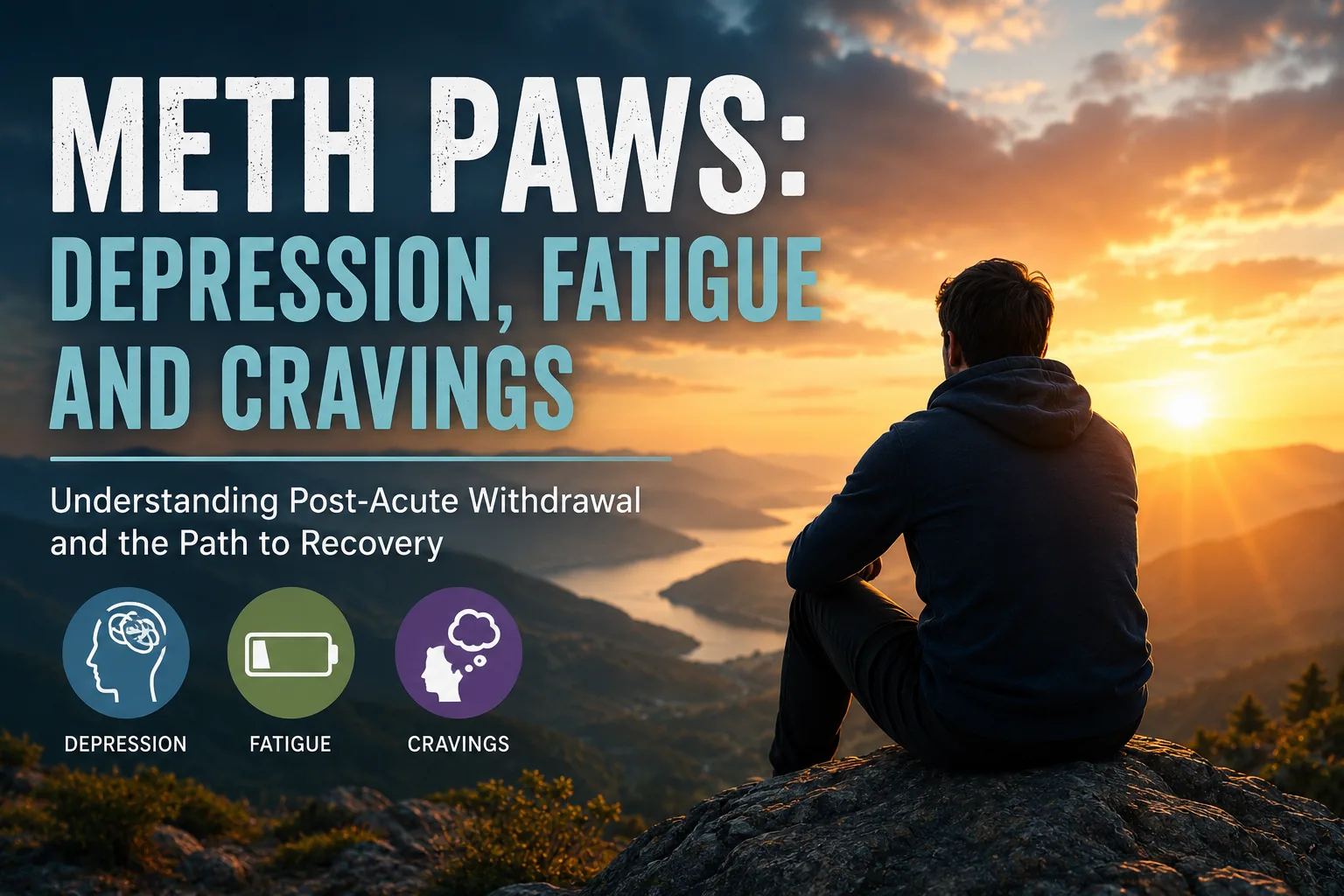


Meth PAWS can make the weeks and months after quitting methamphetamine feel harder than many people expect. The intense crash may pass, but depression, extreme fatigue, low motivation, sleep problems, anxiety, and powerful meth cravings can continue or return in waves.
You may have stopped using meth and still wonder:
“Why am I exhausted all the time?”
“Why does nothing feel good anymore?”
“Why am I still thinking about meth?”
These experiences can be frightening, but they do not automatically mean recovery is failing.
Long-term meth substance use can dramatically affect the brain systems involved in reward, motivation, sleep, attention, and mood. When meth use stops, the brain and body may need time to adapt.
Lingering symptoms after the acute withdrawal period are sometimes described as Post-Acute Withdrawal Syndrome, or PAWS.
What Is Meth Post-Acute Withdrawal Syndrome?
The first stage after stopping meth is often described as a crash.
Someone may experience:
- Extreme tiredness
- Increased sleep
- Increased appetite
- Depression
- Anxiety
- Irritability
- Strong cravings
- Difficulty concentrating
As the most intense symptoms improve, some people continue experiencing emotional, cognitive, or physical problems.
Our broader guide to Post-Acute Withdrawal Syndrome symptoms and recovery explains why symptoms can sometimes continue after acute withdrawal ends.
Meth PAWS does not look exactly the same for everyone.
Some people improve steadily.
Others experience good days followed by periods of exhaustion, sadness, anxiety, or cravings.
The important thing is to look at the overall direction of recovery rather than judging your progress by one difficult day.
Depression Can Be One of the Hardest Meth PAWS Symptoms
Meth creates an intense effect on the brain’s reward system.
During repeated use, ordinary activities may begin to feel less important compared with the powerful stimulation created by meth.
When meth is removed, life may temporarily feel flat.
Food may seem less enjoyable.
Music may not create the same feeling.
Relationships can feel emotionally distant.
Getting out of bed may require enormous effort.
This can contribute to depression during Post-Acute Withdrawal Syndrome.
Understanding the addicted brain and how it changes during recovery can help explain why pleasure and motivation do not always return immediately.
However, severe or persistent depression should never automatically be blamed on withdrawal.
If you experience suicidal thoughts, feel unable to keep yourself safe, or experience rapidly worsening depression, seek immediate professional help.
Why Fatigue Can Last After Quitting Meth
Meth can keep people awake for long periods while placing enormous stress on the body.
Once meth use stops, exhaustion can become intense.
You may sleep for long periods and still feel tired.
Even simple tasks can feel difficult.
Walking across the house, answering messages, preparing food, or going to an appointment may require much more energy than expected.
Sleep can also become unpredictable.
Some people sleep excessively at first and later struggle with disrupted sleep or insomnia. Learn more about insomnia during Post-Acute Withdrawal Syndrome.
During this stage, basic routines matter.
Try to maintain regular sleep and wake times.
Eat consistently.
Stay hydrated.
Move your body when you can.
Do not expect yourself to immediately perform at the same level you did before addiction.
Recovery requires energy too.
Meth Cravings Can Return Without Warning
One of the most dangerous parts of meth PAWS can be craving.
A person may go days or weeks without thinking seriously about meth.
Then something happens.
Stress.
Loneliness.
An argument.
A familiar neighborhood.
A song.
Seeing someone you used with.
Suddenly the urge returns.
Cravings can be especially powerful when combined with depression and fatigue because meth may seem like a quick solution:
“If I use, I will finally have energy again.”
Or:
“At least I will feel something.”
Those thoughts can increase the risk of relapse.
A craving is not a command.
Change your environment.
Contact someone supportive.
Avoid people connected with past meth use.
Talk openly about the craving.
Give the urge time to pass before making decisions.
You do not have to fight every craving alone.
How Long Can Meth PAWS Last?
There is no single timeline for meth PAWS.
Some people notice major improvement within weeks. Others may continue experiencing fatigue, depression, sleep changes, low motivation, or cravings for several months or longer.
Our guide to how long Post-Acute Withdrawal Syndrome can last explains why timelines differ so much.
Recovery may depend on factors such as:
- Length of meth use
- Frequency and amount used
- Sleep deprivation
- Nutrition
- Other substances used
- Mental health
- Physical health
- Stress
- Recovery environment
- Treatment and support
Comparing your recovery with someone else’s can create unnecessary fear.
One person may feel dramatically better after a month.
Another may need much longer.
The broader sobriety timeline shows why recovery is better understood as a process rather than a deadline.
Stimulant withdrawal can also vary by drug. Our guide to cocaine PAWS after withdrawal explores how prolonged symptoms may appear during recovery from cocaine.
Recovery From Meth PAWS Is Possible
One of the most important things to remember during meth PAWS is that improvement may be gradual.
You may not wake up one morning feeling completely different.
Instead, recovery can happen through small changes.
You sleep a little better.
You laugh again.
You begin enjoying food.
You have enough energy to take a walk.
You go several days without a strong craving.
You handle a stressful situation without using.
These are signs of progress.
Continue building your addiction recovery around structure, support, healthy routines, professional care, and realistic expectations.
Anxiety may also need attention during this period. If nervousness, panic, or constant worry becomes difficult to manage, learn more about anxiety during Post-Acute Withdrawal Syndrome.
Meth withdrawal is generally different from potentially life-threatening alcohol or benzodiazepine withdrawal, but that does not mean it should always be handled alone. Severe depression, suicidal thoughts, psychosis, hallucinations, extreme agitation, dehydration, or serious medical symptoms require immediate professional evaluation.
Meth PAWS can involve depression, fatigue, cravings, sleep problems, and emotional changes that continue beyond the initial crash. There is no exact recovery deadline, but symptoms can improve over time. Stay connected, get help when you need it, and judge your progress by how far you are moving—not by whether every difficult symptom has disappeared yet.


