



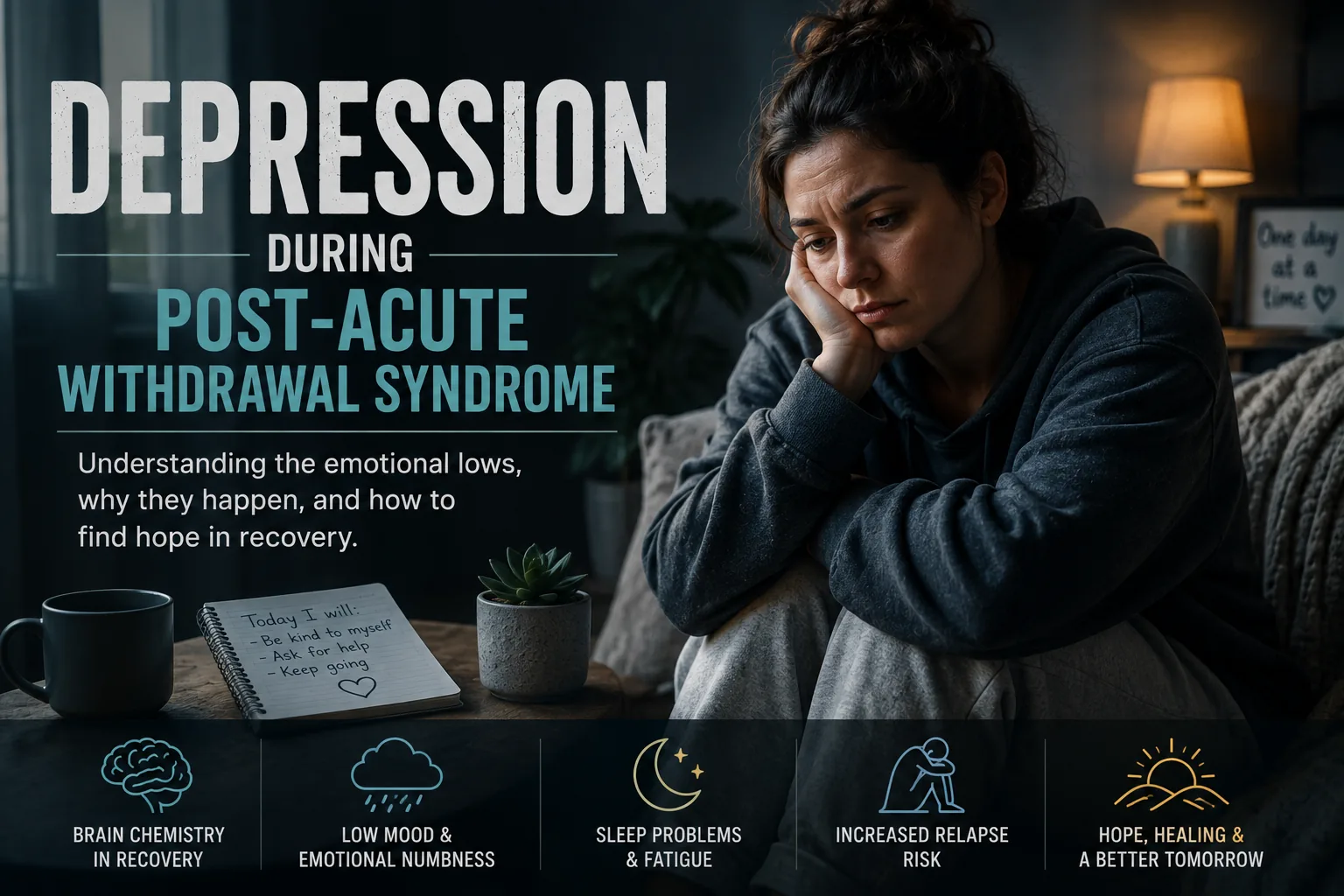


Depression during Post-Acute Withdrawal Syndrome can make early recovery feel much harder than expected. You may have stopped using drugs or alcohol, survived the worst withdrawal symptoms, and still wake up feeling empty, exhausted, unmotivated, or unable to enjoy anything.
That can lead to a frightening question:
“What if I never feel normal again?”
For many people, recovery takes more time than simply getting a substance out of the body. Repeated substance use can affect brain systems involved in pleasure, motivation, stress, sleep, and mood.
As those systems adjust, depression or emotional numbness may occur.
This does not mean you have failed at addiction recovery. But depression should always be taken seriously, especially when it becomes severe or includes thoughts of suicide or self-harm.
Why Can Depression Happen During PAWS?
Post-Acute Withdrawal Syndrome, often called PAWS, describes lingering symptoms that may continue or appear after the initial withdrawal period.
Our complete guide to Post-Acute Withdrawal Syndrome symptoms, timeline and recovery explains how PAWS can affect mood, sleep, energy, concentration, and cravings.
Drugs and alcohol can repeatedly stimulate or suppress brain systems responsible for reward and emotional regulation.
Over time, the brain adapts.
When the substance is removed, normal sources of pleasure may temporarily feel weaker.
Food may not taste as exciting.
Music may not feel meaningful.
Spending time with people you love may feel emotionally flat.
Understanding how the addicted brain changes during recovery can help explain why motivation and pleasure sometimes take time to return.
What Does PAWS Depression Feel Like?
Depression during prolonged withdrawal can look different from person to person.
Symptoms may include:
- Persistent sadness
- Emotional numbness
- Low motivation
- Fatigue
- Hopelessness
- Irritability
- Difficulty concentrating
- Loss of interest in hobbies
- Social withdrawal
- Changes in appetite
- Sleep problems
- Feeling worthless or guilty
- Difficulty enjoying normal activities
Some people do not describe themselves as sad.
Instead, they say:
“I just don’t care about anything.”
That emotional flatness can be especially confusing.
You may know intellectually that something should make you happy, but the feeling does not come.
Anxiety may occur at the same time. If worry, panic, restlessness, or constant nervousness is also affecting recovery, learn more about anxiety during Post-Acute Withdrawal Syndrome.
How Long Can Depression During PAWS Last?
There is no exact timeline.
Some people notice major emotional improvement within several weeks. Others experience periods of low mood or reduced motivation for several months.
Our guide to how long Post-Acute Withdrawal Syndrome can last explains why symptoms vary.
Factors can include:
- Substance used
- Duration of use
- Frequency and amount used
- Mental health history
- Sleep quality
- Stress
- Physical health
- Nutrition
- Other substances
- Treatment and support
The substance involved can matter.
Depression may occur during alcohol PAWS recovery or while recovering from opioid PAWS symptoms.
It can also be significant during benzo PAWS and recovery, particularly when anxiety and insomnia occur alongside low mood.
Stimulant withdrawal is especially known for emotional crashes. Both meth PAWS involving depression, fatigue and cravings and cocaine PAWS after withdrawal may include low motivation and reduced pleasure.
Sleep Problems Can Make Depression Worse
Sleep and mood are closely connected.
When you do not sleep well, emotional problems can become harder to manage.
You may become more irritable.
Concentration becomes difficult.
Small problems feel overwhelming.
Motivation drops even further.
Persistent insomnia during Post-Acute Withdrawal Syndrome can create a cycle in which depression makes sleep difficult and poor sleep makes depression worse.
Try to protect basic routines during recovery.
Wake up around the same time.
Get daylight exposure.
Eat consistently.
Move your body when you can.
Stay connected with people.
Even when motivation is low, small actions can help provide structure.
You do not need to feel motivated before taking care of yourself.
Sometimes action comes first and motivation slowly follows.
Depression Can Increase Relapse Risk
Depression can make returning to drugs or alcohol seem appealing.
You may think:
“At least I felt something when I was using.”
Or:
“I just want this feeling to stop.”
These thoughts deserve immediate attention.
Depression can increase vulnerability to relapse, especially when combined with isolation, insomnia, stress, and cravings.
Do not wait until you have made plans to use before reaching out.
Talk to someone.
Contact your treatment provider.
Attend a recovery meeting.
Get around supportive people.
Change your environment.
The goal is not to pretend everything is fine.
The goal is to avoid turning temporary emotional pain into another cycle of addiction.
When Depression During Recovery Needs Professional Help
Not every episode of depression after quitting drugs or alcohol is PAWS.
A person may have a depressive disorder that existed before addiction.
Depression may also be related to trauma, grief, medications, medical conditions, relationship problems, or other mental health concerns.
That is why persistent symptoms deserve professional evaluation.
Seek help if depression is getting worse, making it difficult to function, or preventing you from caring for yourself.
If you have thoughts of suicide, self-harm, or feel that you may not be able to keep yourself safe, seek immediate emergency or crisis support.
Do not simply wait for those symptoms to pass because someone told you they are “just withdrawal.”
Recovery should gradually become more manageable.
The sobriety timeline may include difficult emotional periods, but one bad week does not erase months of progress.
Look for small improvements.
Maybe you laughed today.
Maybe you went outside.
Maybe you answered a friend’s call.
Maybe you enjoyed a meal.
Maybe you got through a difficult night without using.
Those things matter.
Depression during Post-Acute Withdrawal Syndrome can make recovery feel painfully slow, but feeling depressed today does not predict how you will feel forever. Your brain and body may still be adjusting. Stay connected, protect your basic routines, get professional help when depression persists, and give yourself the opportunity to discover what life can feel like further into recovery.


