



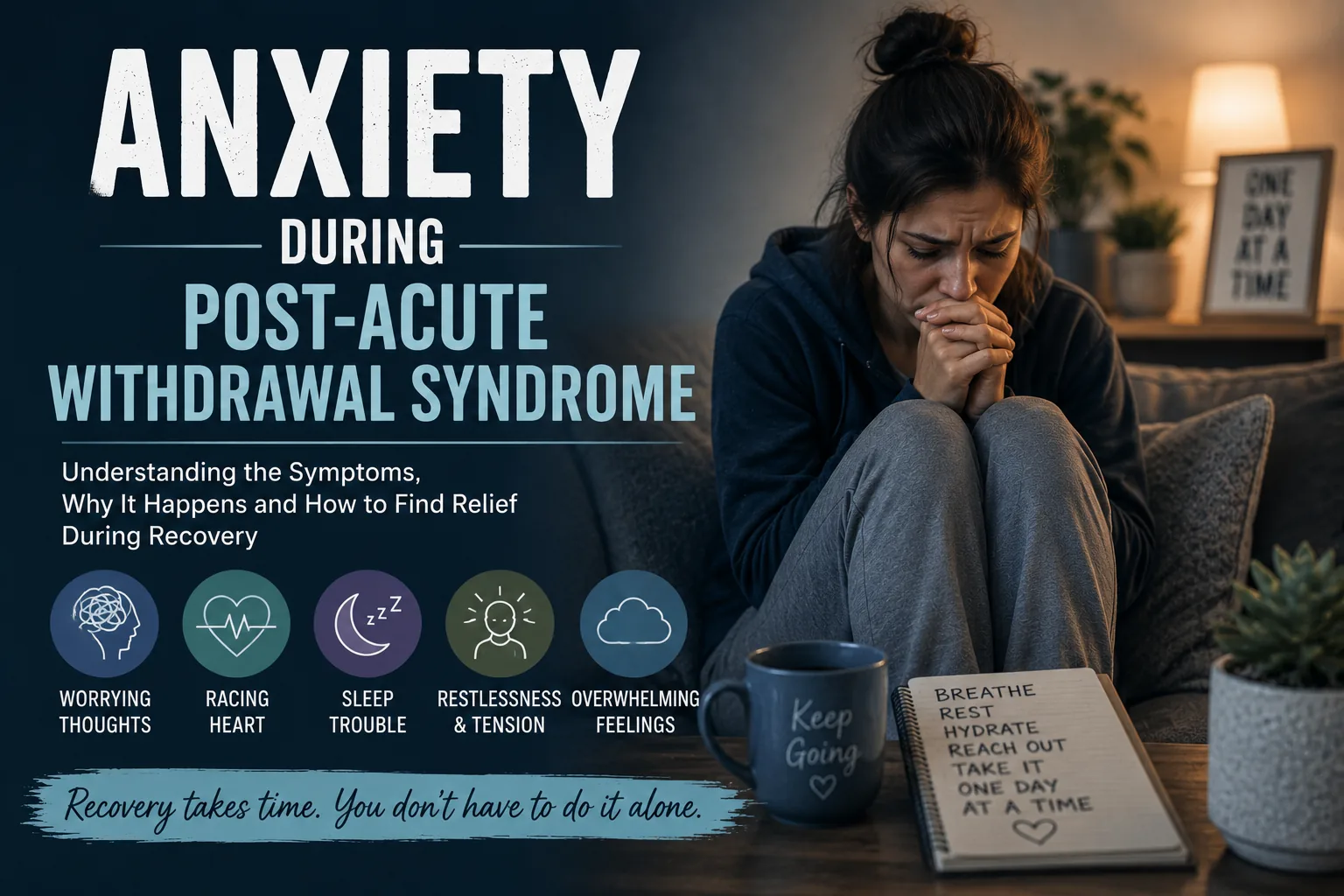


Anxiety during Post-Acute Withdrawal Syndrome can make recovery feel confusing and discouraging. The worst physical withdrawal symptoms may be gone, yet you may still feel nervous, restless, overwhelmed, or constantly on edge.
Your heart may race over small problems.
You may overthink ordinary conversations.
Crowded places can suddenly feel uncomfortable.
Sleep may become difficult because your mind will not slow down.
For some people, anxiety appears in waves. You may feel relatively calm for several days and then suddenly experience intense worry again.
This does not automatically mean your recovery is failing.
Repeated substance use can affect the brain systems involved in stress, sleep, mood, reward, and emotional regulation. After drugs or alcohol are removed, those systems may need time to adjust.
Understanding why anxiety can happen during PAWS may make it easier to manage without returning to substances.
Why Does PAWS Cause Anxiety?
Post-Acute Withdrawal Syndrome, often called PAWS, refers to symptoms that may continue or appear after the acute withdrawal stage has passed.
Our complete guide to Post-Acute Withdrawal Syndrome symptoms, timeline and recovery explains how this stage can affect people differently.
During active addiction, substances may repeatedly change how the brain responds to stress.
Alcohol or benzodiazepines may have temporarily reduced anxiety.
Opioids may have created emotional comfort or numbness.
Stimulants may have changed energy, confidence, and emotional responses.
When those substances disappear, the brain may temporarily struggle to regulate stress normally.
Understanding the addicted brain during recovery can help explain why emotional symptoms sometimes continue even after drugs or alcohol have left the body.
The result may be a nervous system that feels unusually sensitive.
What Does PAWS Anxiety Feel Like?
Anxiety during PAWS can appear in many forms.
Symptoms may include:
- Constant worrying
- Racing thoughts
- Restlessness
- Irritability
- Feeling overwhelmed easily
- Muscle tension
- Difficulty concentrating
- Rapid heartbeat
- Feeling shaky
- Panic-like sensations
- Fear that something bad is about to happen
- Trouble relaxing
- Sensitivity to noise or crowded environments
- Difficulty sleeping
Some people describe feeling uncomfortable in their own body.
Others become anxious about the anxiety itself.
You notice your heart beating faster and think something is wrong.
That creates more anxiety.
Your heart beats even faster.
Learning to recognize this cycle can make the experience less frightening.
Persistent anxiety should still be evaluated by a healthcare professional, especially when it is severe or interfering with everyday life.
PAWS is not the only possible explanation.
How Long Can Anxiety During PAWS Last?
There is no exact timeline.
For some people, anxiety improves significantly within several weeks. For others, symptoms may fluctuate for several months or longer.
Our guide to how long Post-Acute Withdrawal Syndrome can last explains why recovery varies so widely.
Factors can include:
- Substance used
- Length of use
- Amount and frequency of use
- Multiple substances
- Previous anxiety
- Sleep quality
- Stress
- Overall health
- Recovery environment
- Treatment and support
Anxiety may also come in waves.
You might have a calm week followed by several difficult days.
Instead of asking whether anxiety has completely disappeared, look at the larger trend.
Are episodes happening less frequently?
Do they pass more quickly?
Can you handle situations today that felt impossible a month ago?
The broader sobriety timeline can help reinforce that recovery usually happens gradually rather than according to one exact deadline.
Sleep Problems Can Make Anxiety Worse
Anxiety and sleep often affect each other.
You feel anxious, so you cannot sleep.
Then you become exhausted.
Being exhausted makes everyday problems harder to manage.
That creates even more anxiety.
Persistent insomnia during Post-Acute Withdrawal Syndrome deserves attention because poor sleep can affect mood, concentration, stress tolerance, and cravings.
Try to make sleep predictable.
Go to bed and wake up around the same time.
Reduce caffeine later in the day.
Create a calmer bedtime routine.
Avoid spending hours scrolling through stressful content while trying to fall asleep.
Physical activity during the day may also help some people sleep better.
Do not expect every night to be perfect.
Focus on slowly building healthier sleep patterns.
Anxiety Can Increase Cravings and Relapse Risk
For many people, substances once served as an immediate way to escape anxiety.
A person recovering from alcohol addiction might think:
“One drink would calm me down.”
Someone recovering from benzodiazepine dependence may remember how quickly the medication reduced anxiety.
A person recovering from opioids may remember feeling emotionally numb.
These memories can make anxiety a powerful relapse trigger.
Different substances can also create different post-withdrawal experiences. Anxiety may appear during alcohol PAWS and the recovery timeline, opioid PAWS, or benzo PAWS and recovery.
Stimulant recovery may also involve anxiety alongside exhaustion, low mood, and cravings. Learn more about meth PAWS, depression, fatigue and cravings and cocaine PAWS after withdrawal.
The key is recognizing anxiety as something that needs to be managed rather than escaped through substance use.
How to Manage Anxiety During PAWS
You may not be able to eliminate anxiety immediately, but you can reduce its power over your decisions.
Start with simple strategies.
Slow your breathing.
Take a walk.
Exercise when appropriate.
Eat regularly.
Reduce unnecessary caffeine.
Talk to someone you trust.
Stay connected with treatment or recovery support.
Give yourself a quieter environment when you feel overstimulated.
Sometimes it also helps to focus on what is happening right now instead of trying to solve your entire future.
Ask yourself:
Am I safe right now?
What is one thing I can do in the next ten minutes?
Anxiety often tells you that every problem needs to be solved immediately.
It does not.
Depression can also occur alongside anxiety during prolonged withdrawal. If low mood, emotional numbness, or hopelessness becomes a major concern, read more about depression during Post-Acute Withdrawal Syndrome.
Professional care may also be necessary.
Severe panic, suicidal thoughts, hallucinations, seizures, extreme confusion, or symptoms that make it difficult to function require professional medical or mental health evaluation. Alcohol and benzodiazepine withdrawal can be especially dangerous and should not simply be managed alone when significant physical dependence is present.
Anxiety during Post-Acute Withdrawal Syndrome can feel intense, but it does not have to control your recovery. Symptoms may improve gradually as your brain and body adjust. Stay connected, build healthier coping strategies, treat persistent anxiety appropriately, and remember that experiencing anxiety does not mean you need to return to the substance that once seemed to relieve it.


