



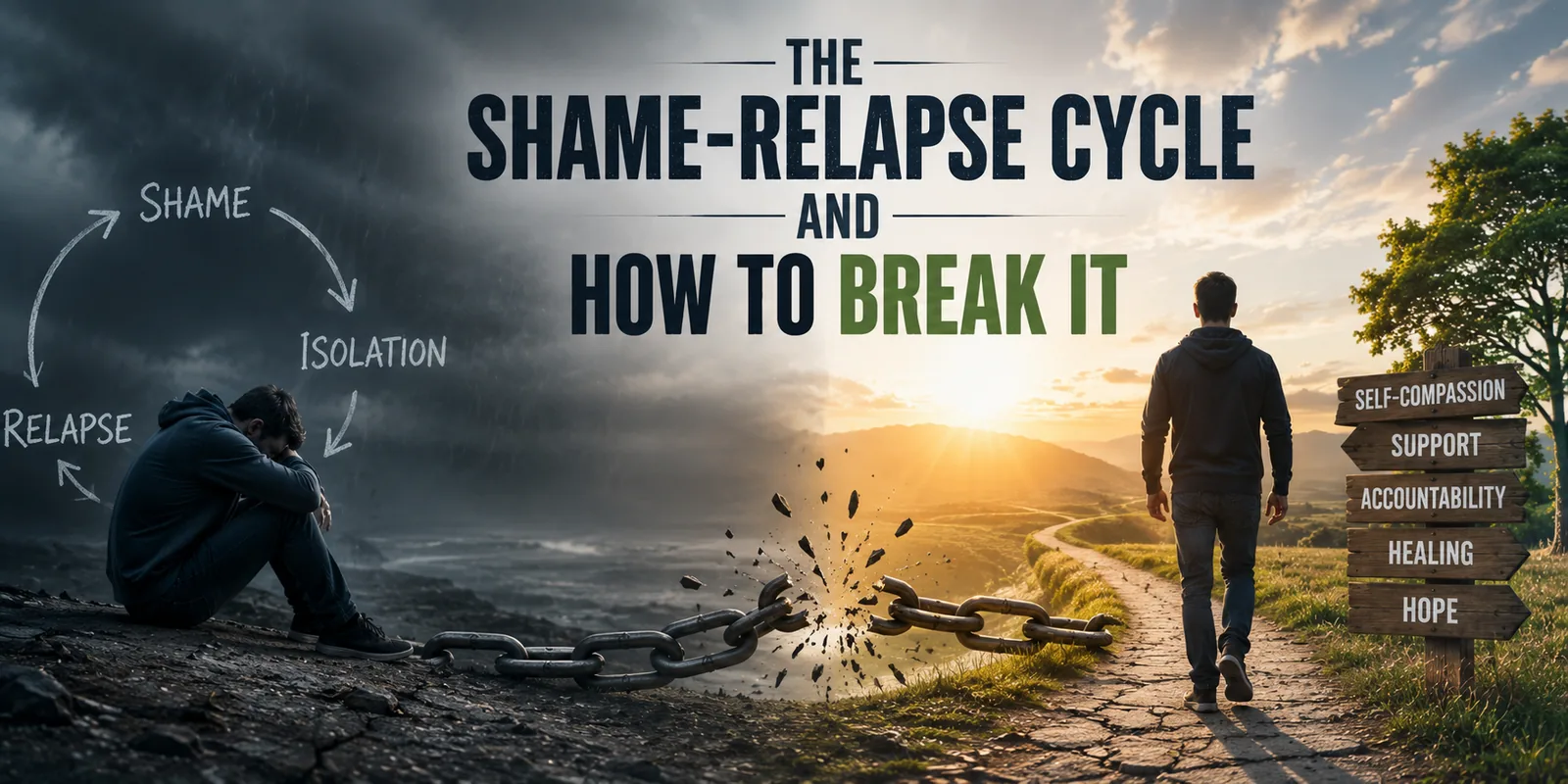


A relapse can be painful enough on its own. But for many people, what happens after the relapse can be even more dangerous.
One drink becomes:
“I ruined everything.”
One use becomes:
“Everyone is going to be disappointed in me.”
A bad night becomes:
“I am a failure.”
That is how the shame-relapse cycle can begin.
Shame can make someone hide what happened, isolate from supportive people, stop attending treatment, and continue using because they believe the damage is already done. The result can be a short lapse turning into days, weeks, or months of substance use.
Relapse should be taken seriously. But shame rarely makes recovery stronger.
The better response is to interrupt the cycle quickly, understand what happened, and use the relapse as information about what needs more support.
What Is the Shame-Relapse Cycle?
The shame-relapse cycle is a pattern where substance use creates intense feelings of guilt or shame, and those feelings then contribute to more substance use.
It can look like this:
Trigger → substance use → shame → isolation → more emotional pain → more substance use
Someone may have been sober for six months and drink one night after an argument.
The next morning, instead of calling their counselor, they think:
“I cannot tell anyone.”
They skip their recovery meeting because they are embarrassed.
They ignore calls from family.
They spend the day alone thinking about how badly they failed.
By evening, they drink again.
Not because the original argument is still the main problem.
Now they are drinking because they feel ashamed.
This is why the hours and days after a relapse matter so much.
Guilt and Shame Are Not the Same Thing
There is an important difference between guilt and shame.
Guilt says:
“I did something I regret.”
Shame says:
“There is something wrong with me.”
Guilt can sometimes lead to healthy action.
You recognize a mistake.
You apologize.
You call your treatment provider.
You make changes.
Shame is different.
Shame attacks identity.
Instead of thinking:
“I relapsed.”
You begin thinking:
“I am hopeless.”
That belief can make recovery feel pointless.
If you believe you are a bad person rather than a person who made a dangerous decision, why bother trying again?
That is where shame becomes a relapse risk.
Shame Pushes People Into Isolation
One of the first things people often do after relapse is disappear.
They stop answering texts.
They skip meetings.
They cancel counseling.
They avoid family.
They may lie about what happened.
Someone asks:
“Are you okay?”
They answer:
“I’m fine.”
Meanwhile, they are terrified someone will discover the truth.
Isolation removes the very people who could help interrupt the relapse.
A craving feels much more powerful when nobody knows you are having it.
The thought:
“Maybe I should use again,”
is easier to challenge when you can tell someone.
In isolation, the only voice responding may be your own.
And shame is often saying:
“You already messed everything up anyway.”
The “I Already Ruined It” Trap
One of the most dangerous thoughts after a relapse is all-or-nothing thinking.
Someone with 300 sober days drinks once and thinks:
“My sobriety is gone.”
Then:
“If I already ruined it, I might as well drink tonight too.”
But one episode does not require another.
Imagine someone trying to eat healthier.
If they eat one unhealthy meal, they do not need to spend the next six months eating badly because the diet has been “ruined.”
Recovery works the same way.
A relapse is serious.
But continuing the relapse is another decision.
You can interrupt it today.
You do not have to wait until Monday.
You do not have to wait until you hit another bottom.
You can stop the cycle after one use.
How to Break the Shame-Relapse Cycle
The first step is tell someone what happened.
Say it clearly:
“I used again.”
You do not need a perfect explanation.
You do not need to understand every trigger first.
You simply need to break the secrecy.
Call your counselor, sponsor, recovery coach, treatment provider, trusted friend, or family member.
Next, deal with immediate safety.
If opioids are involved, overdose risk can be especially high after a period of abstinence because tolerance may have decreased. Keep naloxone available and seek emergency help for suspected overdose.
If alcohol or benzodiazepine use has become regular again, do not assume suddenly stopping is always safe. Withdrawal from these substances can sometimes require medical supervision.
Then look backward.
Ask:
What happened before I used?
Was I stressed?
Lonely?
Exhausted?
Angry?
Did I stop going to meetings?
Was I romanticizing my old substance use?
Did I reconnect with people I used with?
Was my mental health getting worse?
These questions are not about finding an excuse.
They are about finding a weak spot in the recovery plan.
Replace Shame With Accountability
Breaking shame does not mean pretending the relapse did not matter.
Accountability still matters.
If you hurt someone, repair what you can.
If treatment stopped working, change it.
If you returned to a dangerous environment, create stronger boundaries.
If your recovery routine disappeared, rebuild it.
Compassion and accountability can exist at the same time.
You can say:
“What I did was dangerous, and I need to make changes.”
without saying:
“I am worthless.”
Those are very different statements.
One leads toward recovery.
The other often leads deeper into shame.
Treatment May Need to Change
Relapse can mean the current recovery plan needs more support.
Someone attending counseling once a month may need weekly treatment.
Someone living around active drug use may need recovery housing.
A person struggling with depression, anxiety, grief, or trauma may need those problems addressed alongside addiction.
Others may benefit from intensive outpatient treatment, residential treatment, medication for certain substance use disorders, peer support, or a stronger relapse-prevention plan.
The goal is not simply to promise:
“I will try harder.”
The goal is to identify what happened and build a better response for next time.
Relapse Does Not Erase Everything You Built
The shame-relapse cycle depends on one idea:
“Everything is ruined.”
It is not.
The months or years you spent in recovery still happened.
You still learned coping skills.
You still repaired relationships.
You still experienced life without drugs or alcohol.
You now also know something new about what can threaten your recovery.
Use that information.
Tell the truth.
Get out of isolation.
Return to treatment.
Address the trigger.
Make the next safe decision.
Shame says to hide because you relapsed. Recovery says to reach out because you relapsed.
The faster you choose connection over secrecy, the sooner you can break the shame-relapse cycle and begin moving forward again.


