



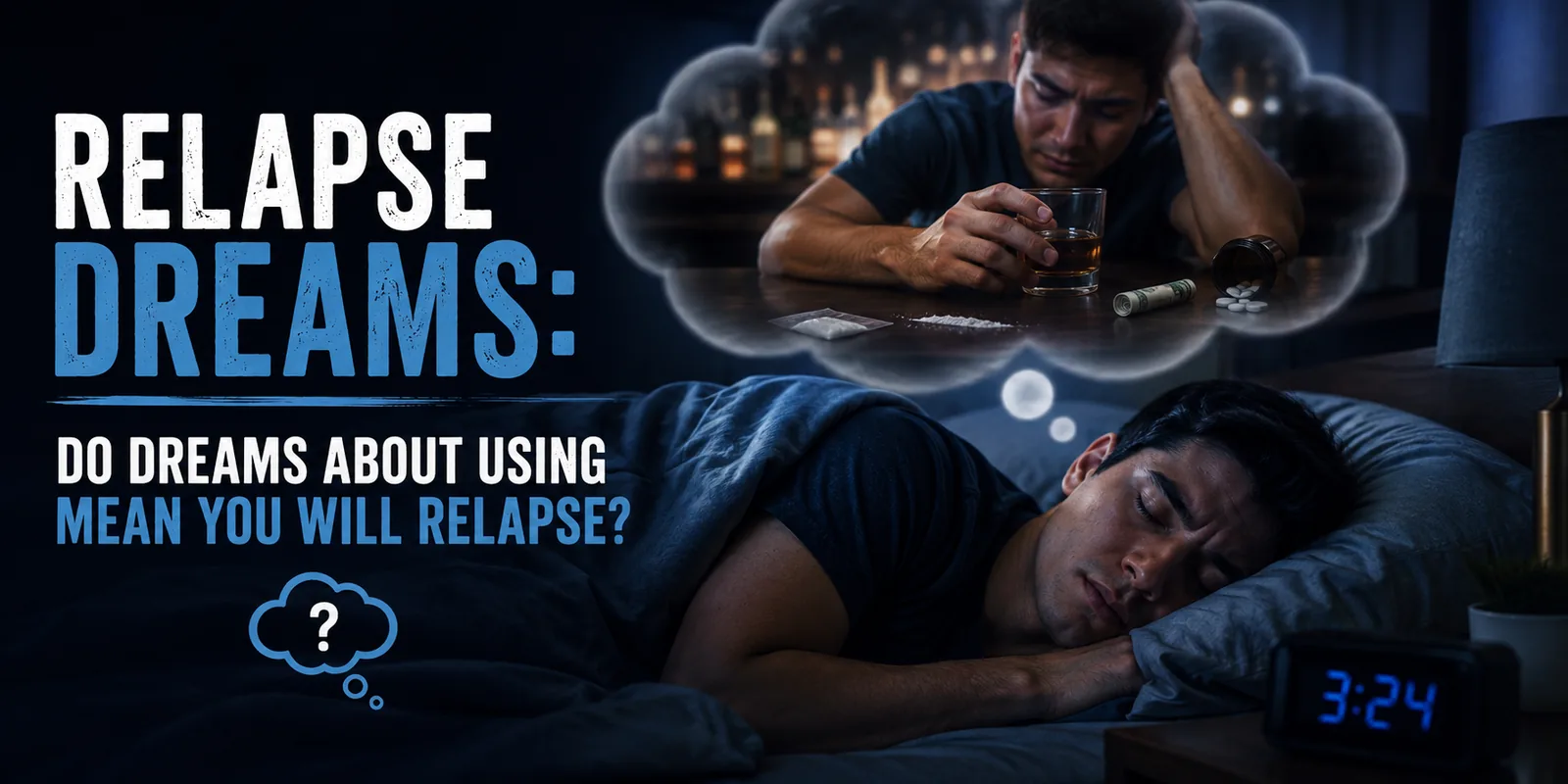


Waking up from a dream about drinking or using drugs can be frightening. The dream may have felt completely real. You may remember finding the drug, taking the first drink, hiding it from your family, or realizing that your sobriety was suddenly gone.
Then you wake up.
For a few seconds, you may honestly believe you relapsed.
The relief that follows can be enormous—but so can the anxiety.
Relapse dreams do not mean you are going to relapse. Dreams about drinking or using drugs are a recognized experience among people recovering from substance use disorders. Research has found that these dreams can occur during recovery and often involve a return-to-use scenario followed by relief when the person realizes it was only a dream. (PubMed Central (PMC))
The dream itself is not the relapse.
What matters is what happens after you wake up.
Why Do People Have Dreams About Using Drugs or Alcohol?
Your brain does not erase years of memories simply because you entered recovery.
Substance use may have been connected to hundreds of experiences:
Stress.
Friends.
Relationships.
Parties.
Certain neighborhoods.
Paydays.
Arguments.
Music.
Loneliness.
Celebrations.
The brain can continue processing those memories during sleep.
That means someone who has been sober for months may suddenly dream that they are sitting at their old bar or using their old drug of choice.
These dreams can be extremely detailed.
You may taste the alcohol.
See the pills.
Feel the drug taking effect.
You may even experience guilt inside the dream because you believe you ruined your recovery.
Researchers have found that drug-related dreams are common enough in addiction treatment to be studied as a distinct recovery experience. (PubMed)
Having one does not mean your subconscious is secretly planning to use.
Relapse Dreams Can Feel Surprisingly Real
One of the most disturbing things about relapse dreams is how emotionally powerful they can be.
Someone may wake up thinking:
“I cannot believe I did that.”
Then realize:
“Wait. I didn’t.”
That moment can bring relief, confusion, guilt, fear, or even cravings.
Some people also feel embarrassed about the dream.
They think:
“Why am I dreaming about cocaine after being sober for a year?”
Or:
“If I am dreaming about alcohol, maybe I still want it.”
That conclusion is not necessarily true.
Dreams can contain memories, fears, emotions, and experiences that do not reflect what you actually want to do.
In fact, some relapse dreams are frightening precisely because the person does not want to lose their recovery.
The dream may involve panic, guilt, hiding drug use, disappointing loved ones, or desperately trying to undo what happened.
Can a Using Dream Cause a Craving?
Sometimes.
Although the dream does not guarantee relapse, it can affect how someone feels after waking.
One study found that drug-related dreams could be associated with increased negative emotions and craving among people who were abstinent. The researchers emphasized that the relationship was correlational, meaning a dream does not automatically cause someone to relapse. (PubMed)
That distinction is important.
You might wake up thinking about your old drug.
That is different from deciding to use it.
If a relapse dream leaves you with a craving, treat the craving like any other recovery warning sign.
Do something about it.
Do not sit alone replaying the dream for three hours.
What Should You Do After a Relapse Dream?
First, remind yourself:
It was a dream. I did not relapse.
Then check how you are feeling.
Are you relieved?
Anxious?
Craving?
Ashamed?
Stressed?
Did the dream remind you of a specific person or place?
Sometimes the dream can reveal something useful.
Maybe you dreamed about your old drinking friends because you recently saw one of them.
Maybe you dreamed about pills during an extremely stressful week.
Maybe your recovery routine has been slipping.
Maybe nothing obvious caused it at all.
You do not have to interpret every dream like it contains a hidden message.
But if the dream leaves you emotionally shaken, talk about it.
Call your sponsor.
Tell your counselor.
Talk to someone in recovery.
You can simply say:
“I had a really realistic dream about using last night, and it bothered me.”
Talking about it can take away some of its power.
Watch What Happens After the Dream
The dream is usually less important than the behavior that follows it.
Pay attention if you begin:
- Thinking about the dream constantly
- Romanticizing your past substance use
- Experiencing stronger cravings
- Looking up old friends
- Thinking about places where you used
- Skipping meetings or counseling
- Isolating
- Thinking you could probably control your use now
- Feeling unusually stressed or emotionally unstable
Those changes deserve attention.
Not because the dream predicted a relapse.
Because your current behavior may be showing that your recovery needs more support.
Dreams May Change as Recovery Continues
Research suggests that drinking and drug-using dreams may become less common as recovery continues. In one study of people who had resolved a significant alcohol or drug problem, using dreams appeared to decrease as time in recovery increased. (PubMed Central (PMC))
That does not mean everyone follows the same pattern.
Someone may unexpectedly have a relapse dream years into recovery.
It does not erase their progress.
It does not reset their sobriety date.
And it does not mean they are destined to use again.
A Dream Is Not a Decision
There is an important difference between dreaming about a substance and choosing to use one.
You cannot control every dream.
You can control what you do when you wake up.
If the dream makes you appreciate your sobriety, use that feeling.
If it frightens you, talk about it.
If it causes cravings, strengthen your recovery plan.
If you have been isolating or neglecting treatment, reconnect.
Most importantly, do not punish yourself for something that happened while you were asleep.
A relapse dream is not a relapse.
It may feel painfully real, but you woke up sober.
And what you choose to do while you are awake is what protects your recovery.


