



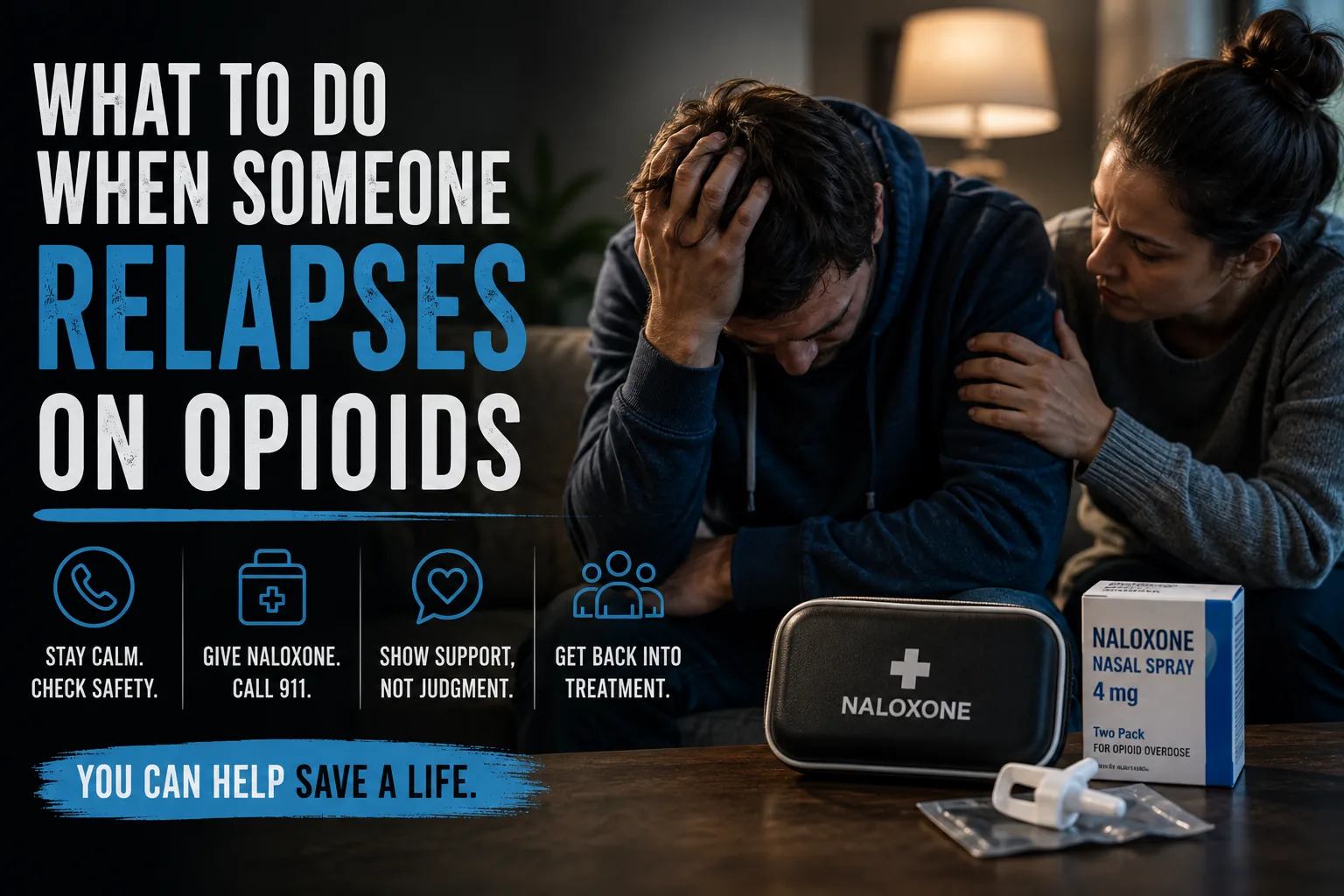


Knowing what to do when someone relapses on opioids can save their life. A return to heroin, fentanyl, prescription painkillers, or other opioids is not simply a setback in recovery. It can become a medical emergency within minutes.
Overdose risk may be especially high after detox, rehab, incarceration, hospitalization, or another period without opioids because tolerance can decrease. At the same time, the illegal drug supply remains unpredictable, and illegally manufactured fentanyl continues to be involved in most overdose deaths.
If someone you care about has relapsed, focus first on keeping them alive, then on reconnecting them with treatment. Shame, arguing, and punishment can wait. Safety cannot.
First, Check for an Opioid Overdose
Do not assume someone who is unconscious is simply sleeping.
Signs of an opioid overdose can include:
- Being unable to wake the person
- Very slow, shallow, irregular, or stopped breathing
- Pinpoint pupils
- A limp body
- Pale, blue, or gray skin or lips
- Choking, snoring, or gurgling sounds
- Loss of consciousness
If you are unsure whether someone is experiencing an overdose, the CDC recommends treating the situation like an overdose.
Give naloxone if you have it and call 911 immediately.
Naloxone can reverse an overdose involving fentanyl, heroin, oxycodone, hydrocodone, methadone, and other opioids. It works by temporarily blocking the effects of opioids on the brain and can restore breathing when administered in time.
After giving naloxone:
- Call 911.
- Try to keep the person awake and breathing.
- Place them on their side to reduce the risk of choking.
- Give another naloxone dose according to the product directions if they do not respond and another dose is available.
- Stay with them until emergency help arrives.
Emergency medical care is still important even if the person wakes up. SAMHSA stresses that medical intervention should be obtained as soon as possible after an opioid overdose reversal medication is given.
Talk About the Relapse Without Shaming Them
Once the immediate danger has passed, talk with the person when they are alert enough to understand the conversation.
You can be compassionate without pretending the relapse is harmless.
Try something simple:
“I care about you. I’m glad you’re alive. We need to figure out what support you need right now.”
Avoid screaming, calling them a failure, or demanding explanations while they are intoxicated. The goal is to get the person back into treatment before another episode occurs.
Relapse can indicate that a treatment plan needs to be resumed, changed, or strengthened. Addiction treatment is often an ongoing process rather than one episode of care.
Ask practical questions:
What did you use?
When did you last use?
Was fentanyl involved or could it have been?
Were alcohol or benzodiazepines involved?
Do you have more opioids available?
Are you willing to contact treatment today?
Be especially cautious with drugs purchased illegally. The CDC reported in April 2026 that the illegal fentanyl supply remains unpredictable and may contain other substances, including sedatives.
Help Them Reconnect With Opioid Treatment Quickly
Do not wait for another overdose before seeking help.
Contact the person’s addiction doctor, previous treatment center, opioid treatment program, counselor, or another qualified healthcare provider. Depending on the situation, they may need medical evaluation, residential treatment, outpatient care, recovery housing, or medication for opioid use disorder.
Evidence-based medications for opioid use disorder include buprenorphine, methadone, and extended-release naltrexone. SAMHSA identifies these medications as treatment options that can support recovery and help prevent overdose.
Buprenorphine can be prescribed by qualified healthcare providers in medical offices, while methadone for opioid use disorder is generally provided through certified opioid treatment programs.
Do not tell someone to stop prescribed buprenorphine or methadone because they relapsed unless their healthcare provider instructs them to do so. The medication may be one of the strongest protections they have against continued illicit opioid use.
Treatment may also need to address depression, anxiety, trauma, unstable housing, chronic pain, or other problems that contributed to the relapse.
Reduce the Risk of Another Fatal Overdose
After an opioid relapse, make overdose prevention part of the recovery plan.
Keep naloxone in the home. Ideally, more than one person should know where it is and how to use it. CDC and SAMHSA recommend naloxone access for people at risk of opioid overdose and those around them.
Do not let a recent overdose be minimized. A person who survived once may not survive the next episode.
Take fentanyl risk seriously. Someone may believe they are using heroin or a prescription-type pill while actually being exposed to illegally manufactured fentanyl.
Make treatment easier to access. Offer to make the phone call, provide transportation, help arrange childcare, or sit with the person while they contact a treatment program.
Support does not mean enabling continued opioid use. You can refuse to provide cash, allow drugs in your home, lie to employers, or repeatedly protect someone from the consequences of substance use while still offering transportation to treatment, naloxone, food, and emotional support.
A Relapse Requires Action, Not Abandonment
Watching someone return to opioids can create anger, fear, and exhaustion. You cannot force another person to remain in recovery, and you should not be expected to sacrifice your own safety to manage their addiction.
But you can respond in ways that improve their chances of surviving.
Recognize an overdose. Give naloxone. Call 911. Stay with the person. Encourage evidence-based treatment and medications for opioid use disorder. Keep naloxone available afterward.
Most importantly, do not assume there will always be another chance to have the conversation.
With fentanyl dominating much of the illegal opioid supply, a relapse can become fatal very quickly.
The message after an opioid relapse should be clear: what happened is serious, but help is still available. The next step should be toward safety and treatment—not shame and isolation.


