



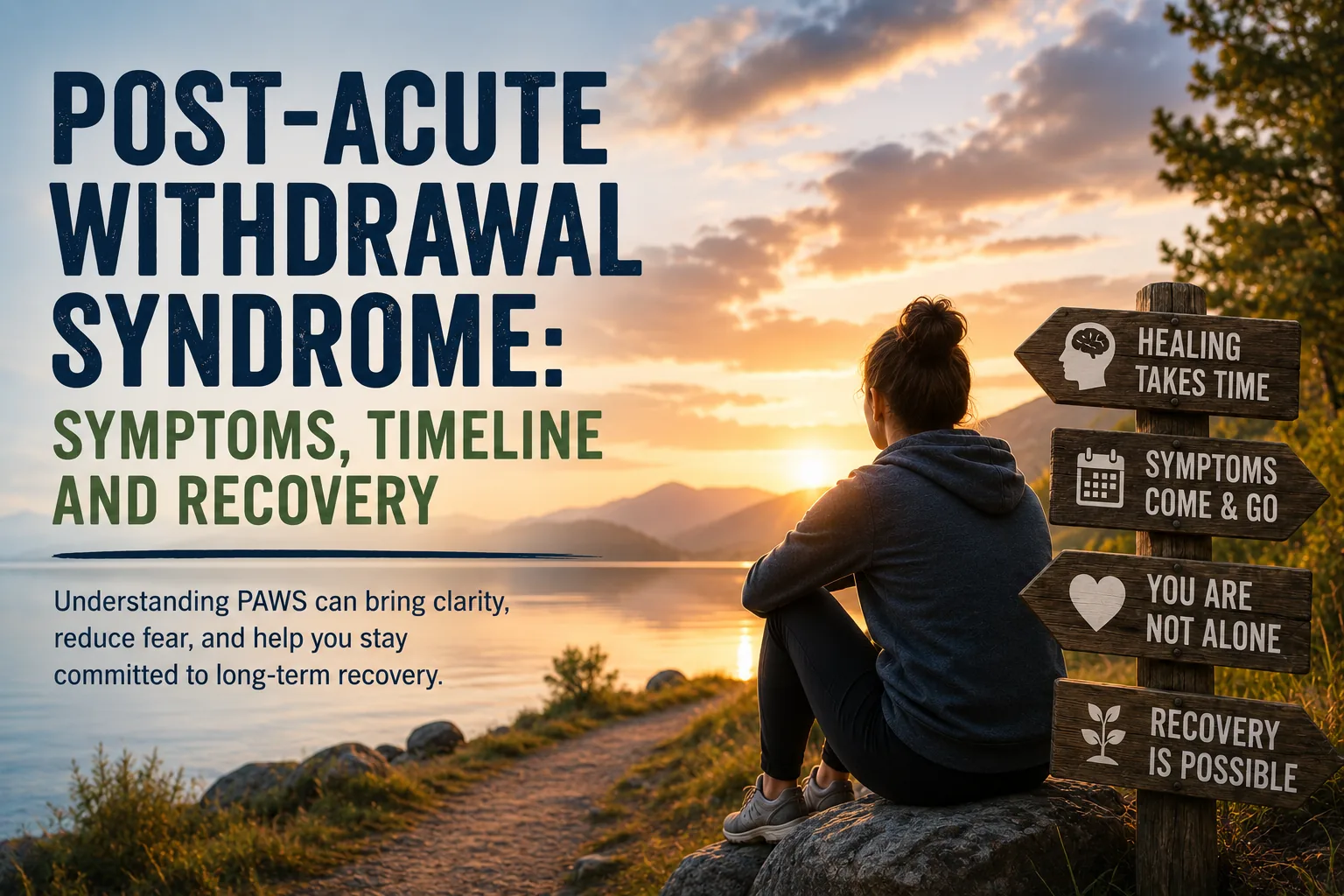


Post-Acute Withdrawal Syndrome (PAWS) is a term commonly used to describe symptoms that may continue or appear after the initial stage of drug or alcohol withdrawal has ended. Someone may be physically sober yet still struggle with anxiety, poor sleep, depression, low energy, difficulty concentrating, mood changes, or powerful cravings.
This can be confusing.
You stopped using.
The worst of withdrawal may be over.
So why do you still feel bad?
Long-term substance use can affect sleep, stress responses, mood, reward, memory, and other brain functions. Removing the substance is an important first step, but the brain and body may need additional time to adjust.
PAWS is not experienced the same way by everyone, and the term itself is used differently across treatment and medical settings. Symptoms and timelines depend heavily on the substance, duration and intensity of use, overall health, and individual circumstances.
For many people, however, understanding prolonged withdrawal symptoms can make early recovery feel much less frightening.
What Is Post-Acute Withdrawal Syndrome?
Withdrawal is often discussed as if it happens once and then disappears.
In reality, recovery can be more complicated.
Acute withdrawal generally refers to the initial physical and psychological symptoms that occur after stopping or significantly reducing a substance.
Depending on the drug, this may include:
- Sweating
- Tremors
- Nausea
- Anxiety
- Insomnia
- Muscle aches
- Agitation
- Changes in appetite
- Cravings
After the acute period improves, some people continue experiencing less dramatic but persistent symptoms.
These longer-lasting problems are often described as post-acute withdrawal symptoms or PAWS.
Common complaints may include:
- Anxiety
- Depression
- Irritability
- Low motivation
- Fatigue
- Trouble concentrating
- Memory problems
- Sleep disturbance
- Emotional sensitivity
- Reduced ability to feel pleasure
- Drug or alcohol cravings
The addicted brain may have spent months or years adapting to repeated substance exposure. Once the substance is removed, those systems may need time to adjust again.
How Long Does PAWS Last?
There is no universal PAWS timeline.
Some people notice lingering symptoms for weeks. Others may experience symptoms that come and go for several months or longer.
Rather than remaining constant, symptoms may occur in waves.
You could feel good for several days and then suddenly have difficulty sleeping, concentrating, or managing emotions.
That does not necessarily mean recovery is moving backward.
Our detailed guide to how long post-acute withdrawal syndrome can last explains why duration differs so much from one person to another.
The broader sobriety timeline is also helpful because healing after addiction rarely follows one exact schedule.
The substance involved matters too.
People recovering from alcohol may experience a different pattern than someone recovering from opioids, benzodiazepines, cocaine, or methamphetamine.
That is why individualized recovery plans are so important.
PAWS Symptoms Can Depend on the Substance
Different substances affect the brain and body differently, so prolonged withdrawal symptoms can vary.
For people recovering from heavy alcohol use, alcohol PAWS symptoms and the recovery timeline may include sleep problems, anxiety, mood changes, difficulty concentrating, and cravings.
People recovering from opioids may experience fatigue, low mood, sleep disturbance, emotional discomfort, or cravings. Learn more about how long opioid PAWS symptoms may last.
Benzodiazepines create special concerns because withdrawal can be serious and potentially dangerous. Our guide to benzo PAWS symptoms and recovery explains some of the longer-lasting symptoms people may experience after benzodiazepine use.
Stimulants create another pattern.
Meth PAWS can involve depression, fatigue and cravings, particularly as the brain adjusts after prolonged stimulation.
Similarly, cocaine PAWS after acute withdrawal can involve low energy, mood changes, sleep problems, cravings, and reduced motivation.
Because symptoms overlap with many medical and mental health conditions, persistent problems should not automatically be blamed on PAWS.
A healthcare professional can help determine what else may be contributing.
Anxiety, Depression and Insomnia During PAWS
Some of the hardest post-acute withdrawal symptoms are emotional.
You may feel anxious for no obvious reason.
Your mind races.
Ordinary problems seem more threatening than they once did.
Our guide to anxiety during post-acute withdrawal syndrome explores why anxiety can become especially difficult during this stage of recovery.
Sleep can also become frustrating.
You may struggle to fall asleep, wake throughout the night, experience vivid dreams, or sleep for hours without feeling rested. Learn more about insomnia during post-acute withdrawal syndrome.
Depression can be equally difficult.
You may feel emotionally flat.
Unmotivated.
Hopeless.
Activities you once enjoyed may not feel rewarding.
Our guide to depression during post-acute withdrawal syndrome discusses this experience in greater detail.
Severe depression, suicidal thoughts, hallucinations, confusion, seizures, or other serious symptoms require immediate professional evaluation rather than being assumed to be normal withdrawal.
PAWS Can Increase Relapse Risk
One reason PAWS matters is that lingering symptoms can become exhausting.
Imagine being sober for two months and still struggling to sleep.
You are anxious.
Nothing feels enjoyable.
Your concentration is poor.
Then your brain offers an old solution:
“Using would make this stop.”
That can increase relapse vulnerability.
Someone may begin believing:
“If I still feel terrible sober, what is the point?”
This is where understanding the recovery process matters.
Temporary discomfort can make substances seem like a solution even though returning to substance use may restart the same cycle that caused the problem.
Protect the basics.
Sleep when you can.
Eat regularly.
Exercise appropriately.
Stay connected with supportive people.
Attend treatment.
Talk honestly about cravings.
Have a plan for difficult days.
Do not disappear from your support system simply because you believe you should be feeling better already.
Recovery From PAWS Takes Patience
There is no single treatment that makes every post-acute withdrawal symptom disappear immediately.
Recovery often involves time combined with supportive care.
Healthy routines may include consistent sleep and wake times, physical activity, regular meals, hydration, treatment participation, supportive relationships, and avoiding unnecessary exposure to triggers.
Professional evaluation can also be important.
Anxiety may need treatment.
Depression may need treatment.
Persistent insomnia may need evaluation.
Recovery should never mean suffering indefinitely because someone told you every problem is simply PAWS.
And some withdrawal syndromes require medical supervision from the beginning. Alcohol and benzodiazepine withdrawal, in particular, can become dangerous. People at risk for severe withdrawal should seek medical guidance rather than attempting to manage it alone.
Most importantly, remember that recovery does not always feel like improvement every single day.
You may have a difficult week after several good ones.
You may sleep badly tonight and better next week.
Healing can move unevenly.
What matters is continuing forward.
Post-Acute Withdrawal Syndrome can make recovery feel slower than expected, but lingering symptoms do not automatically mean something has gone wrong. Your brain and body may still be adjusting to life without substances, and with time, support, healthy routines, and appropriate treatment, many of these challenges can become easier to manage.


