



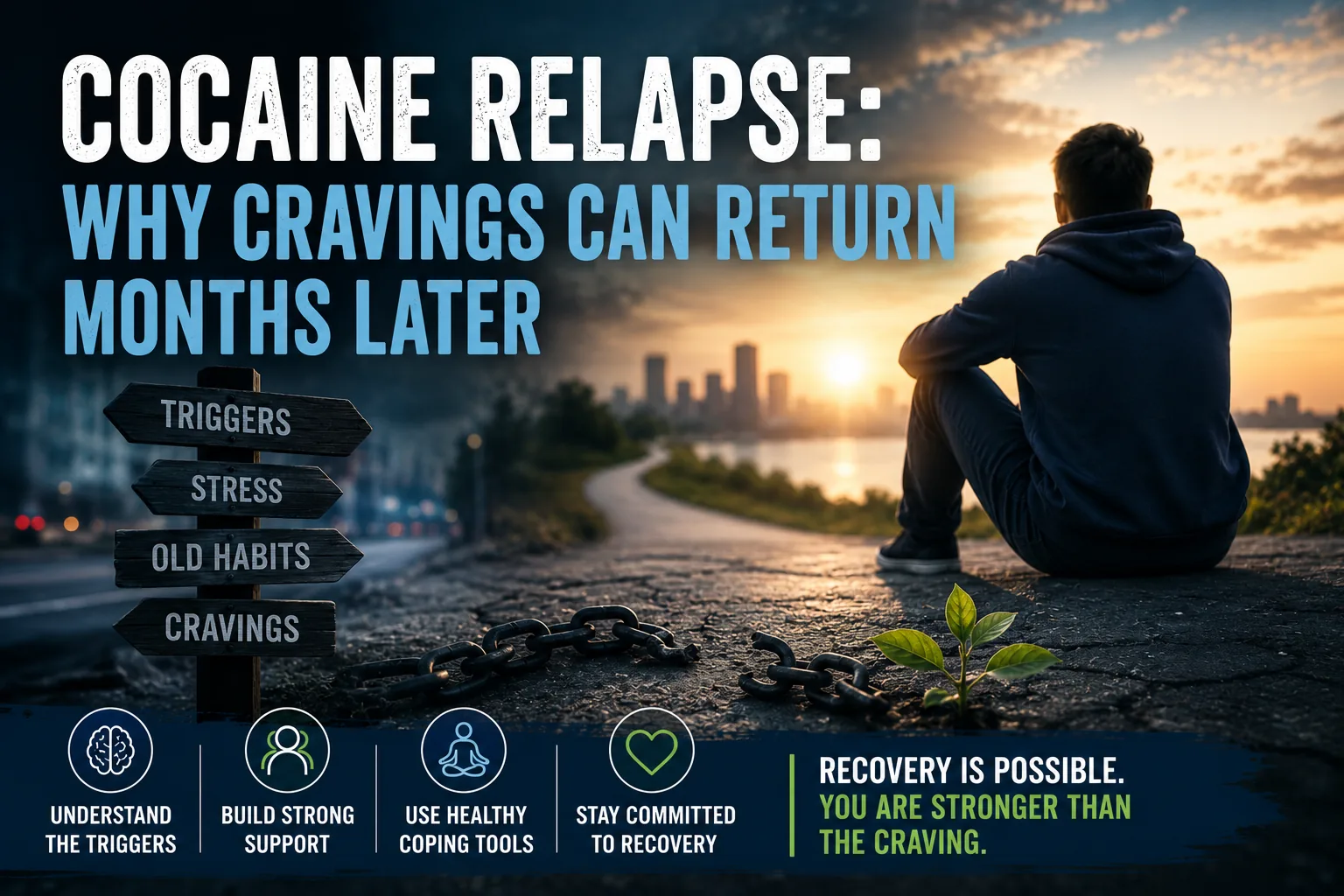


A cocaine relapse can happen months after someone stops using, even when they thought the worst cravings were behind them. A familiar neighborhood, old friend, stressful event, song, smell, or sudden memory can trigger an intense urge for cocaine seemingly out of nowhere.
This does not mean recovery is failing. Cocaine can create powerful learned connections between the drug and the people, places, emotions, and routines surrounding its use. Those connections can remain after the physical effects of cocaine are gone.
Researchers have even documented a phenomenon known as the incubation of craving, in which responses to cocaine-related cues may become stronger during certain periods of abstinence rather than simply fading every day. One human study found that cue-related cocaine craving increased during early abstinence and was particularly strong between about one and six months before declining later.
Understanding this can help someone recognize a sudden craving for what it really is: a warning signal—not an instruction to use cocaine.
Why Cocaine Cravings Can Return After Months of Sobriety
Cocaine strongly affects the brain’s reward system. Repeated cocaine use can teach the brain to associate certain experiences with the expected reward of the drug.
Imagine someone who regularly used cocaine after getting paid on Friday. Eventually, Friday night, receiving a paycheck, driving past a particular neighborhood, or hearing from an old friend may become connected with cocaine.
Months later, those cues can still trigger powerful thoughts about using.
Research has shown that drug-associated environmental cues can provoke craving and contribute to relapse long after the drug itself is gone. Cocaine-associated cues can gain motivational power and encourage drug-seeking behavior during abstinence.
Triggers may include:
- Seeing someone you previously used cocaine with
- Returning to a bar, club, hotel, or neighborhood associated with use
- Drinking alcohol
- Receiving unexpected money
- Arguments or relationship problems
- Work pressure
- Loneliness or boredom
- Sleep deprivation
- Celebrations or parties
- Seeing cocaine or drug paraphernalia
- Hearing music connected with past use
Sometimes the trigger is obvious. Other times the craving seems to appear before the person understands what caused it.
That is why relapse-prevention planning remains important even after someone has been sober for months.
Stress Can Bring Cocaine Cravings Back
Stress is another major relapse trigger.
During early recovery, someone may be highly focused on staying sober. They attend treatment, avoid risky environments, and regularly talk with supportive people.
Months later, life may begin feeling normal again.
Then something happens.
A relationship ends. Money becomes tight. Someone loses a job. A family member becomes sick. Sleep gets worse.
Under enough stress, the memory of cocaine’s immediate effects may become appealing again.
NIDA explains that stress, moods, people, places, and exposure to drugs can all contribute to relapse in people recovering from substance use disorders.
Someone may start thinking:
“Cocaine would help me forget this for a while.”
“I haven’t used in six months. Maybe I can control it now.”
“One night won’t put me back where I was.”
These thoughts should be treated as warning signs.
They do not mean cocaine use is inevitable. They mean it is time to increase support.
What to Do When a Cocaine Craving Suddenly Returns
The first rule is simple: do not keep the craving secret.
Call your counselor, sponsor, recovery coach, sober friend, or someone else who understands your recovery.
Then change your environment.
If you are somewhere associated with cocaine, leave. If an old dealer or using friend contacts you, block the number. If you have access to cash that creates temptation, ask someone trustworthy to help you manage it temporarily.
Cravings often become easier to manage when you interrupt the situation surrounding them.
Try asking yourself:
What happened right before this craving?
Were you stressed?
Did you see someone from your past?
Did you drink alcohol?
Have you been sleeping poorly?
Are you isolating?
Have you stopped attending treatment or recovery meetings?
The answer can reveal what needs to change in your relapse-prevention plan.
Do not purposely expose yourself to cocaine-related situations to prove that you are strong enough to handle them. Recovery is not a test of how close you can stand to a trigger without using.
Warning Signs That a Cocaine Relapse May Be Developing
The craving itself may be only one warning sign.
Watch for changes such as:
- Talking positively about past cocaine use
- Reconnecting with people who use cocaine
- Becoming secretive
- Missing counseling or support meetings
- Increasing alcohol or other drug use
- Keeping large amounts of cash available
- Returning to nightlife associated with cocaine
- Increased impulsivity
- Sleeping poorly
- Isolation
- Depression or irritability
- Thinking you can now use cocaine “normally”
A relapse does not usually happen because someone simply forgot that cocaine was harmful.
It often develops as protective recovery habits weaken while triggers become stronger.
If cocaine use does occur, contact a treatment provider quickly rather than allowing shame to turn one episode into a longer return to use. NIDA describes relapse as a sign that treatment may need to be resumed, changed, or intensified—not proof that treatment has failed.
Treatment Can Help With Cocaine Cravings and Relapse
There is currently no FDA-approved medication specifically for cocaine use disorder. However, effective behavioral treatments are available.
One of the strongest approaches is contingency management. This treatment provides incentives for measurable recovery behaviors, such as attending treatment or producing drug-negative tests. SAMHSA describes contingency management as an evidence-based intervention for substance use disorders, including stimulant use disorders.
Cognitive behavioral therapy can also help someone recognize cocaine-related thoughts, triggers, and patterns and develop healthier responses.
Treatment may include outpatient counseling, intensive outpatient programs, residential care, contingency management, cognitive behavioral therapy, peer support, mental health treatment, and sober housing.
Most importantly, do not assume that being several months sober means relapse risk has disappeared.
A sudden cocaine craving after three, six, or even more months of recovery does not erase your progress.
It may simply mean your brain encountered something it still associates with cocaine.
Recognize the trigger. Tell someone. Change your environment. Strengthen your recovery plan.
Cravings can return months later—but a craving does not have to become a cocaine relapse.


