



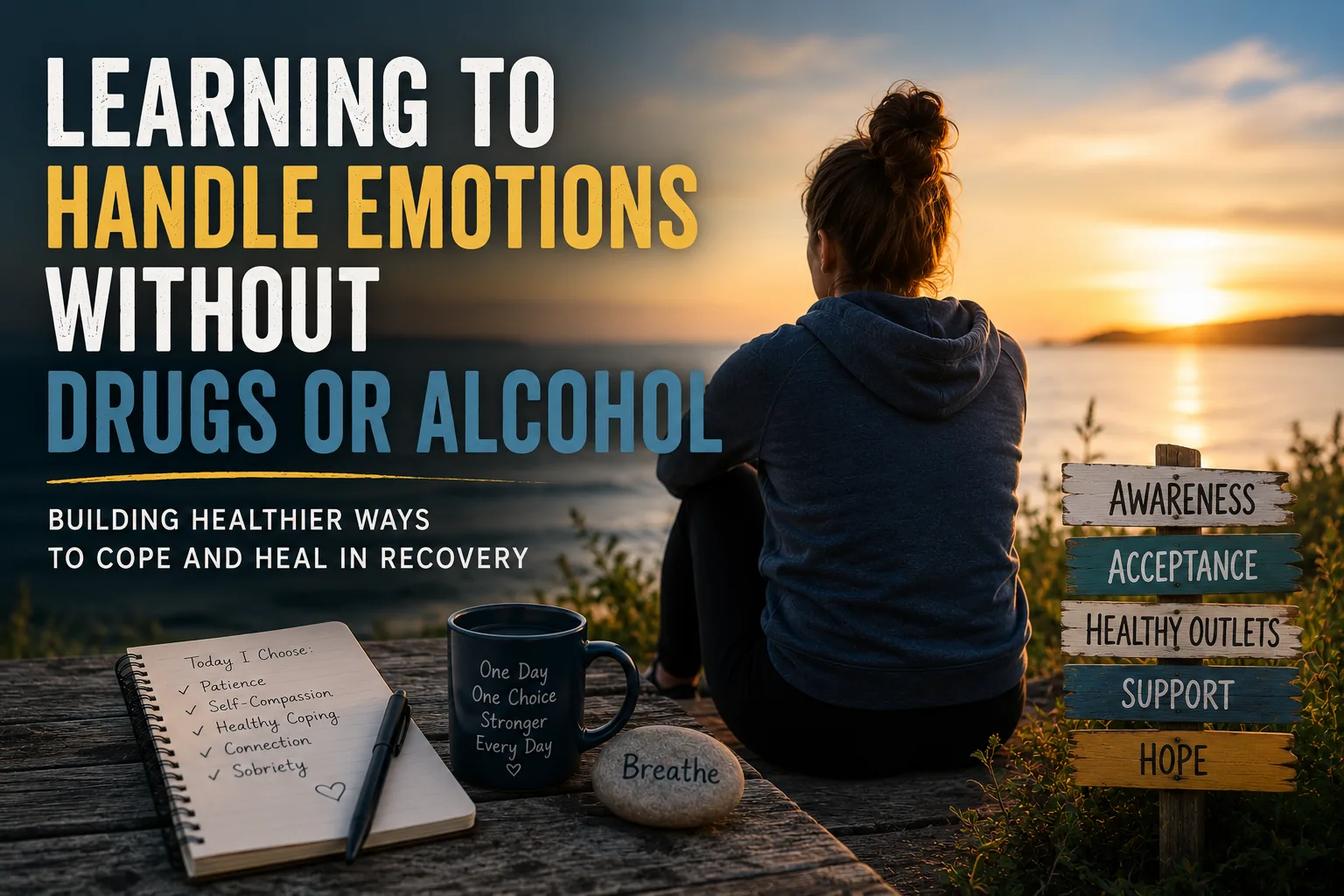


Learning to handle emotions without drugs or alcohol can be one of the hardest parts of recovery. You may have stopped using substances, but stress, sadness, anger, loneliness, fear, and disappointment did not disappear with them.
In fact, those feelings may seem stronger.
During active substance use, drugs or alcohol may have become a fast way to change how you felt.
Bad day?
Drink.
Argument?
Get high.
Lonely?
Use.
Anxious?
Find something that makes the feeling disappear.
Then you enter recovery, and that familiar escape is gone.
Now you have to experience emotions as they happen.
That can feel uncomfortable, but it is also an important part of healing. Recovery is not about becoming someone who never feels pain. It is about learning that you can experience difficult emotions without allowing them to control your next decision.
Why Emotions Can Feel So Strong After Getting Sober
Drugs and alcohol can affect brain systems involved in stress, reward, mood, sleep, and emotional regulation.
The addicted brain may also learn to connect substances with relief.
Over time, using becomes an automatic response.
Stress leads to drinking.
Sadness leads to drugs.
Celebration leads to substances too.
When you stop using, the emotion remains but the automatic response is no longer available.
That is one reason people may wonder why they feel so emotional after getting sober.
You may cry more easily.
Small problems may feel enormous.
You may experience anxiety, sadness, frustration, or fear without understanding why.
These feelings do not necessarily mean sobriety is making your life worse.
Your brain and body may still be adjusting to experiencing life without chemical interference.
Anger, Sadness, and Loneliness Need Different Responses
One of the biggest recovery skills is learning to identify what you are actually feeling.
Anger is a good example.
You may think:
“Everyone is irritating me.”
But underneath the anger could be fear, exhaustion, rejection, embarrassment, or loneliness.
Understanding anger after quitting drugs or alcohol can help you recognize what is happening before you react.
Loneliness needs a different response.
You may have stopped spending time with people you used with, leaving a gap in your social life. If you are struggling with loneliness during addiction recovery, the answer may not be distraction.
It may be connection.
Call someone.
Attend a meeting.
Spend time with family.
Talk with your treatment team.
Join a healthy activity.
The better you become at naming the emotion, the easier it becomes to choose a response that actually helps.
You Do Not Have to Escape Every Uncomfortable Feeling
Addiction can teach you that discomfort must be fixed immediately.
Recovery teaches something very different.
Sometimes feelings simply need to be felt.
You can be sad without making the sadness disappear.
You can be angry without exploding.
You can feel anxious without running from the anxiety.
You can be bored without immediately finding excitement.
This can be especially difficult when you are still adjusting to why normal life feels boring after addiction.
An uncomfortable feeling is not an emergency.
Try giving yourself a little time before reacting.
Take a walk.
Drink water.
Eat something.
Take a shower.
Write down what you are feeling.
Exercise.
Call someone.
Sleep on a difficult decision.
Ask yourself:
“What will I wish I had done when this feeling passes?”
That small pause creates space between emotion and action.
That space is where recovery grows.
Shame and Regret Can Be Especially Difficult
Some emotions are connected directly to the past.
Once you become sober, you may remember things you did while using.
People you hurt.
Money you lost.
Promises you broke.
Years that seem wasted.
Learning how to deal with shame and regret after addiction is important because shame can become dangerous when it turns into hopelessness.
You may think:
“I’ve already ruined everything.”
That thought can quickly become:
“Why bother staying sober?”
Recovery does not require pretending the past never happened.
Accountability matters.
Apologies may matter.
Changing your behavior matters.
But endless self-punishment does not repair anything.
Sometimes you may reach a point where everyone forgives you except yourself.
Eventually, part of recovery may involve learning how to forgive yourself after addiction.
Forgiveness does not erase responsibility.
It gives you permission to become someone different.
Difficult Emotions Can Trigger Thoughts About Using
When life hurts, the brain may remember what once provided fast relief.
That is why you may still think about drugs after getting sober, especially during emotional moments.
You may even miss drugs despite knowing how much damage they caused.
A difficult emotion can become a relapse risk when the thought changes from:
“I feel terrible.”
to:
“Using would make me feel better.”
Recognize that thought for what it is.
A learned response.
Not a command.
Try asking yourself what you really need.
Relief?
Connection?
Sleep?
Food?
Someone to listen?
A safe place to calm down?
When you identify the real need, you have more choices.
Emotional Strength Is Built One Moment at a Time
Handling emotions sober is a skill.
You will not master it immediately.
Some days you will respond calmly.
Other days you may say something you regret or feel completely overwhelmed.
Recovery is not perfection.
It is practice.
Every time you experience sadness without drinking, you practice.
Every time you become angry and walk away instead of using, you practice.
Every time you feel lonely and call someone instead of returning to old friends who are using, you practice.
You may even experience days when you regret getting sober or find yourself grieving your old life.
Those emotions can exist without determining your future.
The sobriety timeline is different for everyone. Emotional stability often develops gradually as you build healthier routines, relationships, coping skills, and confidence.
Eventually, something powerful can happen.
You have a terrible day.
You feel angry.
Sad.
Overwhelmed.
And then you realize you did not use.
The emotion came.
You survived it.
It passed.
That is emotional recovery.
Learning to handle emotions without drugs or alcohol does not mean becoming fearless, calm, or happy all the time. It means discovering that no matter what you feel, you have healthier choices—and you no longer need addiction to decide what happens next.


