



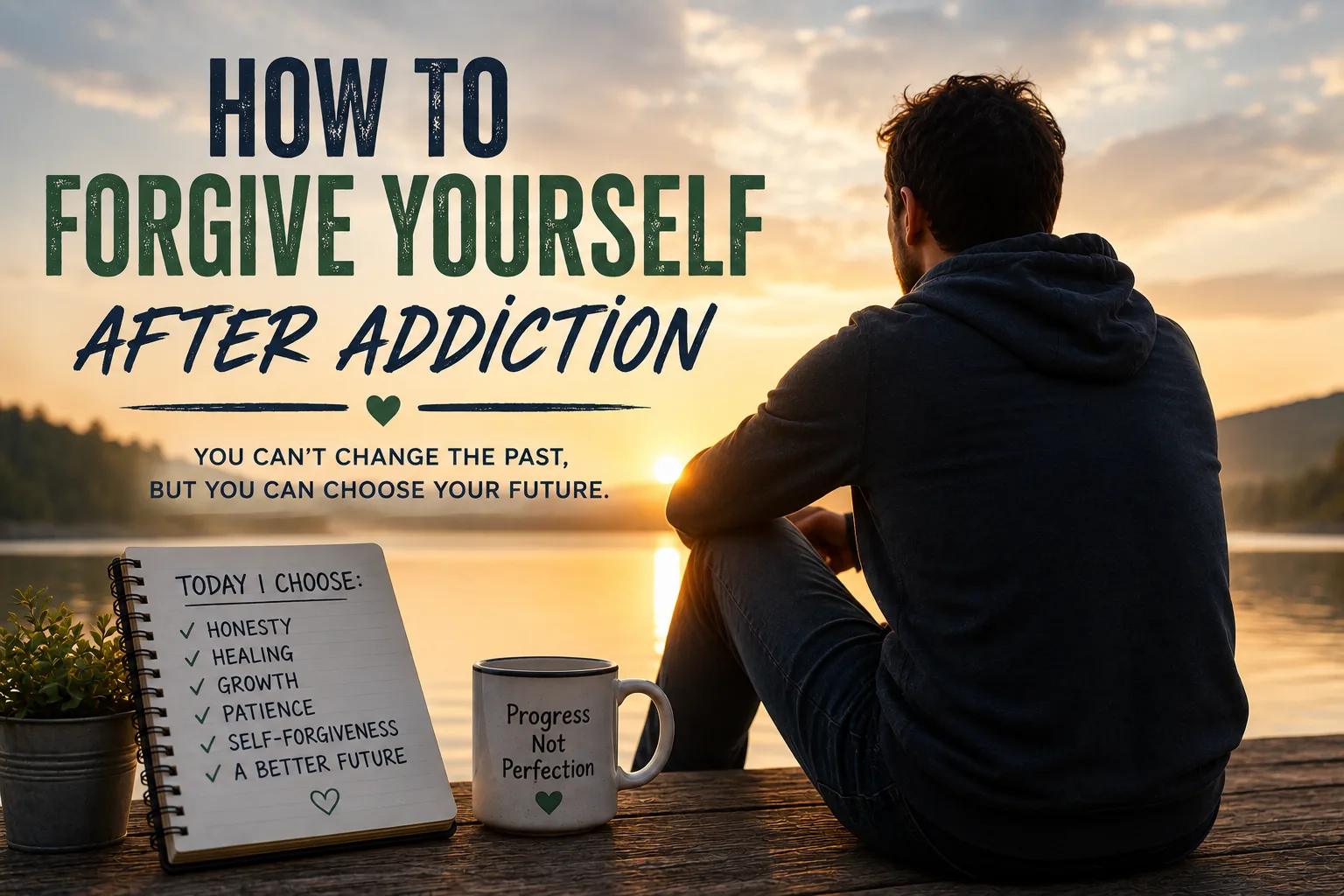


Learning how to forgive yourself after addiction can be one of the hardest parts of recovery. You may have stopped drinking or using drugs, apologized to people you hurt, and started rebuilding your life. Yet your mind keeps returning to the things you did during active substance use.
The lies.
The arguments.
The money you lost.
The people you disappointed.
Maybe your family has forgiven you. Maybe relationships are beginning to heal. But you still look in the mirror and see the person you were at your worst.
That can make recovery feel like a punishment instead of a new beginning.
Self-forgiveness does not mean pretending nothing happened. It means accepting responsibility for the past without believing you must suffer forever because of it.
You cannot change yesterday.
You can decide who you become next.
Understand the Difference Between Guilt and Shame
Guilt and shame can feel similar, but they send very different messages.
Guilt says:
“I did something wrong.”
Shame says:
“I am something wrong.”
Guilt can sometimes help you grow. It may encourage you to apologize, make amends, change your behavior, or repair a relationship.
Shame can convince you that change is pointless.
You may think:
“I’m a terrible person.”
“Nobody should trust me.”
“I don’t deserve a good life.”
Learning how to deal with shame and regret after addiction is important because recovery becomes much harder when every mistake becomes evidence that you are permanently damaged.
Your actions matter.
They are not your entire identity.
Take Responsibility Without Punishing Yourself Forever
Self-forgiveness is not avoiding accountability.
If you hurt someone, acknowledge it.
If an apology is appropriate, apologize.
If something can be repaired, make an effort to repair it.
Then let your behavior demonstrate that the apology meant something.
Show up.
Tell the truth.
Keep promises.
Take responsibility.
Stay sober.
Do what you said you would do.
You may reach a point where everyone forgives you except yourself.
When that happens, ask yourself what continued self-punishment is accomplishing.
Does hating yourself help the people you hurt?
Does replaying the past every night repair a relationship?
Does believing you are worthless make you more dependable today?
Usually, the answer is no.
Real accountability is not spending the rest of your life proving how terrible you feel.
It is living differently.
Recognize How Addiction Changed Your Behavior
Understanding addiction does not excuse harmful behavior.
It can, however, provide important context.
The addicted brain can become increasingly focused on obtaining and using substances despite serious consequences.
Priorities change.
Decision-making can become distorted.
Relationships may become secondary to alcohol or drugs.
You may have done things during addiction that sober you would never normally consider doing.
Understanding that helps you hold two truths at once:
What I did caused harm.
And:
I am capable of becoming someone who does not live that way anymore.
Recovery is not about finding an excuse for everything that happened.
It is about understanding what happened well enough that you can stop repeating it.
Grieve What Addiction Cost You
Sometimes what looks like guilt is actually grief.
You may be grieving years you cannot get back.
A relationship that ended.
Money you lost.
Opportunities you missed.
Time with your children.
Your health.
The person you believe you could have been.
That is why grieving your old life after getting sober can involve much more than missing parties or old friends.
You may be grieving an entire version of your life.
The danger comes when grief turns into endless thoughts such as:
“If I had only stopped sooner.”
You cannot solve that sentence.
You cannot become sober five years ago.
You can stay sober today.
You can call your family today.
You can work toward rebuilding trust today.
You can make the next decision differently today.
That is the part of your story you still control.
Learn to Live With Difficult Emotions Without Escaping
Forgiving yourself can bring up intense emotions.
Sadness.
Anger.
Embarrassment.
Fear.
Regret.
You may discover why emotions can feel so strong after getting sober, especially if drugs or alcohol once helped numb uncomfortable feelings.
Recovery requires learning to handle emotions without drugs or alcohol.
When shame appears, your old response may have been to use.
Now you need another response.
Talk to someone.
Write about what happened.
Exercise.
Attend treatment.
Spend time with supportive people.
Make an appropriate amends.
Allow yourself to feel uncomfortable without immediately trying to escape.
You may even have moments when you regret getting sober because sobriety forces you to face feelings you spent years avoiding.
That does not mean sobriety was a mistake.
It may mean healing is uncomfortable.
Let the Person You Are Becoming Matter
One of the most important parts of self-forgiveness is allowing your present behavior to count.
Imagine someone has been sober for a year.
During that year, they have shown up for their children.
Held a job.
Told the truth.
Gone to treatment.
Supported other people.
Kept promises.
Made healthy decisions.
But whenever they describe themselves, they only talk about something terrible they did three years ago.
At some point, their current life has to become evidence too.
The sobriety timeline continues long after the first days without substances. Recovery gives you time to build a new history.
One good decision does not erase your past.
Neither does one bad chapter erase every good decision you make afterward.
Self-forgiveness grows when you stop demanding that you become perfect before you are allowed to move forward.
It grows every time you live according to the values addiction once pushed aside.
And forgiving yourself can protect recovery.
Persistent hopelessness and self-hatred can contribute to relapse risk if you begin thinking:
“I’ve already ruined everything, so why bother?”
There is always a reason to bother.
Because today still matters.
Because people can heal.
Because trust can sometimes be rebuilt.
Because your future has not happened yet.
You do not have to forget what addiction did.
You do not have to pretend nobody was hurt.
And you do not have to spend the rest of your life being punished by a version of yourself that you are actively working to change.
Forgiving yourself after addiction means accepting the truth about your past while also accepting another truth: you are still capable of growth, accountability, connection, and a different future.


