



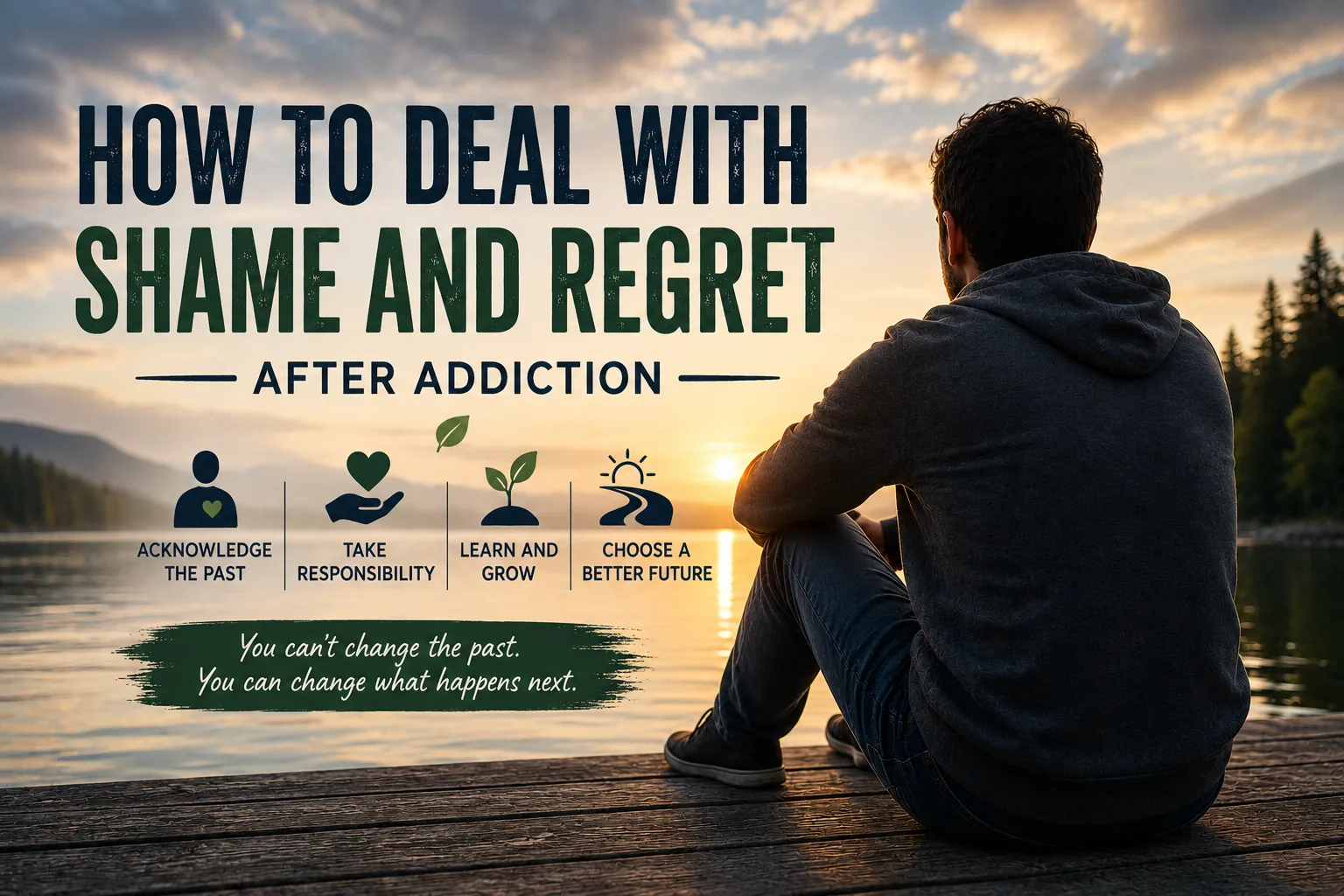


Learning how to deal with shame and regret after addiction can be one of the hardest parts of recovery. Drugs or alcohol may be gone, but the memories are still there.
The lies.
The broken promises.
The money you spent.
The relationships you damaged.
The things you said.
The moments you wish you could erase.
Once active substance use ends, you may finally have enough clarity to see what addiction cost you. That realization can hurt.
But shame does not have to become your permanent identity.
Recovery gives you something addiction often took away: the opportunity to make different choices today.
You cannot change what happened.
You can change what happens next.
Understand the Difference Between Shame and Guilt
Guilt and shame are often treated like the same emotion, but there is an important difference.
Guilt says:
“I did something I regret.”
Shame says:
“I am a bad person.”
Guilt can sometimes lead to growth.
You recognize that you hurt someone.
You apologize.
You repair what you can.
You change your behavior.
Shame can do the opposite.
It may convince you that you are permanently damaged and do not deserve another chance.
Understanding the addicted brain can provide helpful context. Addiction can change priorities, reward-seeking, decision-making, and behavior.
That does not excuse the harm caused during addiction.
But understanding why addiction affected your behavior can help you move from endless self-condemnation toward accountability and change.
Take Responsibility Without Living in Permanent Punishment
Recovery should include responsibility.
If you lied, admit it.
If you hurt someone, acknowledge it.
If you can safely repair damage, try.
But there is a difference between responsibility and punishment.
You do not repair the past by hating yourself every morning.
You repair what you can by becoming more dependable today.
Tell the truth.
Keep your promises.
Show up.
Pay people back when possible.
Treat people better.
Stay sober.
Let your current behavior become evidence that something has changed.
Sometimes the people around you recognize that change before you do. You may reach the painful point where everyone forgives you except yourself.
If that happens, ask yourself:
What would I need to see from another person before I believed they had changed?
Then consider whether you are already doing those things.
Grief and Regret Often Appear Together
Regret is not always only about what you did.
Sometimes it is about what you lost.
Years.
Relationships.
Money.
Opportunities.
Health.
Time with your children.
You may look back and think:
“My life could have been completely different.”
That may be true.
But you cannot live the life that would have happened if you made different choices ten years ago.
You can only live the life available to you now.
That is why grieving your old life after getting sober can be an important part of moving forward.
You may need to grieve both the life addiction created and the life you believe addiction took from you.
Grief can exist without becoming hopelessness.
You are allowed to be sad about lost time while still believing the time ahead matters.
Learn How to Experience Shame Without Escaping It
For many people, drugs and alcohol were a way to avoid painful emotions.
Feeling ashamed?
Drink.
Remember something embarrassing?
Use.
Feeling guilty?
Get high enough not to think about it.
Then you get sober, and the feelings are still waiting.
That is why learning to handle emotions without drugs or alcohol matters so much.
You may also notice strong emotions after getting sober.
Instead of immediately escaping shame, try sitting with it long enough to understand what it is telling you.
Do you need to apologize?
Do you need to change something?
Do you need to talk with someone?
Or are you simply replaying something you have already taken responsibility for?
Sometimes growth means making amends.
Other times growth means finally allowing yourself to stop reopening the same wound.
Shame Can Become Dangerous for Recovery
Shame does not always motivate positive change.
Sometimes it creates hopelessness.
You begin thinking:
“I ruined everything.”
Then:
“Nobody will ever trust me.”
Then:
“I don’t deserve recovery anyway.”
This is where shame can increase relapse vulnerability.
You may begin regretting getting sober because sobriety means facing memories you were able to avoid while using.
You might also still think about drugs after getting sober when shame becomes intense.
Your brain remembers that substances once provided fast relief.
A painful memory appears.
Your mind suggests:
“Using would make this stop.”
Recognize that thought.
You do not have to follow it.
Call someone.
Leave the environment.
Go to a meeting.
Talk with your treatment team.
Exercise.
Write.
Rest.
Give the emotion time to change.
A feeling is temporary.
Using again can create new consequences that last much longer.
Forgiving Yourself Means Living Differently
Eventually, dealing with shame and regret requires more than thinking differently.
It requires living differently.
Learning how to forgive yourself after addiction does not mean deciding your past no longer matters.
It means deciding your future matters too.
Consider who you are becoming.
Are you more honest?
More dependable?
More present?
Are you rebuilding relationships?
Are you staying sober during difficult days?
Are you making healthier decisions?
Those things count.
The sobriety timeline continues long after withdrawal ends. Every sober day gives you another opportunity to build a history that looks different from the one you regret.
Eventually, your life can contain more evidence of recovery than evidence of addiction.
You may never feel good about everything that happened.
You do not need to.
You can regret the past without living inside it.
You can accept responsibility without defining yourself by your worst moment.
You can make amends without demanding that everyone forget.
And you can forgive yourself without pretending nobody was hurt.
The healthiest way to deal with shame and regret after addiction is not to erase the past. It is to learn from it, repair what you can, and live differently enough that your future becomes proof that your past did not get the final word.


